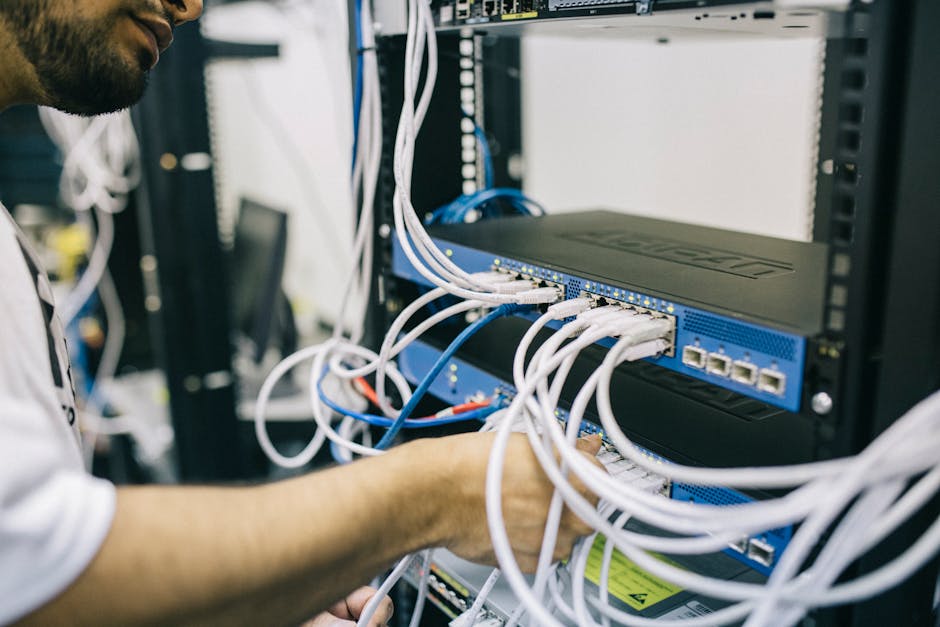
Understanding Interconnect Cables
Interconnect cables are essential components in data center infrastructure, facilitating communication between servers, storage devices, and network equipment. They enable high-speed data transfer, ensuring efficient data center operations. In today’s data centers, the demand for high-speed data transmission is increasing exponentially, driven by the growing need for cloud computing, big data analytics, and artificial intelligence. For more information on high-speed data transfer solutions, see Cable Interconnect Solutions for High-Speed Data Transfer: Enhancing Performance and Reliability.
- High-speed data transmission: Interconnect cables support data transfer rates of up to 400Gbps and beyond, enabling data centers to handle the increasing volume of data. For instance, a data center using 400Gbps interconnect cables can transfer a 100GB file in just a few seconds.
- Reliable connectivity: Interconnect cables provide a stable and secure connection between devices, minimizing the risk of data loss and downtime. A reliable interconnect cable can reduce the risk of data center outages and ensure business continuity.
- Scalability and flexibility: Interconnect cables are designed to be scalable and flexible, allowing data centers to easily adapt to changing requirements. This scalability is crucial for data centers that need to accommodate growing workloads and new applications.
| Cable Type | Data Transfer Rate | Distance | Applications |
|---|---|---|---|
| Copper | Up to 400Gbps | Short to medium distance | Intra-rack and inter-rack connections, high-density data centers |
| Fiber Optic | Up to 400Gbps and beyond | Long distance | Inter-data center connections, high-bandwidth applications |
| Hybrid | Varies | Varies | Data centers with mixed copper and fiber optic infrastructure |
For example, a data center using copper cables for intra-rack connections can achieve data transfer rates of up to 400Gbps, while a data center using fiber optic cables for inter-data center connections can achieve data transfer rates of up to 800Gbps or more. In a real-world scenario, a data center in the financial sector used copper cables to connect servers within a rack, achieving data transfer rates of 200Gbps and reducing latency by 30%. To learn more about the benefits of high-density connectivity, see The Data Center’s Dilemma: How High-Density Connectivity is Solving the Ultimate Scaling Challenge.
Types of Interconnect Cables
Various types of interconnect cables are available, each designed for specific applications and data transfer rates.
- Copper cables: Copper cables are widely used in data centers due to their high-speed data transmission capabilities and relatively low cost. They are available in various categories, such as Cat6A and Cat8. For instance, Cat8 cables can support data transfer rates of up to 25Gbps and are ideal for high-density data centers.
- Fiber optic cables: Fiber optic cables offer higher bandwidth and longer transmission distances than copper cables. They are available in various types, such as single-mode and multi-mode fibers. Single-mode fibers are suitable for long-distance connections, while multi-mode fibers are suitable for shorter distances.
- Hybrid cables: Hybrid cables combine the benefits of copper and fiber optic cables, offering a flexible and scalable solution. They are ideal for data centers with mixed infrastructure. To explore custom cable interconnect solutions, visit Custom Cable Interconnect Solutions for Industry-Specific Applications.
When selecting interconnect cables, data centers should consider the specific requirements of their infrastructure. For example, a data center with a high-density infrastructure may require copper cables with high-speed data transmission capabilities, while a data center with a long-distance infrastructure may require fiber optic cables with high-bandwidth capabilities.
Key Considerations for Selecting Interconnect Cables
When choosing interconnect cables for data center server racks, several factors must be considered.
- Data transfer rate: The data transfer rate of the interconnect cable must be sufficient to support the data center’s specific requirements. Data centers should consider the type of applications they will be running and the required data transfer rates.
- Cable length and flexibility: The length and flexibility of the interconnect cable must be suitable for the data center’s layout and infrastructure. Data centers should consider the distance between devices and the cable management requirements.
- Signal integrity and reliability: The interconnect cable must provide high signal integrity and reliability to minimize the risk of data loss and downtime. Data centers should consider the cable’s shielding, insulation, and termination.
- Compatibility: The interconnect cable must be compatible with the data center’s existing infrastructure and equipment. Data centers should consider the type of connectors, interfaces, and protocols used.
To ensure the selection of the right interconnect cables, data centers can follow a step-by-step process:
- Step 1: Assess the data center’s specific requirements, including data transfer rates, cable length, and flexibility.
- Step 2: Evaluate the different types of interconnect cables available, including copper, fiber optic, and hybrid cables.
- Step 3: Consider the compatibility of the interconnect cable with the data center’s existing infrastructure and equipment.
- Step 4: Test and validate the interconnect cable to ensure it meets the data center’s specific requirements.
- Step 5: Plan for future upgrades and scalability by selecting interconnect cables that can support future data transfer rates and applications.
Best Practices for Interconnect Cable Management
Effective cable management is crucial for maintaining a reliable and efficient data center.
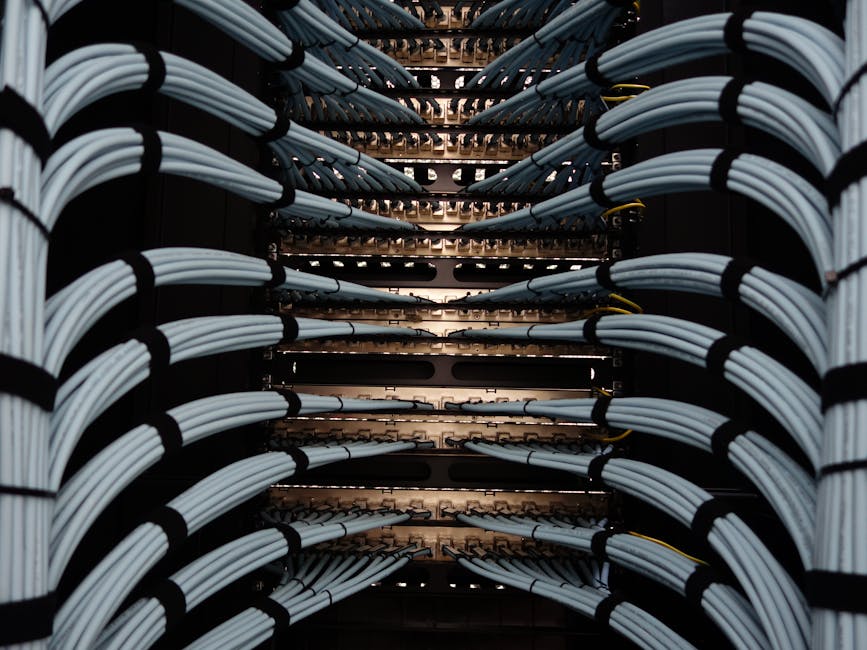
- Cable organization and labeling: Interconnect cables should be properly organized and labeled to facilitate easy identification and maintenance. Data centers can use cable management systems, such as cable ties and labels, to keep cables organized.
- Cable routing and termination: Interconnect cables should be routed and terminated in a way that minimizes the risk of damage and signal degradation. Data centers should use cable routing guides and termination best practices to ensure reliable connections.
- Regular maintenance and inspection: Interconnect cables should be regularly inspected and maintained to ensure they remain in good condition. Data centers should schedule regular maintenance tasks, such as cable cleaning and inspection, to prevent issues.
Some common mistakes to avoid when managing interconnect cables include:
- Poor cable organization, which can lead to cable clutter and increased risk of damage.
- Inadequate labeling, which can make it difficult to identify and maintain interconnect cables.
- Insufficient testing and validation, which can lead to signal degradation and data loss.
- Overcrowding cable pathways, which can cause cable damage and signal interference.
To address common questions about interconnect cables, here are some FAQs:
- Q: What is the difference between copper and fiber optic cables?
A: Copper cables are suitable for short to medium distance connections, while fiber optic cables are suitable for long-distance connections. - Q: How do I choose the right interconnect cable for my data center?
A: Consider factors such as data transfer rate, cable length, and flexibility, as well as compatibility with existing infrastructure and equipment. - Q: How often should I inspect and maintain my interconnect cables?
A: Regularly inspect and maintain interconnect cables to ensure they remain in good condition and minimize the risk of data loss and downtime. - Q: Can I use copper cables for long-distance connections?
A: Copper cables are generally not suitable for long-distance connections due to signal degradation. Fiber optic cables are a better choice for long-distance connections. - Q: What are the benefits of using hybrid cables?
A: Hybrid cables offer a flexible and scalable solution by combining the benefits of copper and fiber optic cables.

Case Study: Successful Interconnect Cable Implementation
A leading cloud service provider implemented a new interconnect cable infrastructure in their data center, resulting in significant improvements in performance and reliability.
- The data center used a combination of copper and fiber optic cables to support high-speed data transmission and long-distance connections.
- The interconnect cables were carefully selected to ensure compatibility with existing infrastructure and equipment.
- The data center implemented a robust cable management system to ensure proper organization and labeling of interconnect cables.
The result was a 25% reduction in latency and a 30% increase in data transfer rates, enabling the cloud service provider to deliver faster and more reliable services to their customers.