Introduction: Why Some Connections Fail
Every technology professional has experienced it: a high-resolution monitor that flickers, a data transfer that inexplicably slows to a crawl, or a server connection that drops intermittently. We often blame the device or the software, but in many cases, the true culprit is an invisible and poorly understood phenomenon known as signal integrity. Signal integrity is the measure of the quality of an electrical signal as it travels from a transmitter to a receiver. For a data cable, it is the single most important factor determining its real-world performance. A cable with poor signal integrity will corrupt data, limit speed, and cause frustrating failures, regardless of the quality of the devices it connects.
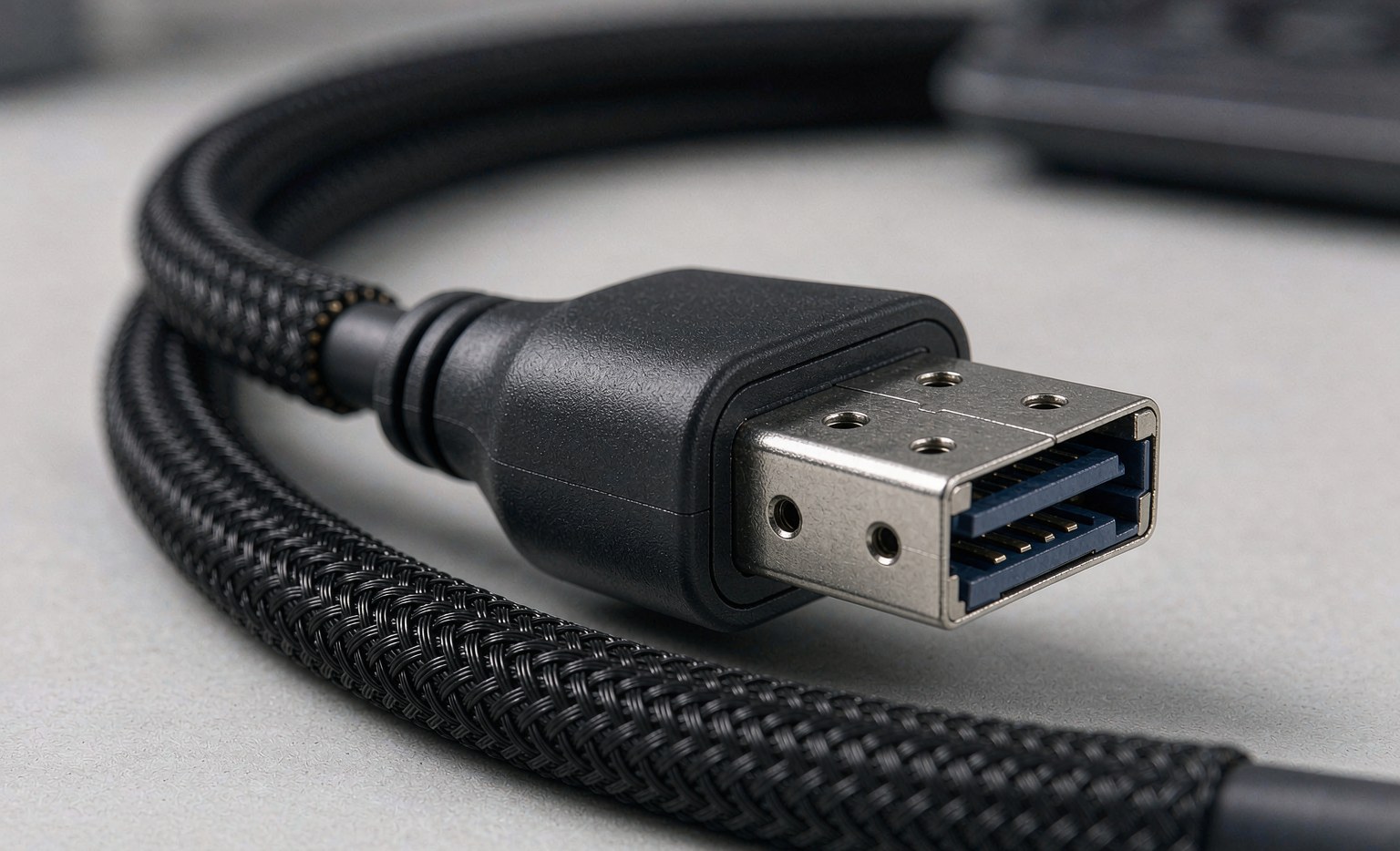
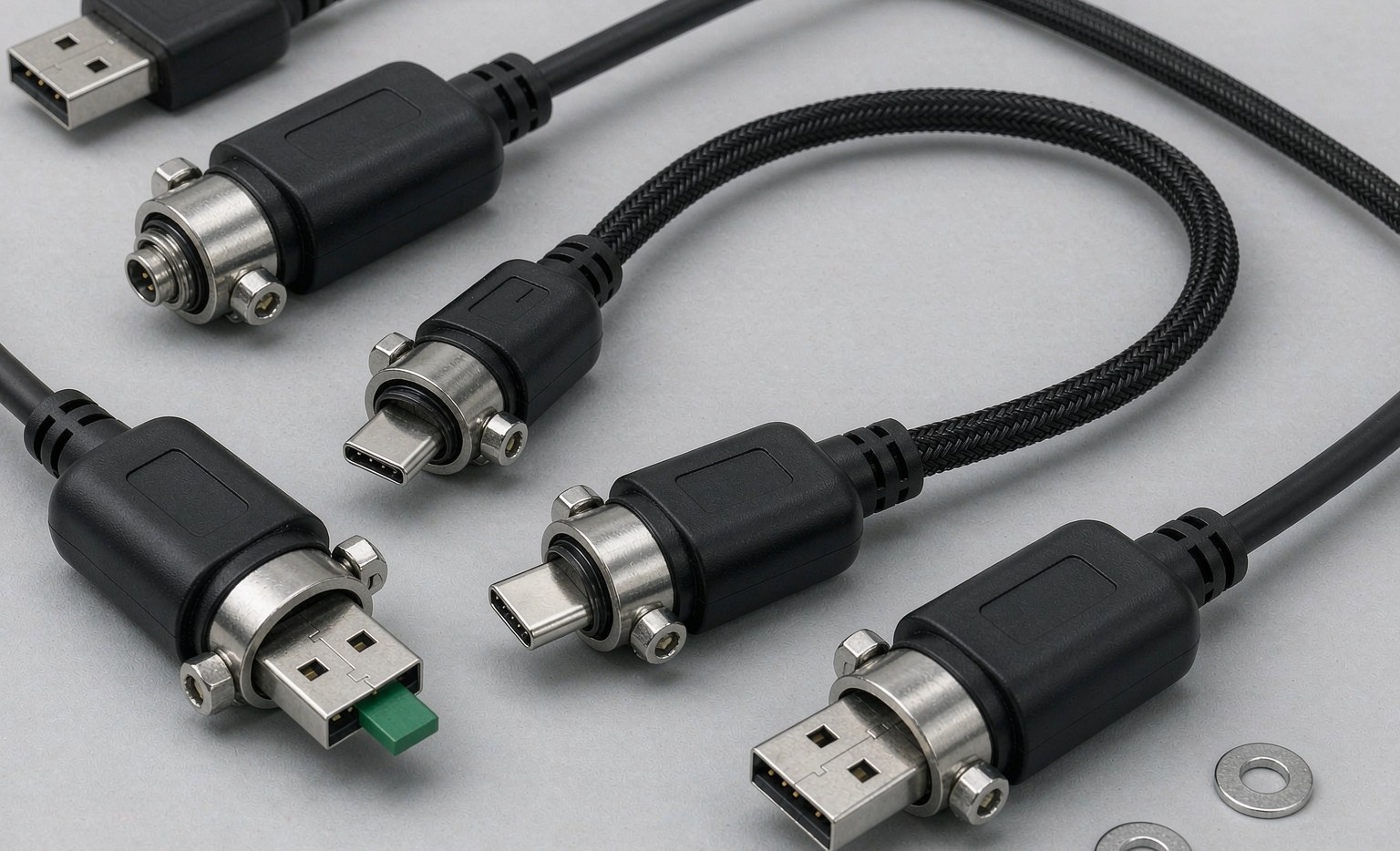
As we enter an era of unprecedented data speeds—with technologies like the 40 Gbps U4 Cable, the 24 Gbps SlimSAS Cable, and high-framerate DisplayPort Cable standards—the importance of signal integrity has grown exponentially. At these high frequencies, the physical cable is no longer a simple conductor but a complex transmission environment where even microscopic imperfections can have a catastrophic effect on the signal. Understanding the basics of signal integrity is therefore essential for anyone specifying, installing, or troubleshooting a modern high-performance system.
This guide will demystify the concept of signal integrity, explaining what it is, the factors that degrade it, and how high-quality cable construction is the primary defense against it. By exploring this fundamental principle, we will demonstrate why a commitment to manufacturing excellence, the core philosophy of Longkai Electronics, is the ultimate guarantee of a fast and reliable connection.
What is Signal Integrity? The Core Concepts Explained
At its core, digital data is transmitted as a series of electrical pulses representing ones and zeros. Signal integrity refers to the ability of a cable to transmit these pulses without distorting them. Think of it like shouting a clear message across a noisy room; if the message arrives garbled, it is useless. Several key factors can degrade a signal as it travels through a cable:
- Attenuation: This is the natural loss of signal strength over distance. The longer the cable, the weaker the signal becomes at the other end. If it becomes too weak, the receiving device cannot distinguish the ones and zeros, leading to errors.
- Crosstalk: In a multi-wire cable, the signal traveling down one wire can electromagnetically “bleed” over and interfere with the signal in an adjacent wire. This is a major issue in high-density connectors like MINI SAS and is a primary cause of data corruption.
- Electromagnetic Interference (EMI): This is external electrical noise from sources like power cords, motors, or fluorescent lights that can overwhelm the delicate data signal. This is a particularly severe problem in industrial environments.
- Impedance Mismatch: Impedance is an electrical property of the cable and connectors. If the impedance is not perfectly consistent along the entire path, some of the signal can be reflected back towards the source, corrupting the outbound data.
How High-Quality Cable Construction Preserves Signal Integrity
A well-engineered cable is a sophisticated system designed specifically to combat the factors listed above. The quality of a cable is not an abstract concept; it is the direct result of deliberate choices in materials and construction methods.
1. Conductors: The Foundation for a Strong Signal
The fight against attenuation starts with the core conductors. High-quality cables use pure, oxygen-free copper, which has very low resistance. The thickness of the wire (its AWG rating) is also critical. A thicker wire (lower AWG) has less resistance and can carry a signal over a longer distance with less loss, which is why a high-performance, 10-foot USB3.0 Cable must be constructed more robustly than a 3-foot one.
2. Twisted Pairs: The First Line of Defense Against Crosstalk
To combat crosstalk, the conductors in high-speed cables like a LAN Cable or USB C Cable are twisted together into pairs. This technique causes the electromagnetic fields generated by the two wires to effectively cancel each other out, preventing them from interfering with adjacent pairs. The precision and consistency of these twists are a hallmark of a high-quality manufacturing process.
3. Shielding: The Armor Against EMI
Robust shielding is the primary defense against external EMI. This is what defines a professional-grade or industrial cable.
- Foil Shielding: A thin layer of aluminum foil provides excellent coverage and is highly effective against high-frequency interference.
- Braid Shielding: A woven mesh of copper wires provides protection against low-frequency interference and adds significant physical strength.
- Combination Shielding: A premium Industrial network cable or enterprise data cable will use both foil and braid shields to provide the most comprehensive protection across the entire frequency spectrum.
4. Connectors and Termination: Preventing Signal Reflection
The point where the cable meets the connector is a critical area for signal integrity. To prevent impedance mismatch, the connector must be engineered to the same precise electrical tolerance as the cable itself. The use of gold-plated contacts ensures a clean, corrosion-free connection with minimal resistance, preserving the quality of the signal at the final point of contact.
Signal Integrity in Action: Real-World Scenarios
- In the Data Center: In a high-density server, a SlimSAS Cable carrying PCIe 4.0 signals is packed tightly against dozens of other cables. Without perfect twisting and shielding to prevent crosstalk, data corruption is inevitable, leading to storage array errors and reduced server performance.
- For the Creative Professional: A video editor using a U4 Cable to drive an 8K display is pushing an immense amount of data. A cheap, poorly shielded cable will be susceptible to EMI from nearby power adapters, causing the screen to flicker or lose sync, rendering it useless for professional work.
- On the Factory Floor: An Industrial Camera Cable on a robotic arm is constantly surrounded by powerful EMI from motors. Only a cable with heavy-duty, multi-layer shielding can deliver a clean video feed for quality control, making superior signal integrity a non-negotiable requirement.
The Manufacturer’s Role: Engineering for Flawless Performance
Signal integrity is not a feature that can be added to a cable; it must be engineered into it from the very first stage of design. It is the direct result of a manufacturer’s commitment to precision, quality materials, and rigorous testing. This is the core philosophy that has guided Longkai Electronics since 2012.
Our integrated approach to R&D, production, and sales allows us to maintain strict control over every variable that impacts signal integrity. We utilize advanced testing equipment to measure performance at every stage of the Cable Assembly process, from the raw copper to the finished product. Our adherence to international standards, validated by our ISO9001, CE, and FCC certifications, is your assurance that a Longkai cable is built to perform not just to specification, but flawlessly in the real world. This is the reason why over 100 global industry leaders trust us with their most critical connections.
Conclusion: The True Measure of a Quality Connection
As data speeds continue to climb, the physical limitations of connectivity are being tested like never before. In this demanding environment, signal integrity has become the ultimate measure of a cable’s quality and performance. It is the unseen factor that determines whether a connection will be fast and reliable or slow and frustrating. By understanding its importance and choosing products from a manufacturer that engineers for it, you are making a strategic investment in the performance, reliability, and future-readiness of your entire technological infrastructure.