
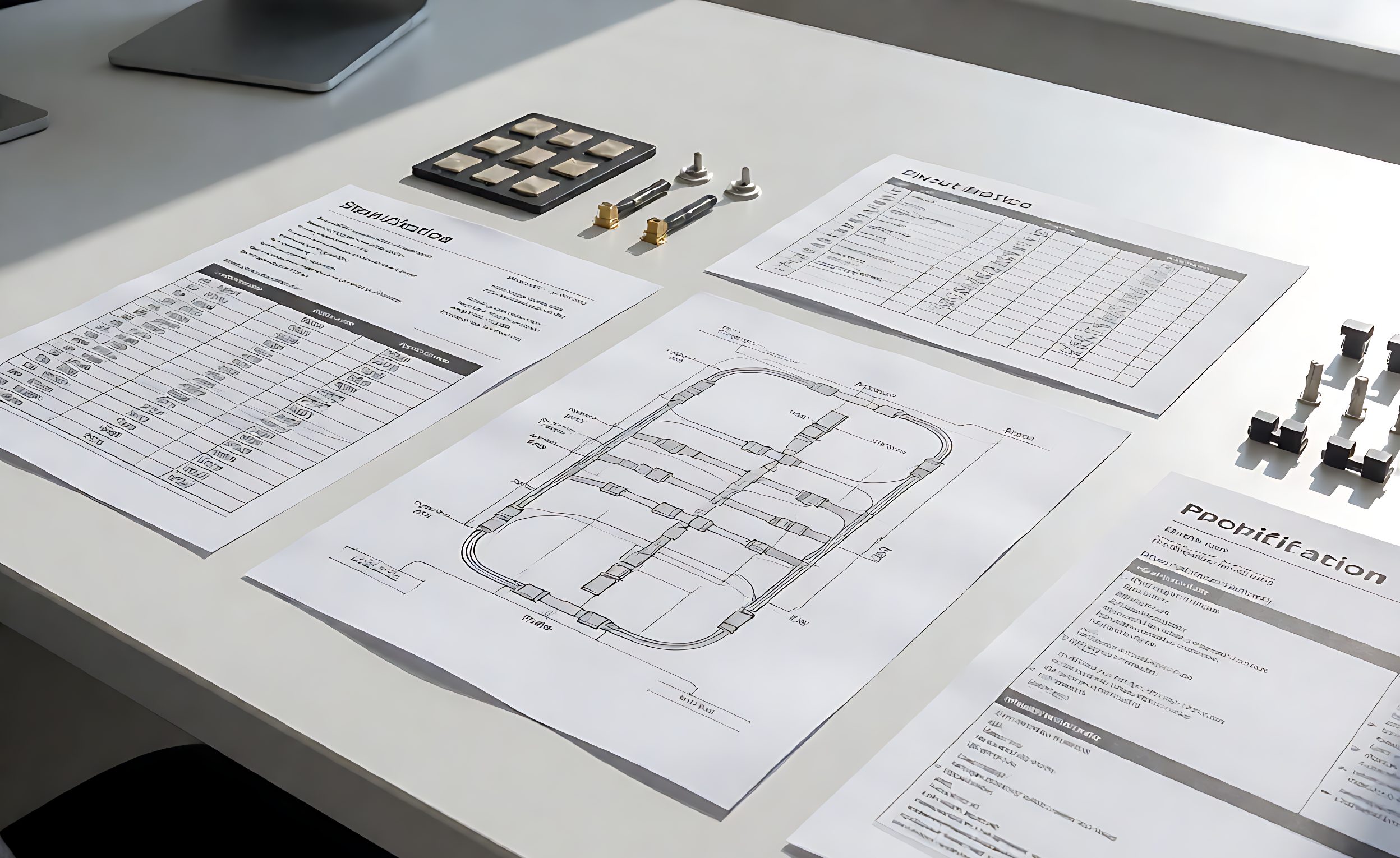
When a quotation takes two weeks and arrives with questions attached, the delay is almost never the supplier’s scheduling. It is an incomplete specification: a missing pinout, an unspecified jacket rating, a length without a tolerance, a connector without a plating requirement. Each gap produces a round of questions, and each round costs days.
A complete drawing package does the opposite. It lets a supplier quote once, accurately, and it becomes the reference against which the finished parts are checked – which is why the same package also prevents disputes.
What the Package Contains
Six elements, in rough order of how often they are missing:
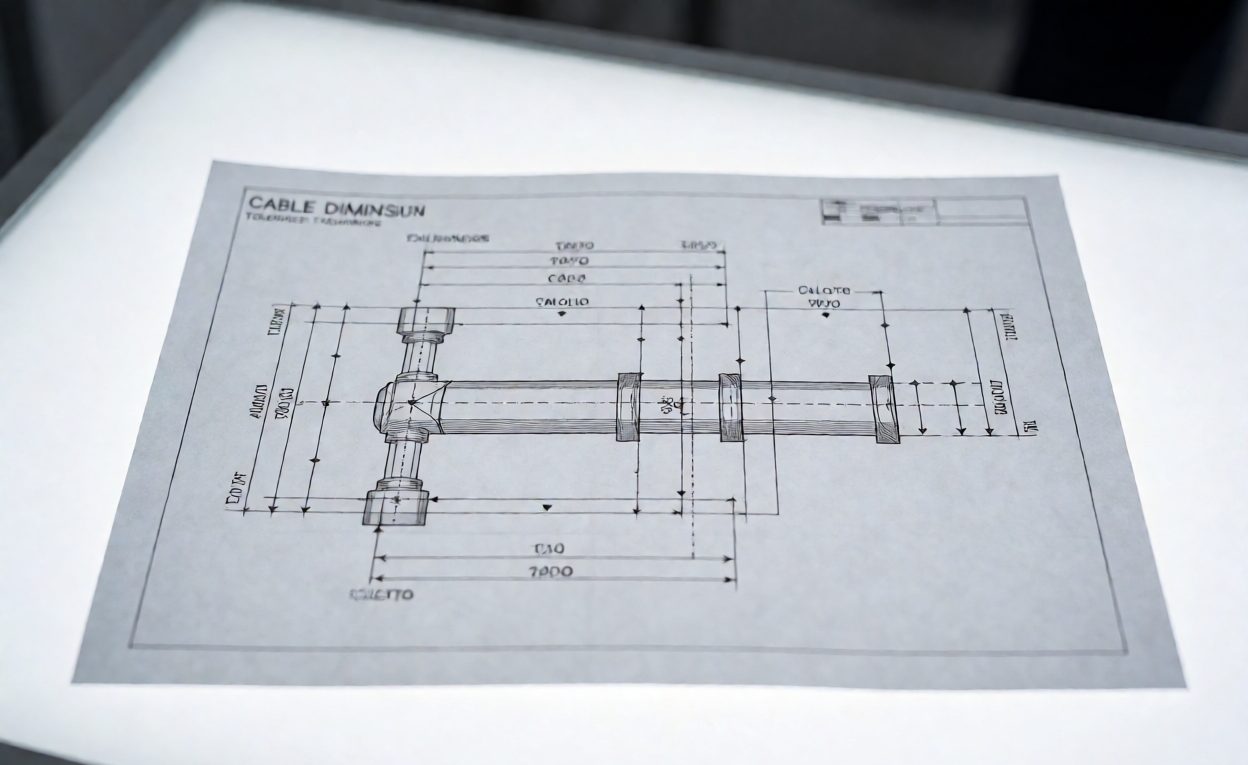
- Dimensioned drawing: overall length with tolerance, connector orientation, exit angle, and any intermediate breakout or branch points.
- Pinout or wiring schedule: conductor by conductor, including shielding and drain connections. “Straight through” is not a pinout when a shield or a shell connection is involved.
- Component callouts: connector part numbers with plating and colour, cable type with conductor gauge and stranding, jacket material and rating.
- Electrical requirements: current or power rating, voltage rating, and for data assemblies the performance class and any required test.
- Environmental and mechanical requirements: temperature range, ingress rating, flame rating, minimum bend radius, flex life, pull force at terminations.
- Marking and documentation: jacket printing content, label content, and which test reports or certificates must accompany the shipment.

The Fields Buyers Most Often Leave Out
Three omissions cause most of the back-and-forth:
Length tolerance. A length without a tolerance forces the supplier to guess, and a conservative guess adds cost. State the nominal and the tolerance, and measure from defined points – overall tip to tip, or moulding edge to moulding edge – because those differ.
Shielding and drain treatment. Whether the shield is connected at one end, both ends, or through a capacitor changes both the construction and the electrical behaviour. Leaving it unspecified produces a part that may work electrically and fail in the system.
Plating and mating cycles. “Gold plated” is not a specification. State the plating type and thickness where it matters, and the mating cycle requirement, since both affect cost and contact life.
Tolerances: Where Tight Costs Money
Tolerances should be set by function. A length tolerance matters where the assembly is routed through a defined path; it matters much less where there is slack. Pull force, crimp height and strip length are process tolerances the supplier controls, and specifying them is usually counter-productive – specify the performance outcome instead, such as a pull force the termination must withstand.
Where a dimension genuinely matters, mark it as critical on the drawing. A drawing with everything marked critical has nothing critical, and suppliers will treat the whole drawing conservatively – which is how an easy part acquires a difficult price.
Technical Background
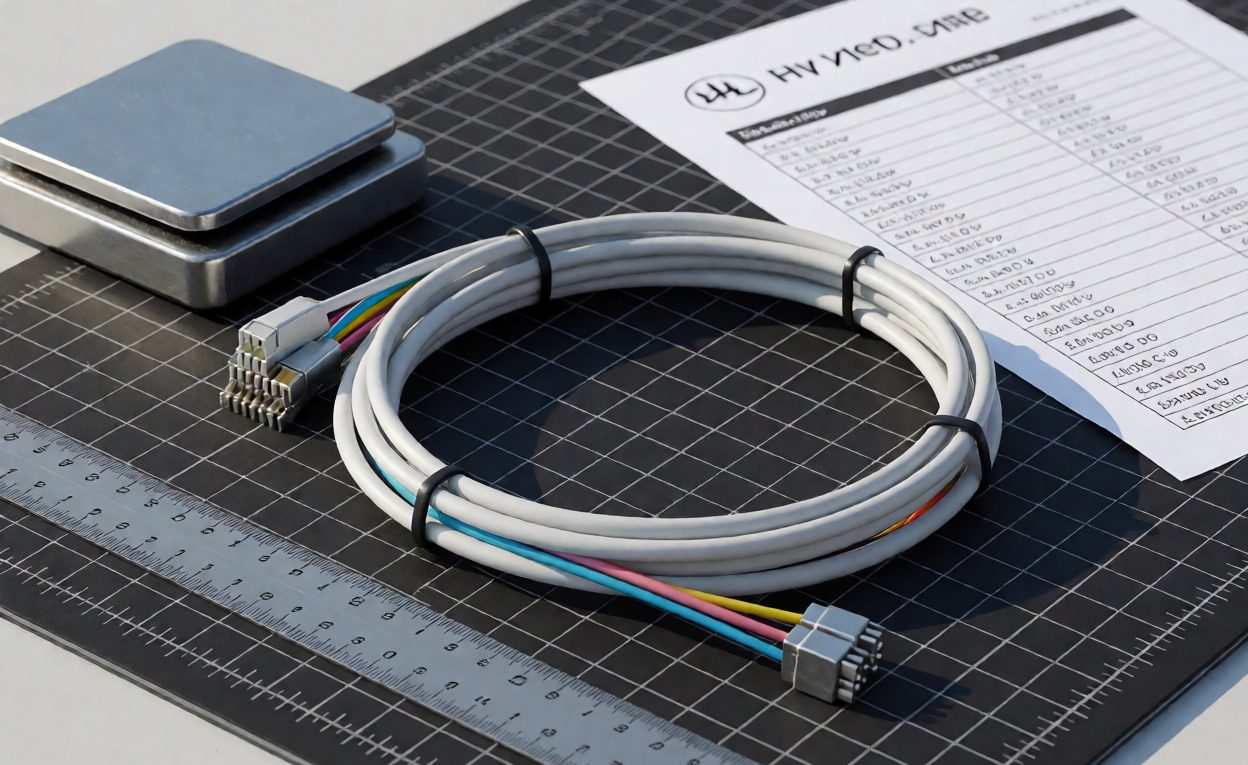
The package is built around an engineering drawing, which communicates geometry and the requirements attached to it. How much variation is acceptable is expressed through geometric dimensioning and tolerancing, whose purpose is to state tolerance only where function requires it. The component list behind the drawing is the bill of materials, and errors there propagate directly into quoted cost.
Turning the Package Into a Faster Cycle
Two habits produce most of the benefit. First, keep one controlled revision per part number, with revision history – because the most common production error is building to a superseded drawing. Second, send the complete package with the enquiry rather than after it; a supplier quoting from a partial specification will quote a partial product.
Version control deserves a rule of its own. Every revision should carry a date, a reason, and a note on whether previously built stock remains acceptable. Without that, a revision made to solve one problem creates another, because the shop floor is still building to the old drawing while the buyer discusses the new one. Where several part numbers share a connector or a cable, keep the shared elements in one specification referenced by all of them, because duplicating the same callout across drawings guarantees that one copy is updated and another is not.
Where a buyer lacks in-house drafting resource, a supplier can usually generate the drawing for approval from a sample and a written requirement. That is worth doing once and keeping: the resulting document makes every subsequent order faster and every dispute shorter.
Include the verification step on the drawing itself: who checks the first article, and what evidence it must provide. That closes the loop between specification and inspection.
Specification practice connects to the path from drawing to sample to bulk and to the price drivers in cable quotation cost drivers. Rating choices are discussed in specifying gauge and power rating, geometry in geometry and retention, and mechanical limits in the bend radius guide.
Finally, treat storage conditions as part of incoming inspection for sensitive parts. A humidity indicator that has changed colour is a finding rather than a decoration, and it should trigger a check before the stock is issued to a build.
FAQ
What is the most commonly missing field?
Length tolerance, followed closely by shielding and drain treatment, both of which change construction and behaviour.
Is “straight through” enough for a pinout?
No where shielding, shell connections or crossed conductors are involved. Specify conductor by conductor.
Should I specify crimp height or strip length?
Usually not. Specify the performance outcome, such as a pull force the termination must survive.
What does marking a dimension critical do?
It focuses supplier attention. Marking everything critical means nothing is, and the whole drawing is priced conservatively.
Does “gold plated” need more detail?
Yes: plating type and thickness where contact life matters, plus the required mating cycles.
How should length be measured?
From defined points – tip to tip or moulding edge to moulding edge – because the two differ materially.
What if I cannot produce drawings?
A supplier can usually generate them from a sample and a written requirement; keep the result as the controlled reference.