Prologue: The $500,000 Connector
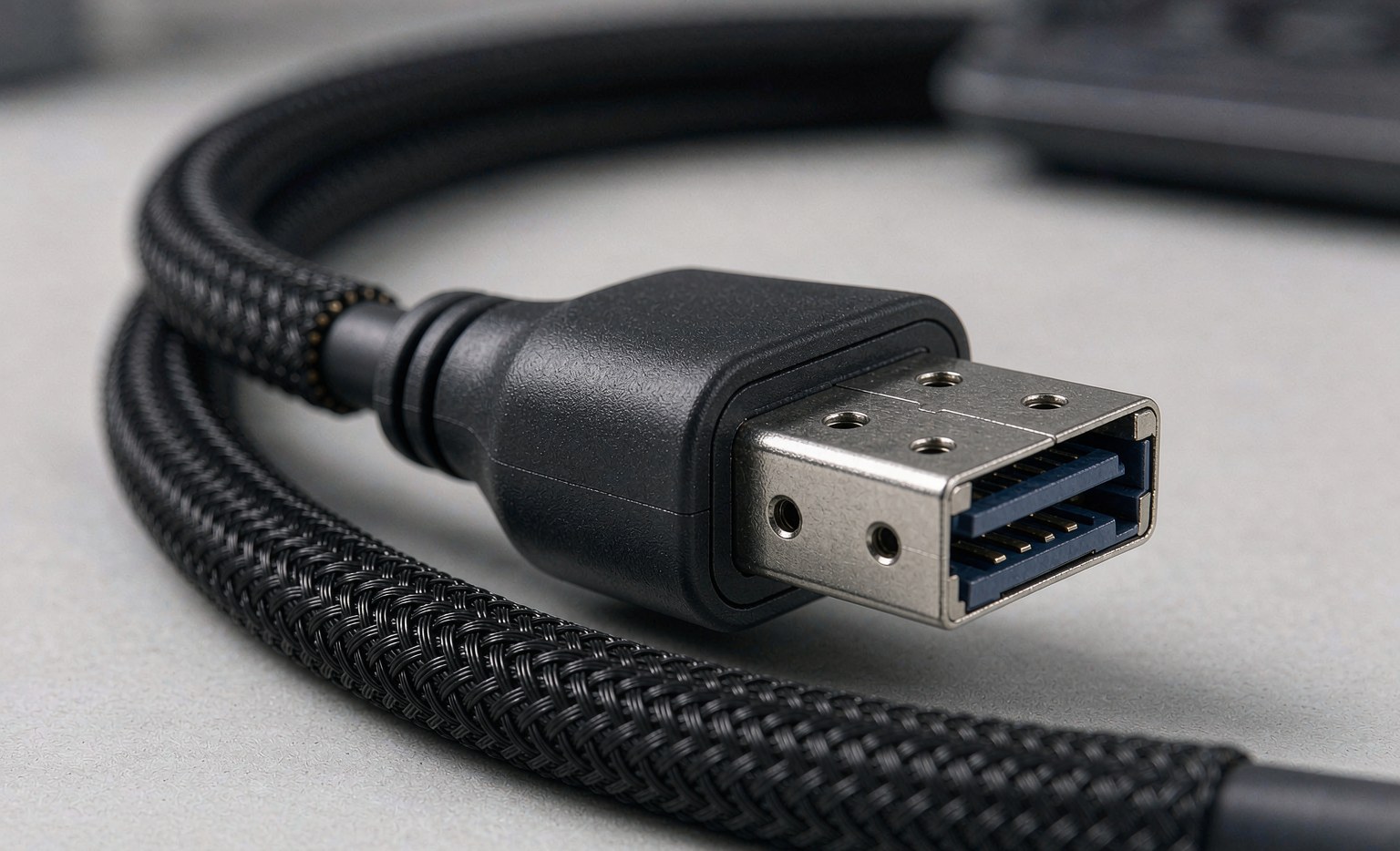
In the spring of 2023, a mid-sized automotive parts manufacturer in the American Midwest faced a catastrophic failure. For six hours, one of its primary robotic assembly lines went dark. The cause, discovered after a frantic, line-by-by-line diagnostic process, was not a software bug or a mechanical breakdown of a multi-million-dollar robot. It was a single, frayed Industrial Cable—a component with a purchase price of less than fifty dollars. The connection to a critical sensor on a robotic arm had failed due to years of unmitigated vibration and flex fatigue. The direct cost of the downtime—lost production, idle labor, and expedited shipping to meet client deadlines—was estimated by the company’s COO to be in excess of half a million dollars. This was, for all intents and purposes, a $500,000 connector.
This story, based on a real-world event with details anonymized, is not an anomaly. It is a stark illustration of a hidden crisis that plays out every day in factories, data centers, and critical infrastructure around the globe. It is the crisis of the “low-cost component,” a pervasive mindset that treats connectivity as a disposable commodity, ignoring the monumental financial and operational risks of its failure. We have become experts at calculating the upfront cost of a cable, but we remain dangerously naive about its true cost—the colossal, cascading impact of its failure.
This investigative report will dissect the anatomy of these failures and quantify their true cost. We will move beyond the simple price tag and explore the complex, interconnected web of consequences that a single failed connection can trigger. Through an analysis of real-world scenarios in data centers, industrial automation, and professional environments, we will build a compelling economic case for a new philosophy of connectivity: one that treats the quality of a Cable Assembly not as an expense, but as one of the most critical investments a technology-driven organization can make. This is an exploration of the ripple effect, a deep dive into the profound and often devastating consequences of the weakest link.
Part I: The Data Center Blackout — When Latency Becomes a Liability
The modern data center is the engine of the digital economy. It is a high-performance ecosystem where success and failure are measured in microseconds. For financial trading firms, e-commerce giants, and cloud service providers, downtime is not just an inconvenience; it is a direct and immediate loss of revenue. A 2022 industry report by the Uptime Institute revealed that over 60% of all significant data center outages cost more than $100,000, with 15% costing over $1 million. While the causes of these outages are varied, a surprising number can be traced back to the physical layer, the humble infrastructure of cables and connectors.
Case Study: The Intermittent Storage Array
Consider a common but insidious scenario: a high-traffic e-commerce platform running on a storage area network (SAN). The storage arrays are connected to the core servers using a series of MINI SAS cables. One of these cables, a non-certified, low-cost alternative purchased to save a few hundred dollars on a multi-million-dollar server deployment, has a microscopic flaw in its termination. It doesn’t fail completely; instead, it begins to introduce a higher-than-normal bit error rate (BER) under heavy load.
The immediate consequences are not a full outage, but a subtle and corrosive degradation of performance:
- Increased Latency: The storage protocol (SAS) has built-in error correction. When it detects a corrupted data packet, it requests a retransmission. This process happens in milliseconds, but when it happens thousands of times a minute, it introduces significant latency into the system. For the end-user, this translates to slower page load times and a frustrating checkout experience.
- The Diagnostic Nightmare: This “soft failure” is incredibly difficult to diagnose. The system logs will show performance issues, but they won’t point to a “failed cable.” The IT team will spend days, or even weeks, troubleshooting the software, the network switches, and the server itself, burning hundreds of hours of expensive engineering time.
- The Tipping Point: During a peak traffic event, like a holiday sale, the retransmission requests overwhelm the controller, causing the entire storage array to drop from the fabric. The website goes down.
The true cost in this scenario is a multi-layered financial disaster:
- Direct Revenue Loss: Every minute the site is down translates to lost sales.
- Wasted Operational Expense: The cost of the engineering hours spent troubleshooting the wrong problem.
- Reputational Damage: Customers who have a bad experience may never return. The long-term loss of customer trust can be the most damaging cost of all.
The “savings” of a few hundred dollars on the initial data cable purchase has created a ripple effect costing tens or hundreds of thousands of dollars. A modern, high-performance solution like a certified SlimSAS Cable, built with the precision to handle high-frequency signals without degradation, would have prevented this entire cascade of failure.
Part II: The Factory Floor Shutdown — Where Reliability is Production
If the data center is the engine of the digital economy, the automated factory is the engine of the physical one. In the world of Industry 4.0, the goal is “lights-out” manufacturing—a fully automated process where every component works in perfect, uninterrupted harmony. In this environment, reliability is not just a feature; it is the sole metric of success. The entire financial model of an automated factory is predicated on uptime, and the most common threat to that uptime is the failure of the physical connectivity layer.
Case Study: The Blind Robot
Let’s return to our opening example of the automotive parts manufacturer. The failed component was an Industrial Cable connecting a machine vision camera to its controller. This camera’s job was to guide a robotic arm in performing a high-precision weld. Let’s dissect the engineering and economic failures that led to this half-million-dollar event.
The original cable was a standard, off-the-shelf USB cable, not a purpose-built industrial assembly. This single decision created multiple failure points:
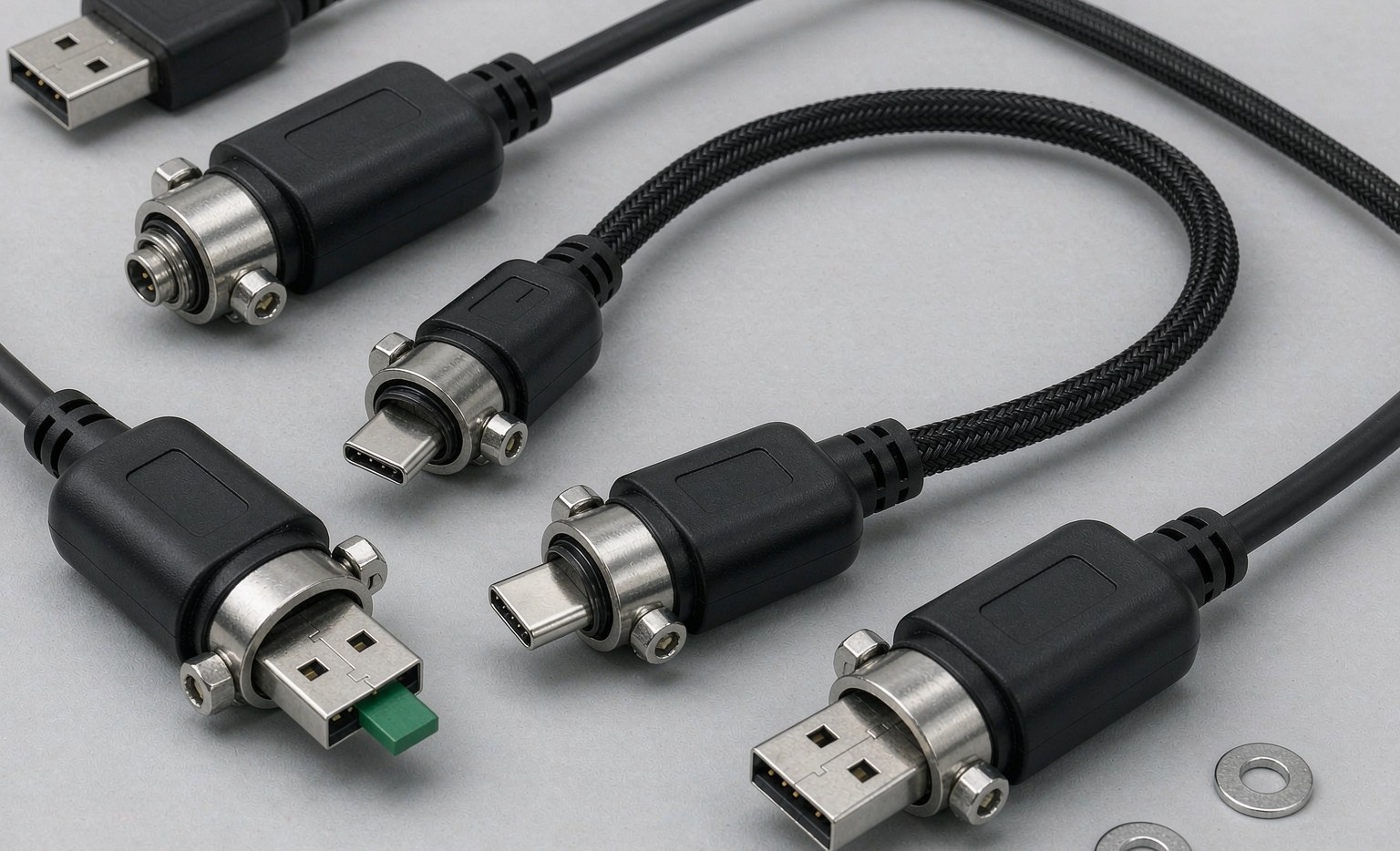
- Lack of Mechanical Security: The cable used a standard friction-fit USB connector. The constant, high-frequency vibration of the robotic arm caused the connector to slowly work itself loose over time. The lack of a USB Cable locking mechanism was the primary design flaw.
- Flex Fatigue: The cable was not rated for a high flex-life. The constant bending and twisting of the robotic arm’s movement caused the copper conductors inside the cable to become brittle and eventually fracture.
- Inadequate Shielding: The cable was routed in a Wire Harness alongside high-voltage motor power lines. The intense EMI from these lines likely caused intermittent data corruption long before the final physical failure, leading to subtle and untracked production defects.
The true cost of this failure can be broken down into a devastating financial equation:
- Cost of Downtime = (Lost Units per Hour x Profit per Unit x Hours of Downtime) + Idle Labor Costs
- Cost of Repair = Cost of Replacement Parts + (Hours to Diagnose x Labor Rate) + (Hours to Repair x Labor Rate)
- Cost of Risk = Cost of Scrapped Materials + Cost of Expedited Shipping + Potential Penalties for Late Delivery
When you sum up this equation, the seemingly insignificant price difference between a standard cable and a purpose-built, ruggedized Industrial Cable becomes laughably small. An investment in a properly engineered solution—one with locking connectors, a high-flex-life rating, and robust multi-layer shielding—is not a cost; it is an insurance policy against a catastrophic financial event.

Part III: The Hidden Costs in Every Environment — A Universal Principle
While the consequences of failure are most dramatic in data centers and factories, the ripple effect of poor connectivity is a universal principle that impacts every technological environment, albeit on different scales.
The Professional’s Wasted Hour
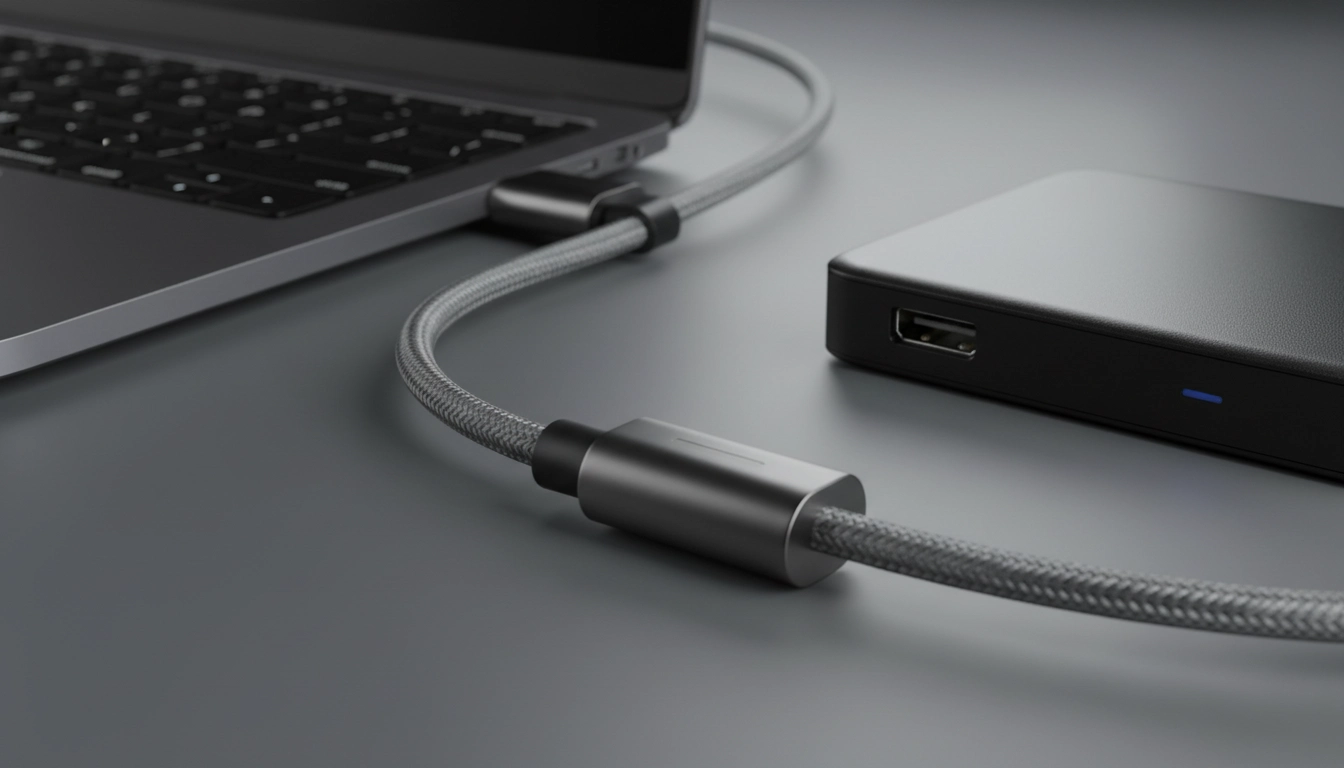
Consider a video editor working on a tight deadline. They are using a state-of-the-art laptop with a powerful U4 Cable port, connected to a high-speed external SSD. However, they are using a cheap, uncertified Type C-Cable that came with a different device. The cable cannot maintain the signal integrity required for 40 Gbps speeds, and the connection constantly drops or throttles, turning a 10-minute file transfer into a 45-minute ordeal. The cost here is not a factory shutdown, but it is real nonetheless: an hour of a highly paid professional’s time wasted, a deadline missed, and immense personal frustration. Multiplied across an entire organization, this “soft cost” of lost productivity can be substantial.
The Unreliable Network
In a corporate office, a new Gigabit network is installed, but to save money, the existing, older ethernet cable infrastructure is reused. Many of these cables are Cat 5, not the required Cat 5e or Cat 6. The result is that the entire network underperforms, with employees experiencing slow file access and dropped video calls. The cost is a subtle but pervasive drag on the efficiency of the entire company, a daily tax paid for a one-time failure to invest in the proper physical infrastructure.
Part IV: The Proactive Solution — Architecting for Reliability
The evidence is overwhelming. Treating connectivity as a low-cost commodity is a failed strategy that leads to predictable and often disastrous financial consequences. The solution is to invert the paradigm: to treat the physical connectivity layer as a piece of critical infrastructure, worthy of the same level of strategic planning and investment as the servers and machinery it connects. This is the philosophy of “architecting for reliability.”
This approach requires a partnership with a manufacturer that understands and embodies this philosophy. It requires a partner whose business is not just selling cables, but engineering solutions to complex connectivity challenges. This is the role that a company like Longkai Electronics plays in the modern technology ecosystem.
Architecting for reliability means:
- Specifying for the Environment, Not Just the Connector: It means moving beyond “I need a USB cable” to “I need a USB solution with a locking connector, a PUR jacket, and a certified high-flex-life rating for a robotic application.”
- Demanding Verifiable Quality: It means choosing a partner whose commitment to quality is not just a marketing claim, but is proven by internationally recognized certifications like ISO 9001 and backed by a rigorous, multi-stage testing protocol for every single Cable Assembly.
- Investing in Longevity: It means understanding that the true cost of a component is its purchase price plus the cost of all the failures it will cause over its lifespan. A slightly more expensive, expertly engineered cable with a near-zero failure rate will always have a lower Total Cost of Ownership than a cheap alternative.
This is the expertise that Longkai Electronics has been cultivating since 2012. Our integrated approach to R&D and manufacturing, our deep knowledge of both enterprise and industrial applications, and our partnerships with over 100 of the world’s most demanding technology companies are all built on this foundational commitment to architecting for reliability.
Conclusion: Beyond the Broken Link
The story of the $500,000 connector is a cautionary tale, but it is also a call to action. It is a call to move beyond the short-sighted focus on upfront costs and to embrace a more holistic, strategic understanding of the economics of connectivity. The ripple effect of a single failed cable can be immense, spreading from a simple broken link to a wave of financial, operational, and reputational damage.
By understanding these risks, by quantifying the true cost of failure, and by architecting our systems with a foundational commitment to reliability, we can break this destructive cycle. The future of technology will be built on a network of connections that are not just faster and smarter, but are fundamentally more resilient. The decision to invest in quality connectivity is not just an engineering choice; it is one of the most astute financial decisions an organization can make in an increasingly connected world.