Key Performance & Failure Data (As of May 2026)
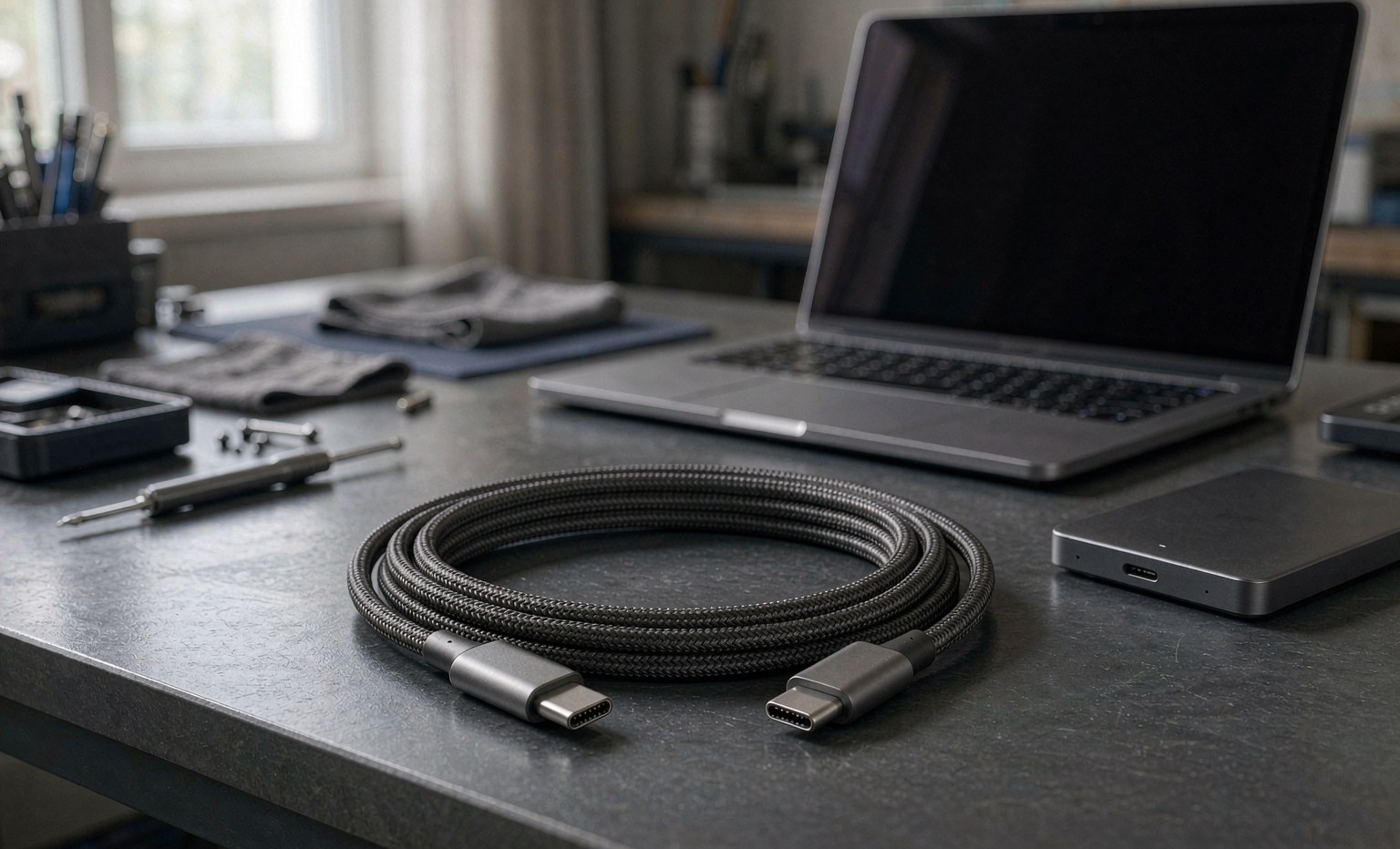
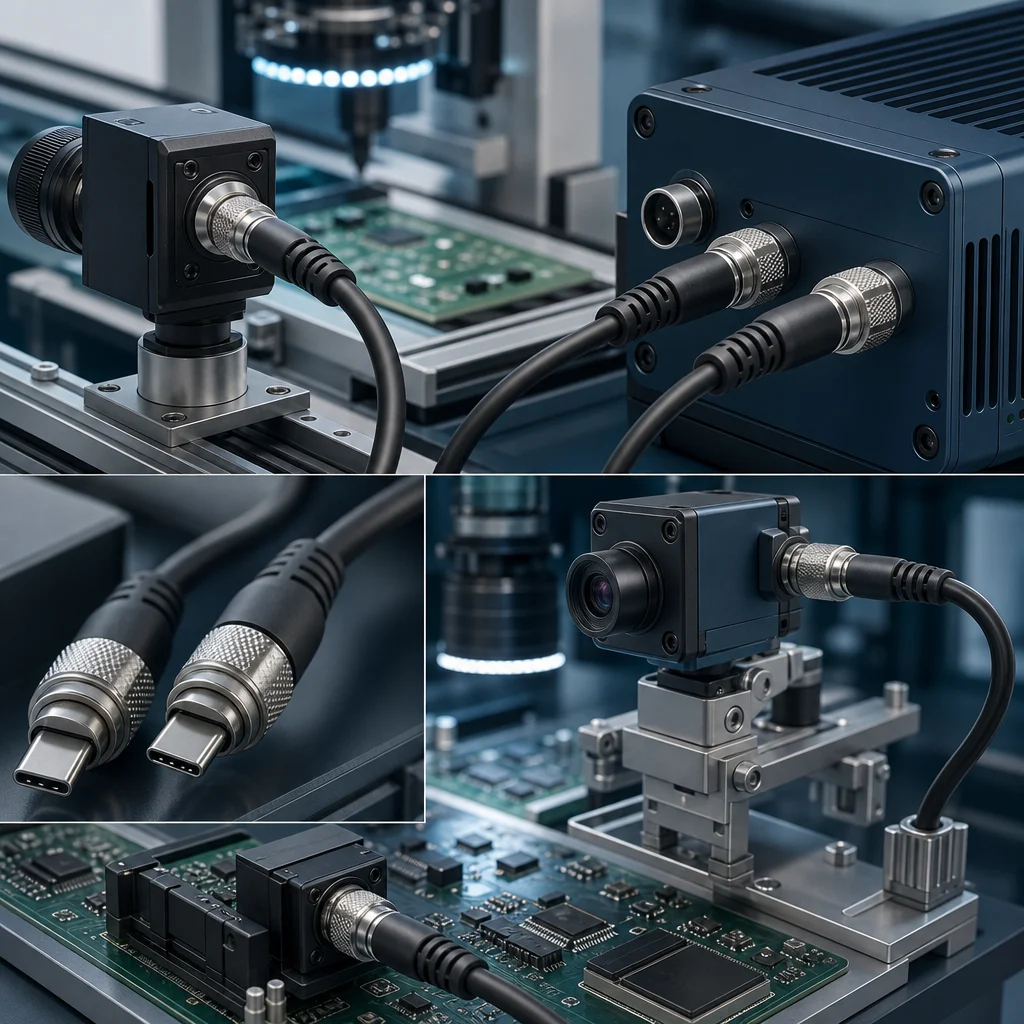
In high-speed imaging, factory automation, and robotic pick-and-place lines, standard consumer USB cables represent a critical failure point. Analytical field reports from 2025 and early 2026 point to a clear trend: as cameras adopt higher bandwidth standards (such as USB 3.2 Gen 2 and USB4) to handle high-resolution raw frames, signal integrity requirements become vastly tighter. Even a micro-displacement of 0.2mm within a type c cable connection can lead to impedance mismatches, signal reflections, and immediate packet dropouts.
Let us look at the empirical testing data comparing standard friction-fit Type-C ports against single and dual screw locking industrial variants under continuous 3-axis sinusoidal vibration (5 Hz to 2000 Hz, 5G amplitude):
- Friction-Fit Type-C: Experiences intermittent signal loss (dropouts lasting >10 microseconds) within an average of 45 minutes of continuous vibration. Internal spring contact leaves show fatigue, causing contact resistance to spike from 30mΩ to over 150mΩ.
- Single Screw Locking Type-C: Zero signal dropouts recorded over 250 hours of continuous vibration testing. Axis shift restricted to <0.05mm.
- Dual Screw Locking Type-C: Zero signal dropouts recorded over 500+ hours. The structural connection handles up to 150N of axial pull-force without shifting the contact mating pins.
For system integrators, these numbers demonstrate that sourcing from a qualified usb c cable manufacturer that offers certified locking configurations is a necessary step to prevent expensive unplanned downtime.
Why Friction-Fit USB Type C Cable Connections Fail in Industrial Environments
The standard USB Type-C interface was originally designed for consumer electronics—smartphones, laptops, and tablets—where ease of insertion and quick disconnect are the primary design priorities. However, these exact design features become liabilities on an automated production floor.
1. Inadequate Retention Force
Consumer-grade USB-C mating relies solely on the friction of internal spring latches. Over time, heat, physical dust, and repetitive mating cycles weaken these spring elements. In robotic systems where the cabling is routed through a moving drag chain, the inertia from rapid acceleration and deceleration easily exceeds the native friction-retention threshold, causing the connector to shift or pull out entirely.
2. High-Frequency Signal Integrity Degradation
High-resolution industrial cameras transfer gigabytes of data per second. Operating at these frequencies means the margin for error is tiny. A slight angle mismatch in a standard usb type c cable connection causes high-frequency attenuation, impedance anomalies, and signal reflection. This leads to immediate frame dropouts in machine vision systems, causing inspection software to trigger false rejects or halt production lines.
3. Lack of Strain Relief
Most consumer cables feature soft, short strain-relief boots designed for limited bending. In an industrial setup, cables are often bent at sharp angles, putting continuous lateral pressure on the plug housing. Without a rigid screw anchor, this lateral tension pulls the internal contact pins out of alignment, causing intermittent open circuits.
Evaluating Screw Locking Configurations: Single vs. Dual Screw Lock
As a leading custom usb cable manufacturer, we configure locking cables based on the mechanical layout of the target equipment. The USB-IF (USB Implementers Forum) has standardized specific locking dimensions to ensure cross-vendor compatibility.
Single Screw Locking Connectors
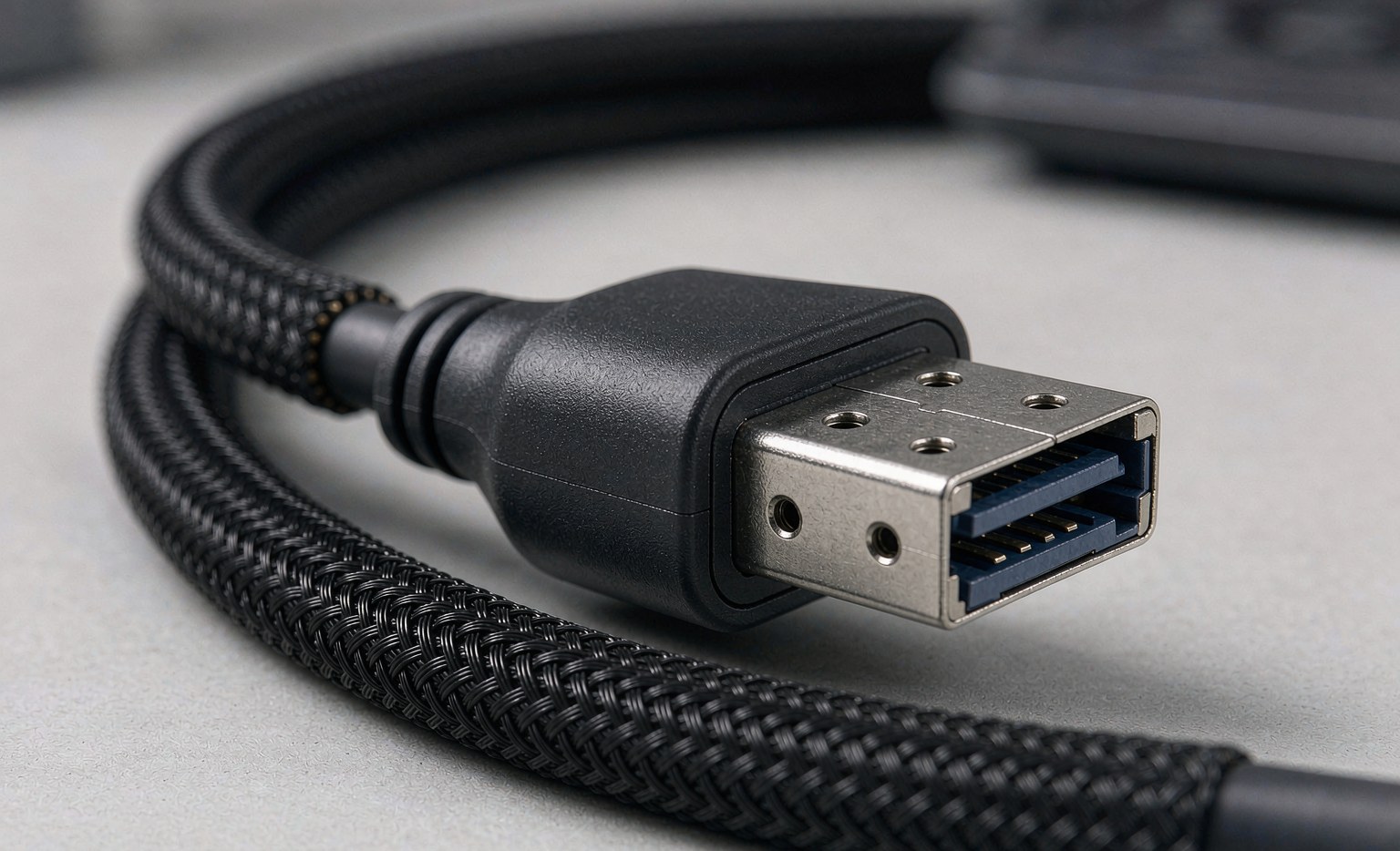
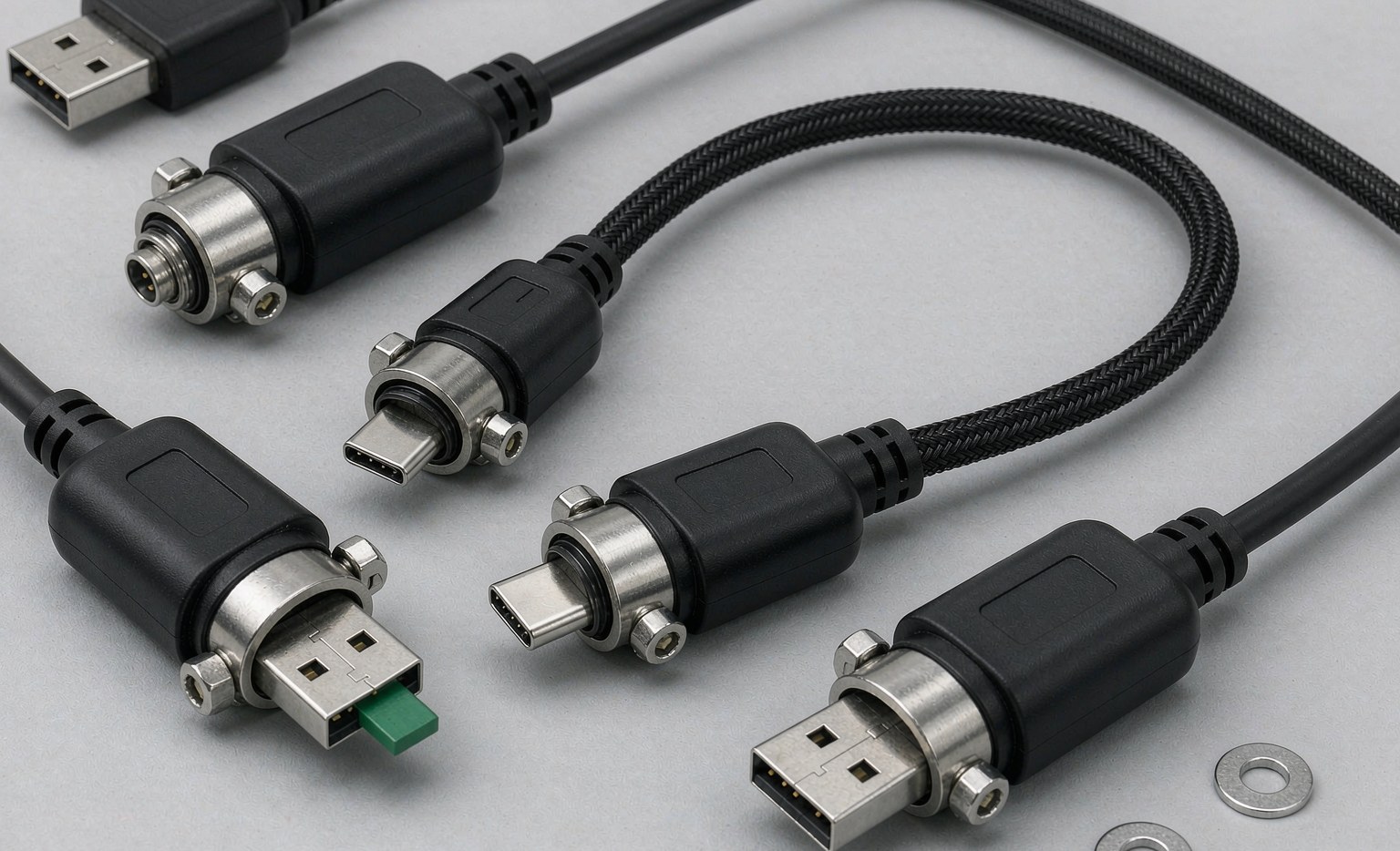
Single-screw designs feature a mounting screw offset to one side of the Type-C plug. This configuration is widely used on compact industrial cameras and mobile testing equipment where space is restricted. It provides robust mechanical security while maintaining a slim physical profile.
Dual Screw Locking Connectors
Dual-screw configurations place locking screws on both sides of the connector housing (typically spaced 15mm apart, conforming to USB-IF specifications). This design distributes mechanical tension evenly across both sides of the plug, making it the preferred option for high-vibration applications, heavy robotic arms, and deep-sea or aerospace sensor networks. To achieve a similar level of stability on legacy host equipment, engineers often deploy a rugged USB 3.0 Double Screw Locking Female Cable to extend and lock connections within control cabinets.
Industrial vs. Consumer USB Cable Connection Performance Comparison
The following technical data table highlights the performance differences between consumer-grade cabling and industrial-grade screw locking solutions under dynamic factory floor conditions:
| Performance Parameter | Consumer USB-C Cable | Industrial Screw Locking USB-C |
|---|---|---|
| Mating Cycle Life | ~10,000 cycles (contacts degrade significantly) | >50,000 cycles (using heavy gold-plated contacts) |
| Max Retention Force | 5N to 20N (friction only) | >120N (with dual screws locked) |
| Continuous Vibrational Tolerance | Poor (disconnects under 1G load) | Excellent (certified for up to 10G loads) |
| Contact Resistance Over Time | Increases to >100mΩ (causes charging/data faults) | Maintains <30mΩ (stable power & signal) |
| Jacket Material Options | Standard PVC / TPE thin braid | Heavy PUR / TPE (oil, chemical, & UV resistant) |
For older systems using standard USB interfaces on the camera end, upgrading to a high-retention USB 3.0 A to B Screw Lock Cable ensures that even older imaging hardware can operate with the same reliability as modern Type-C devices.
How to Qualify a Professional Custom USB Type-C Cable Manufacturer
Manufacturing locking cables for industrial use requires highly precise tooling and strict quality control. If the locking screw pitch is misaligned by even 0.1mm, the screws will cross-thread, damaging either the cable or the camera chassis. When evaluating a potential usb type c cable manufacturer, look for these advanced capabilities:
1. Precision Overmolding and Hardness Ratings
The connector mold must be made from high-rigidity plastics (like glass-reinforced nylon or hard PVC) to prevent the integrated steel nuts from pulling out when the screws are tightened. Ask your supplier about the durometer hardness rating of their overmold compounds.
2. High-Frequency Signal Testing (TDR & Eye Diagram)
Adding metal screws and specialized shielding to a Type-C connector alters the electromagnetic properties around the plug. A professional type c cable connection fabricator must run every production batch through a Time-Domain Reflectometer (TDR) to generate eye diagrams. This step verifies that impedance remains at 90Ω (±5Ω) and that the cable meets full USB 3.2 Gen 2 (10Gbps) specifications under physical stress.
3. Complete Environmental Stress Testing
Quality manufacturers subject prototypes to environmental chambers (testing across temperatures ranging from -45°C to +105°C), salt spray corrosion tests, and continuous flex testing to guarantee that metal components and shields will not degrade under heavy industrial exposure.
Securing Your Industrial Data Pipeline
As manufacturing lines become more automated and machine vision speeds increase, even minor connection dropouts can lead to major operational losses. Upgrading from simple consumer-grade friction-fit cords to ruggedized screw-locking USB-C cables represents a cost-effective way to protect your signal pipeline and keep your machines running smoothly.
At LUNG KAY, we specialize in manufacturing precision, high-vibration connectors and cable assemblies. From custom overmolded single/dual screw locking Type-C cables to high-speed legacy USB assemblies, we ensure your industrial systems stay securely connected. You can explore our robust product solutions on our Product Page, read about our manufacturing facility on our About Us page, or contact our engineering team directly to obtain custom drawings and quotes for your next OEM/ODM integration project.
Frequently Asked Questions
Q: What is the USB-IF standard screw thread for locking Type-C cables?
A: The standard thread specified by the USB-IF is M2 (with a metric thread pitch of 0.4mm). Some specialized legacy industrial cameras use custom threads, which is why it is important to work with an experienced custom usb cable manufacturer who can supply alternative hardware options (like 2-56 or 4-40 UNC threads) when required.
Q: Can a locking USB-C cable be plugged into a standard, non-locking USB-C port?
A: Yes. The physical dimensions of the Type-C mating plug remain exactly the same. When plugged into a non-locking host port, the screws simply remain inactive, and the connection relies on the built-in friction leaves. This makes locking cables highly versatile for mixed fleets of equipment.
Q: How do you prevent locking screws from loosening over time due to machine vibration?
A: We design our locking assemblies with knurled thumb screws that can be hand-tightened or securely snugged down with a screwdriver. For environments with extreme vibration, we can supply screws with pre-applied thread-locking patches or integrated spring washers to prevent back-out.