Understanding Low Latency Data Center Cables
Low latency data center cables are designed to minimize the delay in data transmission, ensuring that information is transferred quickly and efficiently. These cables are crucial in modern computing, where high-speed data transfer is essential for applications such as cloud computing, big data analytics, and artificial intelligence. The importance of low latency data center cables cannot be overstated, as they directly impact the performance and efficiency of data center operations. For more information on the importance of high-speed data cables, see The Critical Role of High-Speed Data Cables in a Connected World.
- Reduced signal attenuation: Low latency cables are designed to minimize signal loss, ensuring that data is transmitted clearly and efficiently. For instance, using cables with high-quality insulation and shielding can reduce signal attenuation. Techniques such as using foil shielding or braided shielding can also help to minimize electromagnetic interference (EMI). To further reduce signal attenuation, it’s essential to use cables with the correct gauge and to minimize the number of connectors and splices.
- Improved signal integrity: These cables are constructed to maintain signal quality, reducing the risk of data corruption or loss. Techniques such as using twisted-pair cables or fiber optic cables can improve signal integrity. Twisted-pair cables, for example, can help to reduce crosstalk and EMI. Additionally, using cables with high-quality connectors and terminations can also help to maintain signal integrity.
- Enhanced data transfer rates: By minimizing latency, low latency data center cables enable faster data transfer rates, improving overall system performance. For example, using cables that support higher bandwidths, such as 400 Gbps or 800 Gbps, can significantly enhance data transfer rates. To achieve these higher data transfer rates, it’s essential to use cables that are designed for high-speed data transfer and to ensure that the equipment and infrastructure are configured to support these speeds.
| Cable Type | Latency | Data Transfer Rate | Typical Applications |
|---|---|---|---|
| Copper | Low | Up to 100 Gbps | Short-distance connections, such as within a rack or between adjacent racks. Copper cables are often used for connections between servers and switches. However, copper cables are limited by their distance and are susceptible to EMI, making them less suitable for long-distance connections. |
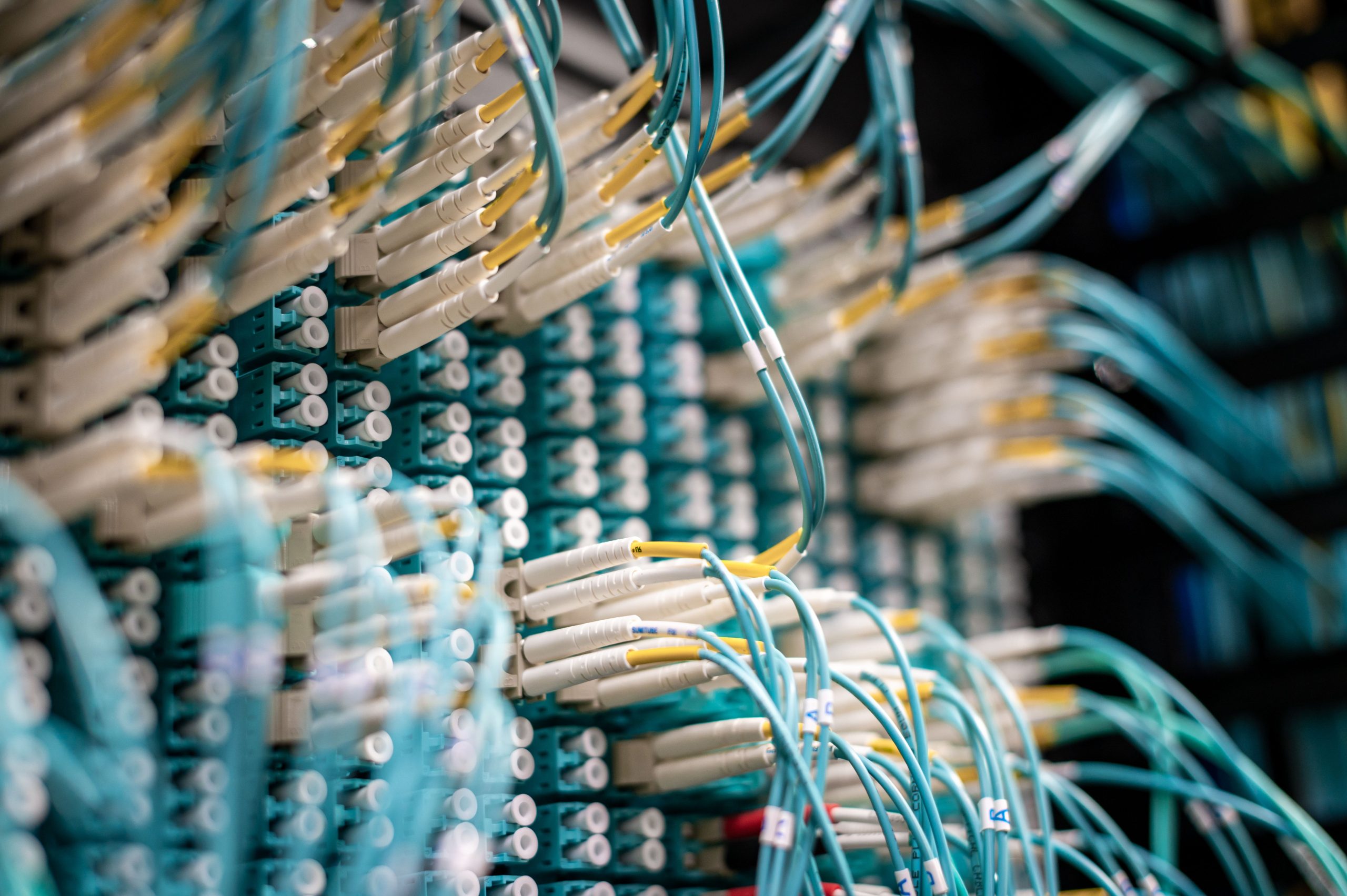
| Fiber Optic | Very Low | Up to 400 Gbps or higher | Long-distance connections, such as between data centers or across campuses. Fiber optic cables are often used for connections between data centers, or for long-distance connections within a data center. Fiber optic cables offer several benefits, including lower latency, higher bandwidth, and greater reliability. For more information on high-performance cable interconnects for data centers, see High-Performance Cable Interconnects for Data Centers: Enhancing Efficiency and Reliability. |
| Direct Attach Cables (DACs) | Low | Up to 100 Gbps | Short-distance connections, such as within a rack or between adjacent racks. DACs are often used for connections between servers and switches. DACs are a cost-effective solution for short-distance connections and offer low latency and high-speed data transfer. |
| Active Optical Cables (AOCs) | Very Low | Up to 400 Gbps or higher | Long-distance connections, such as between data centers or across campuses. AOCs are often used for connections between data centers, or for long-distance connections within a data center. AOCs offer several benefits, including lower latency, higher bandwidth, and greater reliability. |
Key Considerations for Choosing Low Latency Data Center Cables
When selecting low latency data center cables, several factors should be considered:
- Cable type: Copper or fiber optic cables have different latency and data transfer rate characteristics. The choice of cable type depends on the specific application and the distance of the connection. For example, copper cables are suitable for short-distance connections, while fiber optic cables are better suited for long-distance connections.
- Cable length: Longer cables can introduce more latency, so it’s essential to use the shortest cable necessary. Cable management techniques, such as using cable ties and labels, can help to minimize cable length. Additionally, using cables with the correct gauge can also help to reduce latency.
- Cable quality: High-quality cables with good insulation and shielding can minimize signal attenuation and improve signal integrity. Look for cables that meet or exceed industry standards, such as TIA/EIA or ISO/IEC. It’s also essential to consider the cable’s construction, including the type of insulation and shielding used.
- Connector type: The type of connector used can affect signal quality and latency. For example, using connectors with low insertion loss and high return loss can help to minimize signal attenuation. It’s also essential to ensure that the connectors are compatible with the equipment and infrastructure.
- Compatibility: Ensure that the cables are compatible with the equipment and infrastructure in your data center. This includes ensuring that the cables meet the required standards and are compatible with the connectors and interfaces used in your equipment.
Benefits of Low Latency Data Center Cables
The benefits of low latency data center cables are numerous. They include:
- Improved application performance: By minimizing latency, low latency data center cables enable applications to perform faster and more efficiently. For example, in financial trading, low latency can mean the difference between profit and loss. In cloud gaming, low latency is critical for a seamless gaming experience.
- Enhanced user experience: Faster data transfer rates and reduced latency result in a better user experience. For instance, in video streaming, low latency can reduce buffering and improve video quality.
- Increased data center efficiency: Low latency data center cables help to optimize data center operations, reducing the risk of bottlenecks and improving overall efficiency. By minimizing latency, data centers can process more data and improve their overall performance.
- Support for emerging technologies: Low latency data center cables are essential for supporting emerging technologies such as 5G, artificial intelligence, and the Internet of Things (IoT). These technologies require high-speed data transfer and low latency to function effectively.
- Reduced power consumption: Low latency data center cables can help to reduce power consumption by minimizing the need for signal amplification and regeneration. This can lead to cost savings and a reduced carbon footprint.
Case Study: Implementing Low Latency Data Center Cables in a Financial Trading Platform
A financial trading platform implemented low latency data center cables to improve the performance of their trading applications. By reducing latency by 50%, they were able to execute trades faster and improve their overall competitiveness.
The implementation involved replacing existing copper cables with low latency fiber optic cables, and upgrading the connectors and interfaces to support higher bandwidths. The result was a significant improvement in application performance and a reduction in latency. For more information on reliable cable assemblies for data centers, see Reliable Cable Assemblies for Data Centers: Ensuring High-Speed Connectivity and Performance.
The financial trading platform also implemented cable management techniques, such as using cable ties and labels, to minimize cable length and reduce latency. They also used high-quality cables with good insulation and shielding to minimize signal attenuation and improve signal integrity.
Best Practices for Implementing Low Latency Data Center Cables
To get the most out of low latency data center cables, it’s essential to follow best practices for implementation. These include:
- Proper cable management: Proper cable management is critical to ensuring that low latency data center cables perform optimally. This includes using cable ties, labels, and routing cables in a way that minimizes bends and kinks. Cable management techniques can help to reduce latency and improve signal integrity.
- Regular cable testing and maintenance: Regular testing and maintenance are necessary to ensure that low latency data center cables continue to perform optimally over time. This includes testing for signal attenuation, signal integrity, and data transfer rates. Regular maintenance can help to identify and resolve any issues before they become major problems.
- Using high-quality cables: Using high-quality cables is essential to achieving low latency and optimal performance. This includes selecting cables that are designed for low latency and high-speed data transfer. High-quality cables can help to minimize signal attenuation and improve signal integrity.
- Planning for future upgrades: When implementing low latency data center cables, it’s essential to plan for future upgrades and scalability. This includes selecting cables that can support higher bandwidths and emerging technologies. Planning for future upgrades can help to ensure that the data center remains competitive and can support new applications and services.
- Monitoring and troubleshooting: Regular monitoring and troubleshooting are necessary to identify and resolve any issues that may arise. This includes monitoring for signal attenuation, signal integrity, and data transfer rates, and troubleshooting any issues that may arise. Monitoring and troubleshooting can help to ensure that the data center operates smoothly and efficiently.
Frequently Asked Questions (FAQs) about Low Latency Data Center Cables
Here are some common questions and answers about low latency data center cables:
- Q: What is the difference between low latency and high-speed data transfer?
- A: Low latency refers to the delay in data transmission, while high-speed data transfer refers to the rate at which data is transferred. While related, they are not the same thing. Low latency is critical for applications that require real-time data transfer, while high-speed data transfer is essential for applications that require large amounts of data to be transferred quickly.
- Q: Can I use existing cables for low latency data center applications?
- A: It depends on the type and quality of the existing cables. In general, it’s recommended to use cables that are specifically designed for low latency data center applications. Existing cables may not meet the required standards or may not be compatible with the equipment and infrastructure.
- Q: How do I measure latency in my data center?
- A: Latency can be measured using specialized testing equipment or software tools. It’s essential to measure latency regularly to ensure that your data center is performing optimally. Measuring latency can help to identify any issues and ensure that the data center is operating within the required parameters.
- Q: What are the benefits of using fiber optic cables in my data center?
- A: Fiber optic cables offer several benefits, including lower latency, higher bandwidth, and greater reliability. They are also less susceptible to electromagnetic interference (EMI) and can support longer distances. Fiber optic cables are ideal for long-distance connections and can help to future-proof the data center.
- Q: How can I minimize latency in my data center?
- A: To minimize latency, use low latency data center cables, optimize cable management, and ensure that your equipment and infrastructure are configured for optimal performance. Additionally, regular testing and maintenance can help to identify and resolve any issues that may arise.
- Q: What are the typical applications for low latency data center cables?
- A: Low latency data center cables are typically used in applications that require high-speed data transfer and low latency, such as financial trading, cloud gaming, and video streaming. They are also used in emerging technologies such as 5G, artificial intelligence, and the Internet of Things (IoT).