In our digitally-driven era, data is the lifeblood of industries, economies, and daily life. From sprawling data centers managing global cloud services to the intricate electronics in medical devices and the simple act of charging a smartphone, the seamless transfer of data is fundamental. This transfer is not magic; it relies on a sophisticated and often overlooked component: the high-speed data cable. These cables are the physical highways of the digital world, and their performance, reliability, and specifications directly impact the efficiency and capabilities of the technology they connect.
The demand for faster, more reliable, and more versatile connections has never been greater. We live in an age of 8K video streaming, artificial intelligence, machine learning, and the Internet of Things (IoT), all of which generate and process unprecedented volumes of data. This explosion in data requires a corresponding evolution in connectivity solutions. A cable that was sufficient for transferring documents a decade ago is now a bottleneck for modern workflows. Consequently, understanding the landscape of high-speed data cables—from enterprise-grade solutions like MINI SAS to the universally adopted Type C-Cable—is crucial for engineers, IT professionals, and even discerning consumers.
This comprehensive guide will explore the key technologies shaping modern data transfer. We will delve into the specifications, applications, and advantages of various cable types, including:
- Enterprise Solutions: Exploring the world of Mini SAS, SlimSAS, and OCUlink cables that power servers and storage networks.
- Consumer and Prosumer Standards: A deep dive into the versatile USB Type-C, the powerful U4 (USB4), and the foundational USB 3.0 and USB 2.0 standards.
- Specialized Industrial Cables: Understanding the unique requirements of industrial automation, medical devices, and other demanding environments.
Furthermore, we will discuss the importance of selecting a high-quality manufacturing partner. A cable is only as good as its design, materials, and production process. With over a decade of innovation, Longkai Electronics exemplifies the expertise required to deliver certified, reliable connectivity solutions. By the end of this article, you will have a clear understanding of the critical role these cables play and how to select the right one for any application.
Understanding the Foundations: From USB 2.0 to USB 3.0
Before we explore the cutting-edge of data transfer, it is essential to understand the journey that brought us here. The Universal Serial Bus (USB) standard is arguably the most successful interface in the history of computing. Its evolution reflects the growing demands for speed and functionality over the past two decades.

The Era of USB 2.0: Establishing a Universal Standard
Introduced in the year 2000, the USB2.0 Cable was a revolutionary step forward from its predecessor, USB 1.1. It offered a maximum transfer speed of 480 Megabits per second (Mbps), a massive improvement that opened the door for a new generation of peripherals like external hard drives, webcams, and printers that required more bandwidth.
Key characteristics of USB 2.0 include:
- Speed: Officially termed “High-Speed,” 480 Mbps was sufficient for most consumer applications for nearly a decade.
- Connectors: It solidified the use of the ubiquitous USB A cable for hosts (like computers) and the USB B cable or Mini USB cable for devices. The Micro USB cable later became the standard for mobile phones and small electronics.
- Power Delivery: USB 2.0 could deliver up to 2.5 Watts of power (5V at 500mA), which was enough to charge small devices and power simple peripherals without a separate power adapter.
- Ubiquity: Its simplicity, low cost, and royalty-free standard led to its adoption in billions of devices worldwide, making it a truly universal connector.
While 480 Mbps is considered slow by today’s standards, USB 2.0 remains relevant for many low-bandwidth applications, such as connecting keyboards, mice, and some audio interfaces. Its legacy is in creating a single, recognizable standard that simplified connectivity for everyone.
The Leap to SuperSpeed: The Introduction of USB 3.0
As file sizes grew with the advent of high-definition video, high-resolution photos, and complex software, the limitations of USB 2.0 became apparent. Transferring large files could take an impractically long time. In response, the USB Implementers Forum (USB-IF) released the USB 3.0 standard in 2008, later rebranded as USB 3.1 Gen 1 and now commonly known as USB 5Gbps.
The USB3.0 Cable represented a quantum leap in performance:
- SuperSpeed Performance: USB 3.0 introduced a new “SuperSpeed” transfer mode, boasting a maximum theoretical speed of 5 Gigabits per second (Gbps)—more than ten times faster than USB 2.0. This reduced the time to transfer a 25GB file from over 10 minutes to just over one minute.
- Advanced Architecture: This speed increase was achieved by adding a new set of data lanes, bringing the total number of wires in a USB 3.0 cable to nine, compared to four in USB 2.0. This allowed for full-duplex (two-way) data communication, meaning data could be sent and received simultaneously.
- Backward Compatibility: To ensure a smooth transition, USB 3.0 ports and connectors (typically colored blue for easy identification) were designed to be backward compatible with USB 2.0 devices. A USB 2.0 device plugged into a USB 3.0 port would simply operate at USB 2.0 speeds.
- Improved Power Delivery: USB 3.0 increased the available power to 4.5 Watts (5V at 900mA), allowing it to power more demanding devices and charge others slightly faster.
The introduction of the usb 3 cable was a critical enabler for external SSDs, high-resolution cameras, and other peripherals that required low-latency, high-bandwidth connections. It set a new benchmark for performance and paved the way for further innovations in the USB standard, including the faster USB 3.2 (10 Gbps and 20 Gbps) and the game-changing Type-C connector.
Mini SAS: The Backbone of Enterprise Data Storage
While USB standards dominate the consumer electronics landscape, the world of enterprise computing, data centers, and high-performance storage systems relies on a different set of technologies designed for maximum throughput, reliability, and scalability. Chief among these is Serial Attached SCSI (SAS), and its high-density connector, the Mini SAS.
What is SAS? A Brief Overview
Serial Attached SCSI (SAS) is a point-to-point serial protocol that moves data to and from computer storage devices such as hard disk drives and tape drives. It is the successor to the older parallel SCSI bus technology. SAS offers several key advantages over its counterpart, Serial ATA (SATA), which is more common in consumer desktops:
- Performance: SAS drives typically offer higher rotational speeds and are designed for 24/7 operation under heavy workloads.
- Reliability: The protocol includes more robust error-checking and recovery features, making it ideal for mission-critical data.
- Scalability: SAS architecture allows for the connection of a vast number of devices using expanders, creating complex storage topologies.
- Dual-Port Functionality: Many SAS drives feature two data ports, allowing for redundant paths to the drive. This creates a high-availability, failover-capable system where if one path fails, the drive remains accessible through the second path.
The Evolution of Mini SAS Connectors
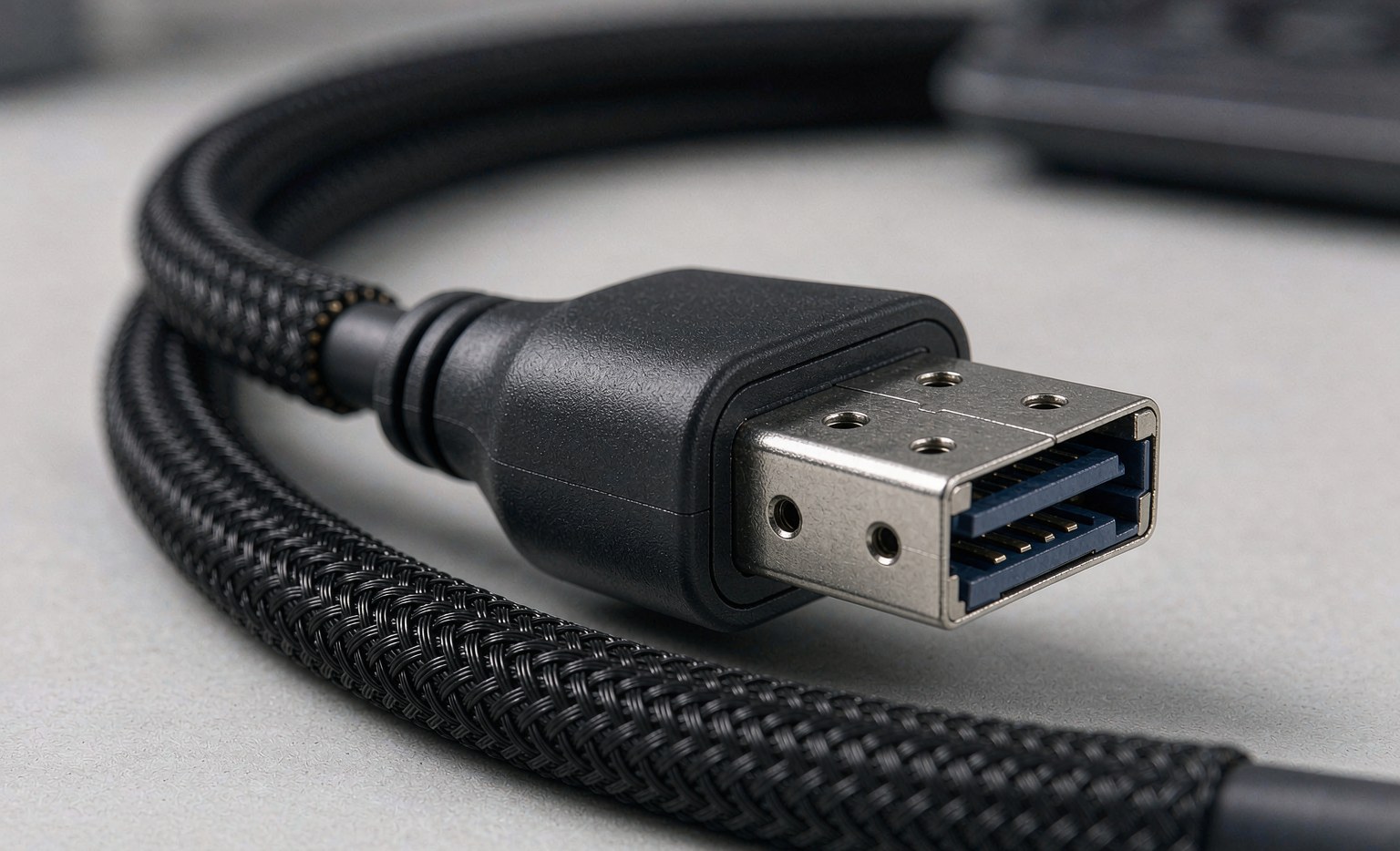
To connect these high-performance drives to a host bus adapter (HBA) or RAID controller, a specialized, high-density cable is required. This is where the MINI SAS cable comes in. A standard Mini SAS cable bundles four SAS lanes into a single connection, allowing for a more compact and efficient cabling solution compared to connecting each drive individually.
The evolution of Mini SAS connectors reflects the increasing demand for data speed:
- SFF-8087 (Internal Mini SAS): This was the primary internal connector for the 6 Gbps SAS 2.0 generation. It features a latching mechanism to ensure a secure connection inside a server chassis or disk enclosure. An SFF-8087 cable typically breaks out into four individual SATA or SAS connectors to link the controller to the drives.
- SFF-8088 (External Mini SAS): This is the external counterpart to the SFF-8087, used for connecting servers to external storage arrays (like a JBOD, or “Just a Bunch of Disks”). It features a more robust, shielded connector with screws for a secure external link, also supporting 4 lanes of 6 Gbps connectivity.
- SFF-8643 (Internal HD Mini SAS): With the arrival of the 12 Gbps SAS 3.0 standard, a new, even higher-density connector was needed. The SFF-8643, or HD Mini SAS, became the new internal standard. Its much smaller footprint allows for more ports on a single controller card, increasing the density of connections possible within a server.
- SFF-8644 (External HD Mini SAS): The external version of the HD Mini SAS connector, SFF-8644 provides a stable and high-bandwidth connection for 12 Gbps SAS between servers and external storage systems.
A high-quality MiniSAS Cable is crucial for maintaining signal integrity, especially at 12 Gbps speeds and over longer distances. Poorly constructed cables can lead to data errors, reduced performance, and system instability—unacceptable risks in an enterprise environment. This is why sourcing from a manufacturer with proven expertise in industrial and communication cables, such as Longkai Electronics, is paramount for system builders and data center operators.
The Next Generation of Internal Connectivity: SlimSAS and OCUlink
As server and storage technologies continue to evolve, pushing the boundaries of speed and density, even the HD Mini SAS connector has started to face limitations. The industry’s relentless drive toward faster protocols like PCIe 4.0, PCIe 5.0, and 24 Gbps SAS 4.0 has necessitated the development of even more compact and higher-performing internal cabling solutions. Two standards leading this charge are SlimSAS and OCUlink.
SlimSAS: Higher Density for Next-Generation Servers
SlimSAS, formally known as SFF-8654, is a connector standard designed to be a direct successor to the HD Mini SAS (SFF-8643). As its name implies, its primary advantage is its significantly smaller form factor. This allows hardware designers to fit more connections into the same physical space, a critical consideration in modern 1U and 2U servers where every millimeter counts.
Key features and benefits of SlimSAS Cable technology include:
- Reduced Size: The SlimSAS connector has a pitch of just 0.6mm, making it much narrower than the 0.75mm pitch of the HD Mini SAS. This enables higher port density on controllers, backplanes, and motherboards.
- High-Speed Support: SlimSAS was designed from the ground up to support modern high-speed protocols. It is the connector of choice for 24 Gbps SAS 4.0 and is also fully capable of handling the stringent signal integrity requirements of PCIe 4.0 (16 GT/s) and the emerging PCIe 5.0 (32 GT/s).
- Versatility: Available in 4-lane (4x) and 8-lane (8x) configurations, SlimSAS can be used for a wide range of applications, from connecting NVMe SSDs to linking high-port-count SAS controllers to storage backplanes.
- Improved Airflow: The lower profile of SlimSAS cables and connectors can contribute to better airflow within a densely packed server chassis, which is crucial for effective cooling and system reliability.
SlimSAS represents a critical piece of the puzzle for building next-generation data center hardware, enabling the full performance of technologies like NVMe over Fabrics (NVMe-oF) and high-speed RAID configurations.
OCUlink: A Direct Pipeline for PCIe
OCUlink, which stands for “Optical-Copper Link,” is another important internal and external connectivity standard, but with a specific focus on extending the PCI Express (PCIe) bus. While SAS is primarily for storage devices, PCIe is the main high-speed interconnect for nearly everything else inside a computer, including graphics cards, network adapters, and increasingly, NVMe SSDs.
The primary purpose of an OCUlink Cable is to provide a standardized way to extend PCIe lanes outside of the motherboard’s physical slots. This opens up new possibilities for system architecture.
Key aspects of OCUlink:
- PCIe Focus: OCUlink is designed to be a pure PCIe transport. An OCUlink 4x cable provides four lanes of PCIe connectivity. With PCIe 4.0, this translates to a theoretical bandwidth of 8 GB/s, and with PCIe 5.0, that doubles to 16 GB/s.
- Small Form Factor: Like SlimSAS, the OCUlink connector is very compact, making it suitable for dense environments and small form-factor devices.
- Enabling NVMe Connectivity: OCUlink is a popular choice for connecting multiple NVMe SSDs. A server motherboard might have one or two OCUlink ports, which can then be connected via a cable to a backplane that supports four or more NVMe drives. This is a much more cable-efficient solution than using individual cables for each drive.
- External PCIe Expansion: While less common than its internal use, OCUlink also has specifications for external connectivity, allowing for the creation of external PCIe enclosures for things like GPUs or specialized processing cards.
Both SlimSAS and OCUlink are essential technologies for unlocking the performance of modern servers. They are not competing standards but rather complementary tools that system designers use to solve different high-speed connectivity challenges. Manufacturing these advanced Internal Cable solutions requires extreme precision and an understanding of high-frequency signal engineering, underscoring the need for a specialized and experienced manufacturer.
USB Type-C and U4 (USB4): Redefining Universal Connectivity
While Mini SAS and its successors dominate the server room, a parallel revolution has been taking place in the consumer and professional electronics space. This revolution is centered around a small, reversible, and incredibly powerful connector: the USB Type-C. Paired with the latest USB4 protocol, it represents the pinnacle of universal connectivity, aiming to be the one cable that can truly do it all.
The USB Type-C Connector: More Than Just a Shape
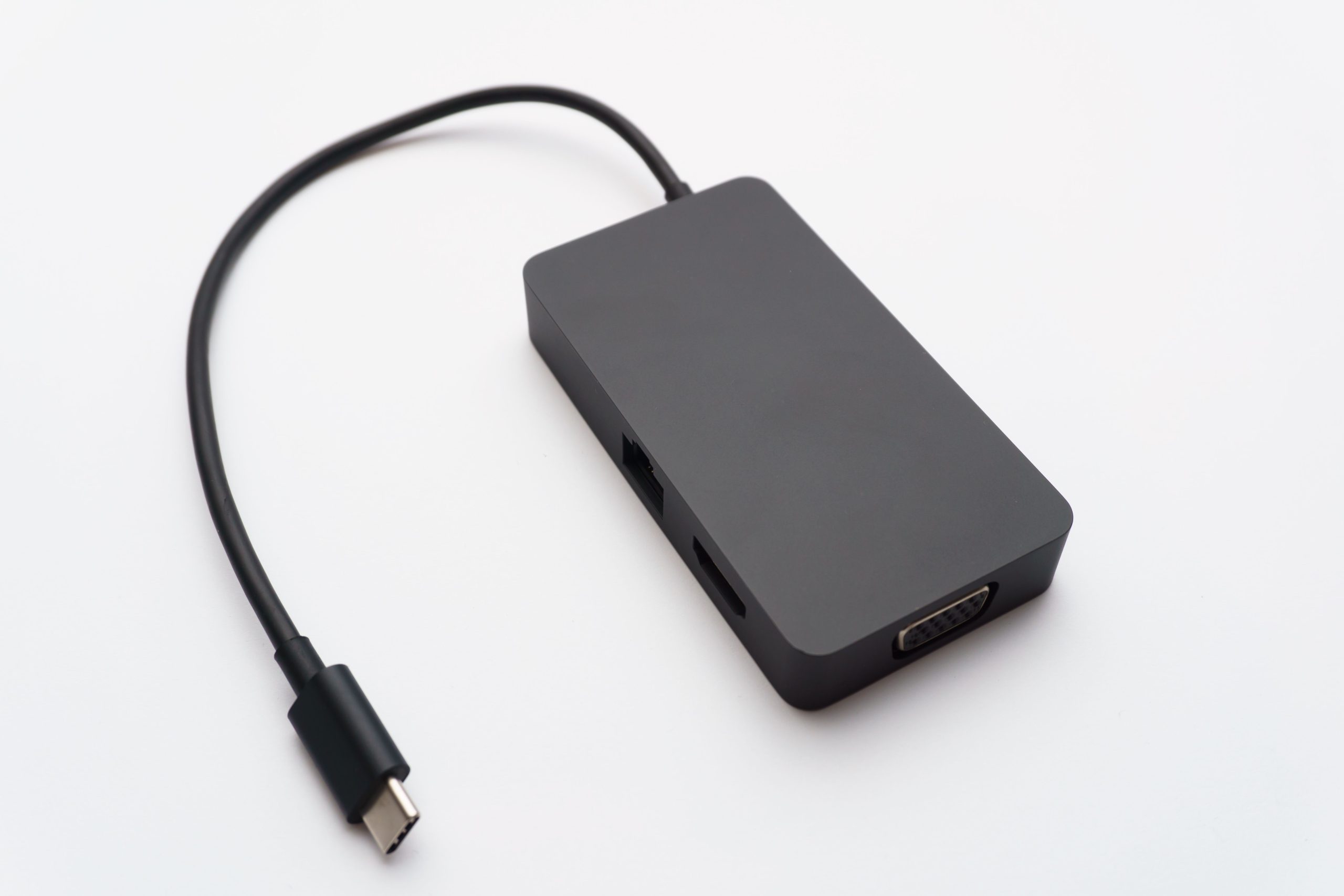
It is crucial to distinguish between the USB Type-C connector and the USB protocols that run over it. The Type C-Cable refers to the physical plug—the small, oval-shaped, reversible connector that eliminates the frustration of trying to plug in a USB-A cable the wrong way. However, the capabilities of that cable depend entirely on the underlying technology.
Key features of the USB Type-C connector itself include:
- Reversibility: The 24-pin symmetrical design allows it to be plugged in either way, a major user-experience improvement.
- Durability: It is rated for at least 10,000 insertion/removal cycles, making it more robust than previous USB connectors.
- Versatility: The pinout is designed to support a wide range of protocols, which is its most powerful feature. A single Type-C port can handle data, video, and power simultaneously.
The Power of Protocols: USB 3.2, DisplayPort, and Power Delivery
The true magic of the USB C Cable lies in its support for “Alternate Modes” and advanced specifications:
- USB Data: A Type-C port can support everything from basic USB 2.0 speeds up to USB 3.2 Gen 2×2, which offers speeds of up to 20 Gbps.
- DisplayPort Alternate Mode: This allows the cable to carry native DisplayPort video signals. A usb-c to usb-c cable can connect a laptop directly to a monitor, delivering up to 8K video and audio with no adapter needed. This has made it a popular alternative to traditional DisplayPort Cable connections.
- USB Power Delivery (PD): This is a game-changer. The USB PD specification allows for bidirectional power negotiation up to 240 Watts (with the latest EPR standard). This means a single usbc cable can power a monitor, which in turn charges the laptop connected to it, all while transferring data.
U4 (USB4): The Unification with Thunderbolt
The latest and most significant development in the USB ecosystem is USB4, often marketed as U4 Cable. Released in 2019, USB4 is a major architectural shift because it is based on the Thunderbolt 3 protocol, which Intel donated to the USB-IF. This move effectively unifies the previously separate worlds of USB and Thunderbolt, bringing high-end performance to a wider, royalty-free standard.
Key features of a certified U4 cable:
- High Speed by Default: U4 mandates a minimum performance of 20 Gbps and enables a maximum of 40 Gbps, the same as Thunderbolt 3 and Thunderbolt 4. This massive bandwidth is enough to drive multiple 4K displays and connect high-speed external storage simultaneously.
- Dynamic Bandwidth Allocation: This is one of its most intelligent features. U4 can dynamically share a single 40 Gbps link between video and data traffic. For example, if a 4K display requires 15 Gbps, the remaining 25 Gbps is instantly available for data transfer to an external SSD. In older standards, the video would have reserved a fixed amount of bandwidth, even when not fully utilized.
- Backward Compatibility: U4 is fully backward compatible with USB 3.2, USB 2.0, and, importantly, Thunderbolt 3. A U4 port will work with a Thunderbolt 3 device, and vice versa.
- Mandatory USB PD: All U4 devices and hosts must support USB Power Delivery, ensuring a consistent experience for charging and powering devices.
The U4 standard, delivered through the versatile Type-C connector, comes closer than ever to the ideal of a single cable for everything—from charging your phone with an iphone charger cable to editing 8K video from an external drive. Just like its enterprise counterparts, the performance of a thunderbolt 4 cable or U4 cable is highly dependent on its manufacturing quality to handle the high frequencies and power loads involved.
Specialized Cabling for Professional and Industrial Applications
Beyond the well-known standards that govern enterprise data centers and consumer electronics, a vast array of specialized cables exists to meet the unique and often harsh demands of professional and industrial environments. These applications—ranging from factory automation and medical imaging to professional broadcasting—require cables that prioritize reliability, durability, and specific performance characteristics over universal compatibility.
Visual Interface Cables: DVI and D-SUB
Before the dominance of DisplayPort and HDMI, digital and analog video connections were handled by different standards that are still found on much legacy and industrial equipment.
- DVI Cable: The Digital Visual Interface was a critical transition technology, offering a significant quality improvement over analog signals. DVI connectors come in several forms: DVI-D (digital only), DVI-A (analog only), and DVI-I (integrated, supporting both). While largely superseded in consumer products, DVI is still common on industrial PCs, medical displays, and projectors where a simple, robust digital link is needed.
- D-USB Cable (VGA): The D-subminiature connector, most famously used for the VGA (Video Graphics Array) standard, was the analog workhorse for computer monitors for decades. Despite its age, the 15-pin VGA connector is incredibly resilient and is still used in industrial settings where electrical interference is a concern and extremely high resolutions are not required. Longkai also offers robust D-SUB connector solutions, including D-SUB Waterproof conn for harsh environments.
Networking and Data Acquisition: LAN and SCSI
Reliable data transmission is the cornerstone of modern industry, whether it’s on a factory floor or in a research lab.
- LAN Cable: Industrial Ethernet requires cables that are far more robust than a typical office ethernet cable. An Industrial network cable often features enhanced shielding to protect against electromagnetic interference (EMI) from motors and machinery, a ruggedized jacket to resist oils and chemicals, and secure locking connectors (like M12 or M16) to prevent disconnection due to vibration.
- SCSI CABLE: Before SAS became the standard, parallel SCSI (Small Computer System Interface) was the dominant interface for high-performance storage and data acquisition systems. Though now a legacy technology, SCSI devices are still operational in many long-lifecycle industrial and scientific systems. Maintaining these systems requires access to high-quality SCSI cables and SCSI connectors.
Cables with Locking Mechanisms
In environments where vibration, movement, or accidental disconnection can lead to critical failure (e.g., medical devices, machine vision systems), a standard friction-fit connector is not sufficient. This has led to the development of cables with integrated locking mechanisms.
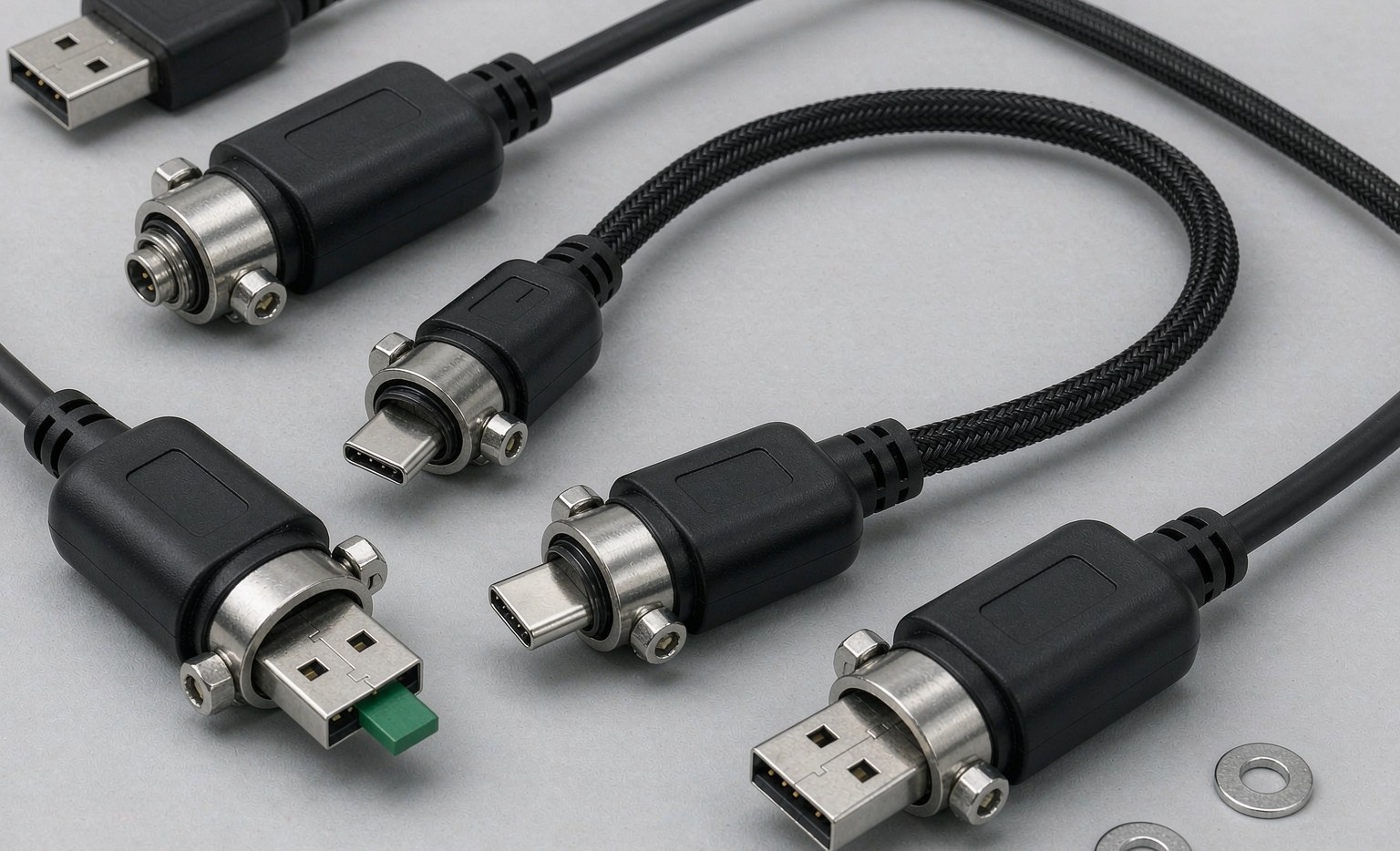
- USB Cable locking: This variant of the standard USB cable includes thumbscrews on the connector housing that securely fasten it to a corresponding port. This is essential for Industrial Camera Cable connections in machine vision systems, where a lost connection during an inspection process could shut down an entire production line.
- TYPE C-3.1 Cable locking: As the versatile Type-C connector makes its way into industrial applications, the need for a secure version has emerged. Locking Type-C cables often feature single or dual screws to provide the same level of security and reliability as their USB-A counterparts, ensuring a stable link for data, video, and power.
These specialized cables highlight the fact that there is no one-size-fits-all solution for connectivity. Manufacturing these products requires a deep understanding of specific industry standards and environmental challenges. A comprehensive provider like Longkai Electronics, which produces everything from consumer Cable Assembly to complex industrial Wire Harness solutions, is invaluable for sourcing these critical components.
Why Your Choice of Cable Manufacturer Matters: The Longkai Electronics Advantage
In a market flooded with options, it can be tempting to view data cables as a commodity, choosing the cheapest available option. However, this perspective overlooks the complex engineering, high-quality materials, and rigorous testing that go into producing a reliable high-speed cable. A poorly made cable is not just an inconvenience; it can be a critical point of failure, leading to data corruption, hardware damage, and costly downtime. This is why partnering with an experienced and reputable manufacturer is a strategic decision.
Since its establishment in 2012, Longkai Electronics has built a reputation as a manufacturing enterprise that integrates research and development, production, and sales to deliver superior connectivity solutions. Choosing Longkai is choosing a partner committed to quality, innovation, and customer success.
A Foundation of Rich Experience and Expertise
With over a decade in the industry, Longkai Electronics brings extensive expertise in the data cable and connector field. This experience is not just about manufacturing; it’s about understanding the nuances of different technologies, from the signal integrity requirements of a SlimSAS Cable to the power delivery protocols of a U4 Cable. This deep knowledge allows us to provide professional solutions tailored to our customers’ unique needs.
Our expertise is reflected in the numbers:
- A Decade of Innovation: Founded in 2012, we have continuously adapted and grown with the rapidly evolving technology landscape.
- Trusted by Industry Leaders: We have established partnerships with over 100 well-known brands, including global giants like LG, Samsung, and BAYER, as well as domestic leaders such as LITEON and CATL. This trust is a testament to our consistent quality and reliability.
Commitment to Certified Quality
Quality is not just a goal; it is a system. Longkai Electronics operates under a comprehensive and scientific quality management system, ensuring that every product leaving our facility meets the highest standards of safety and performance. A cable is more than just wires; it’s an engineered component that must perform flawlessly.
- International Certifications: We have obtained several key quality certifications, including ISO9001 and ISO14001, which demonstrate our commitment to quality processes and environmental management.
- Product Safety and Reliability: Our products are certified by FCC and CE. These certifications guarantee that our cables meet stringent requirements for electromagnetic compatibility, safety, and reliability, giving our customers peace of mind.
Whether it’s a Type-C cable for a consumer device or a high-speed Mini SAS data cable for a data center, each product undergoes rigorous testing to ensure it provides the fast and stable connections necessary to boost work and entertainment efficiency.
An Integrated, Customer-Centric Business Model
At Longkai Electronics, we adhere to the principle of “Quality First, Integrity-Based.” This customer-centric philosophy drives our integrated business model of design, manufacturing, and sales. We are committed to providing the best products and services to our clients around the globe.
- Comprehensive Product Portfolio: Our primary focus is on producing a wide series of our own branded cables, including DisplayPort, D-USB, USB, and industrial high-speed cables. Our diverse catalog, from consumer cables to complex Communication cable solutions, ensures we can meet varied customer demands.
- OEM/ODM Manufacturing: We also welcome OEM/ODM partnerships, leveraging our R&D and production capabilities to bring our clients’ unique designs and specifications to life.
- Global Reach: Our products serve clients across the globe, with a strong presence in North America, East Asia, and beyond. This global footprint demonstrates our ability to meet the standards and logistical needs of a diverse international market.
Choosing Longkai means choosing a partner that offers more than just products—we deliver exceptional solutions that drive success, built on a foundation of innovation, quality, and reliable support.
Conclusion: Connecting the Future with the Right Cable Technology
The journey through the world of high-speed data cables reveals a landscape of remarkable innovation and specialization. From the foundational USB standards that built the connected world we know, to the powerful Mini SAS, SlimSAS, and OCUlink cables that form the invisible backbone of the global data infrastructure, each technology plays a vital role. The parallel evolution of the consumer-facing USB Type-C connector and the powerful U4 (USB4) protocol promises a future of unprecedented simplicity and capability, consolidating data, video, and power into a single, elegant solution.
Throughout this exploration, one principle remains constant: the quality and suitability of a cable are paramount to the performance and reliability of the system it connects. A cutting-edge server is only as fast as the Internal Cable that links its components. The potential of a 40 Gbps U4 port can be squandered by a poorly manufactured, non-compliant cable. In industrial, medical, and automotive electronics, the integrity of a connection is not a matter of convenience but of safety and operational continuity.
This reality underscores the critical importance of choosing the right manufacturing partner. A manufacturer like Longkai Electronics brings more than just production capacity to the table. It brings a decade of experience, a portfolio of internationally recognized certifications, and a proven track record of collaboration with global industry leaders. It offers an integrated approach that spans from research and development to final delivery, ensuring that every product—be it a simple USB2.0 Cable or a complex industrial wire harness—is built to a standard of excellence.
As technology continues to accelerate, the demands placed on our connectivity infrastructure will only intensify. Faster speeds, greater power delivery, and more ruggedized solutions will be required to power the next wave of innovation. By understanding the technologies available and partnering with experts who are committed to quality, we can build a more connected, efficient, and reliable future. The right cable does more than just transfer data; it connects possibilities.