In the complex world of electronics manufacturing, space is often the most valuable commodity. Whether inside a sleek laptop or the moving arm of an industrial robot, bulky wiring can be a liability. This is where the flat cable comes into play.
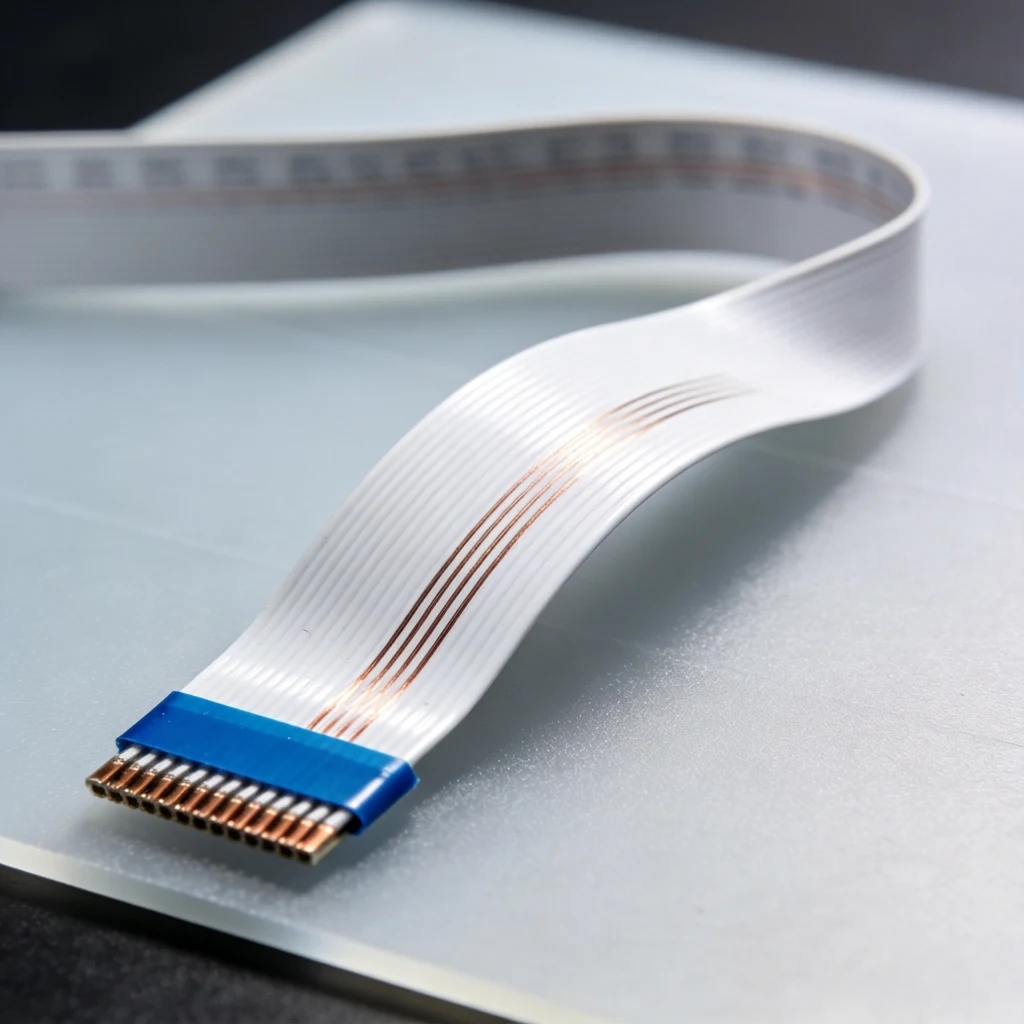
A flat cable, also known as a ribbon cable or planar cable, is an electrical cable where the conducting wires are arranged parallel to each other on the same flat plane. The result is a cable that is wide and thin, resembling a ribbon. This unique geometry is not just for aesthetics; it solves critical engineering challenges regarding heat dissipation, weight, and flexibility.
At Longkai Electronics, established in 2012, we specialize in high-performance connectivity. From robust industrial cables to precise internal wiring, we understand that choosing the right cable architecture is essential for product longevity and efficiency.
Why Use a Flat Cable? The Technical Advantages
Engineers do not choose flat cables simply because they look neat. The flat architecture offers distinct physical and electrical benefits over traditional round cables.
1. Superior Flexibility and Motion
This is the primary reason for using flat cables in automation. Because the conductors are aligned in a single plane, the cable bends easily along its thin axis. This allows it to flex millions of times without damaging the internal wire strands. This is crucial for applications like printers, scanners, and robotic arms.
2. Space and Weight Reduction
Round cables contain fillers and multiple layers of insulation to maintain their shape. Flat cables strip away this excess bulk. They can slide into tight spaces, route under carpets, or fit inside compact medical devices where a round cable would be too thick.
3. Better Heat Dissipation
In a bundle of round cables, heat can get trapped in the center. A flat cable has a higher surface-to-volume ratio. This allows heat to dissipate more efficiently, allowing the cable to carry higher currents without overheating.
Types of Flat Cables: FFC, FPC, and Ribbon
When asking “what is a flat cable,” it is important to distinguish between the different technologies available. While they look similar, they are manufactured differently.
Flexible Flat Cable (FFC)
FFC usually refers to extremely thin, flat copper conductors laminated between two layers of polyester insulation (PET). They are commonly found in high-density electronics like laptops and TVs. They are lightweight and cost-effective.
Flexible Printed Circuit (FPC)
FPC is more complex. It is essentially a printed circuit board that is flexible. Unlike FFC, which is just wires, FPC can have components mounted directly onto it. It is chemically etched rather than laminated. These are often used in smartphones and LCD displays.
Ribbon Cable (IDC)
The “classic” flat cable, often recognizable by its rainbow colors. It consists of multiple insulated wires running parallel. It is designed for mass termination using Insulation Displacement Connectors (IDC). You will often see these connecting internal components in older PCs or industrial control panels. For these applications, we often integrate them with D-Sub connectors or similar interfaces.

Flat Cables in Data Transmission
Flat architecture isn’t just for internal power. It is also used for high-speed data.
Flat Ethernet Cables:
In modern offices, flat LAN cables are becoming popular. Their thin profile allows them to run under carpets or behind baseboards without creating a bulge. However, manufacturing these requires precision to ensure the twisted pairs inside remain effective against interference.
Internal SAS and Data Cables:
Server rooms require efficient airflow. Flat or slim cables, such as our SlimSAS cables, take up less volume than round bundles. This improves airflow within the server chassis, keeping critical drives cool.
Industrial Reliability and Customization
In harsh industrial environments, a flat cable must withstand more than just bending. It must resist vibration, oil, and dust.
At Longkai Electronics, we offer custom cable assembly services. We can customize flat cable solutions with specific shielding requirements or ruggedized jackets. Whether you need a simple jumper cable or a complex wiring harness for a servo motor, our R&D team ensures the design meets your mechanical constraints.
Why Manufacturing Quality Matters
Producing a high-quality flat cable requires precise control over conductor spacing (pitch). If the pitch is off by even a fraction of a millimeter, the cable will not fit into the connector properly, leading to connection failures.
Longkai’s Commitment:
- Precision: We use advanced automated equipment to ensure exact pitch alignment.
- Certification: Our facility is ISO9001 and ISO14001 certified.
- Trust: We supply over 100 global brands, ensuring that our connectivity solutions are tested and reliable.
Conclusion
So, what is a flat cable? It is a streamlined, flexible, and efficient solution for modern electronics. By eliminating the bulk of round cables, it solves space constraints and improves mechanical reliability in moving parts.
Whether you are designing the next generation of consumer electronics or maintaining industrial automation equipment, the right cabling architecture is key. Explore the extensive range of internal and external connectivity solutions at Longkai Electronics to find the perfect fit for your project.