Introduction: The Unspoken Contract of Connectivity
In every electronic device, from the smartphone in our pocket to the sprawling servers that power the internet, there exists an unspoken contract. It is a contract between the user and the manufacturer, a promise that when a connection is made, it will work—flawlessly, instantly, and reliably. For the end-user, this contract is simple. For the engineers and manufacturers who build these devices, however, fulfilling this promise is a monumental and increasingly complex challenge. The weakest link in this chain of trust, the point where this contract is most often broken, is the physical Cable Assembly.
We live in an age of astonishing technological sophistication, yet the fundamental reliability of our most advanced systems often comes down to the integrity of a few strands of copper and a molded piece of plastic. The perception of the cable as a low-cost, low-tech commodity is a dangerous relic of a bygone era. Today, a high-performance data cable is a marvel of material science and precision engineering, a component as critical to system performance as the silicon it connects. The difference between a cable that upholds the contract of connectivity and one that shatters it is not a matter of chance; it is a matter of quality—a deliberate, systematic, and non-negotiable commitment to excellence at every stage of the manufacturing process.
This deep-dive investigation will pull back the curtain on the high-stakes world of precision cable manufacturing. We will move beyond the marketing specifications and explore the tangible, scientific principles that define a truly high-quality assembly. We will journey from the sourcing of raw materials to the final, rigorous testing protocols, revealing the hidden complexities and engineering artistry that go into creating a connection you can trust. This is the story of the Quality Equation—the formula of materials, machinery, and methodology that separates a world-class manufacturer from the rest, and a reliable system from a critical failure.
Part I: The Foundation — The Science of Raw Materials
The journey to a high-quality cable begins long before a single wire is extruded. It starts with a fanatical obsession with the quality of the raw materials. The electrical and physical properties of the final product are determined at this foundational stage. Any compromise here will be magnified at every subsequent step, creating inherent weaknesses that no amount of clever engineering can fully overcome.
The Heart of the Matter: The Purity of Copper
The soul of any data cable is its copper conductor. The primary metric for conductor quality is its purity. The industry standard for high-performance cables is Oxygen-Free Copper (OFC), typically C10100 or C10200, which is refined to remove at least 99.95% of the oxygen content. This process yields significant, tangible benefits:
- Enhanced Conductivity: Oxygen and other impurities within the copper lattice act as obstacles to the flow of electrons. Removing them reduces the electrical resistance of the conductor. This means that for a given wire gauge, an OFC conductor can transmit a signal with less power loss (attenuation) than a lower-grade copper, such as Electrolytic-Tough-Pitch (ETP) copper. This is critical for long cable runs and for maintaining the sharp, clean edges of a high-speed digital signal.
- Corrosion Resistance: Oxygen is a catalyst for oxidation, or corrosion. Over time, a lower-grade copper conductor can develop a layer of oxide at the termination point where it is crimped or soldered to the connector. This oxide layer acts as a resistor, degrading the connection and leading to intermittent failures. The purity of OFC makes it far more resistant to this long-term degradation, ensuring the reliability of the cable over its entire service life.
A manufacturer’s refusal to compromise on the purity of their copper is the first and most telling indicator of their commitment to quality. It is an unseen detail that has a profound impact on the final product’s performance and longevity.
The Science of Insulation: The Dielectric’s Critical Role
Surrounding each copper conductor is a layer of plastic insulation, known as the dielectric. Its role is far more complex than simply preventing wires from touching. In a high-speed cable, the dielectric material and its application are critical to maintaining the cable’s characteristic impedance—a key electrical property for preventing signal reflections.
The material of choice is typically a form of polyethylene (PE) or polypropylene (PP), chosen for their low dielectric constant, which means they store less energy and have a minimal impact on the signal. The manufacturing challenge is to apply this insulation with absolute uniformity. A process called “foam skin” injection is often used, where nitrogen gas is injected into the molten plastic. This creates microscopic, evenly distributed bubbles in the insulation, further lowering the dielectric constant and allowing for a stronger signal. Any inconsistency in the thickness or density of this insulation will create an impedance mismatch, degrading signal integrity. It is a process that requires incredibly precise machinery and constant monitoring.
The Outer Shell: Engineering the Jacket for the Environment
The final material choice is the outer jacket, the cable’s first line of defense. This is not a one-size-fits-all decision. A world-class Cable Assembly is specified with a jacket material that is perfectly matched to its intended application. For an Industrial Cable destined for a factory floor, a Polyurethane (PUR) jacket is chosen for its exceptional resistance to abrasion, oils, and chemicals. For a medical cable that must withstand repeated sterilization, a medical-grade Thermoplastic Elastomer (TPE) might be specified. For a standard data center cable, a Low Smoke Zero Halogen (LSZH) jacket is often required to meet strict fire safety codes. The ability to work with and specify this wide range of materials is a key capability of a versatile and experienced manufacturer.
Part II: The Art of Assembly — Precision in Process
With the highest quality raw materials secured, the focus shifts to the manufacturing process itself. This is where the art of the assembly comes into play, a symphony of high-precision machinery and skilled human oversight. This is where the Quality Equation is solved.
Twisting and Shielding: The Battle Against Noise
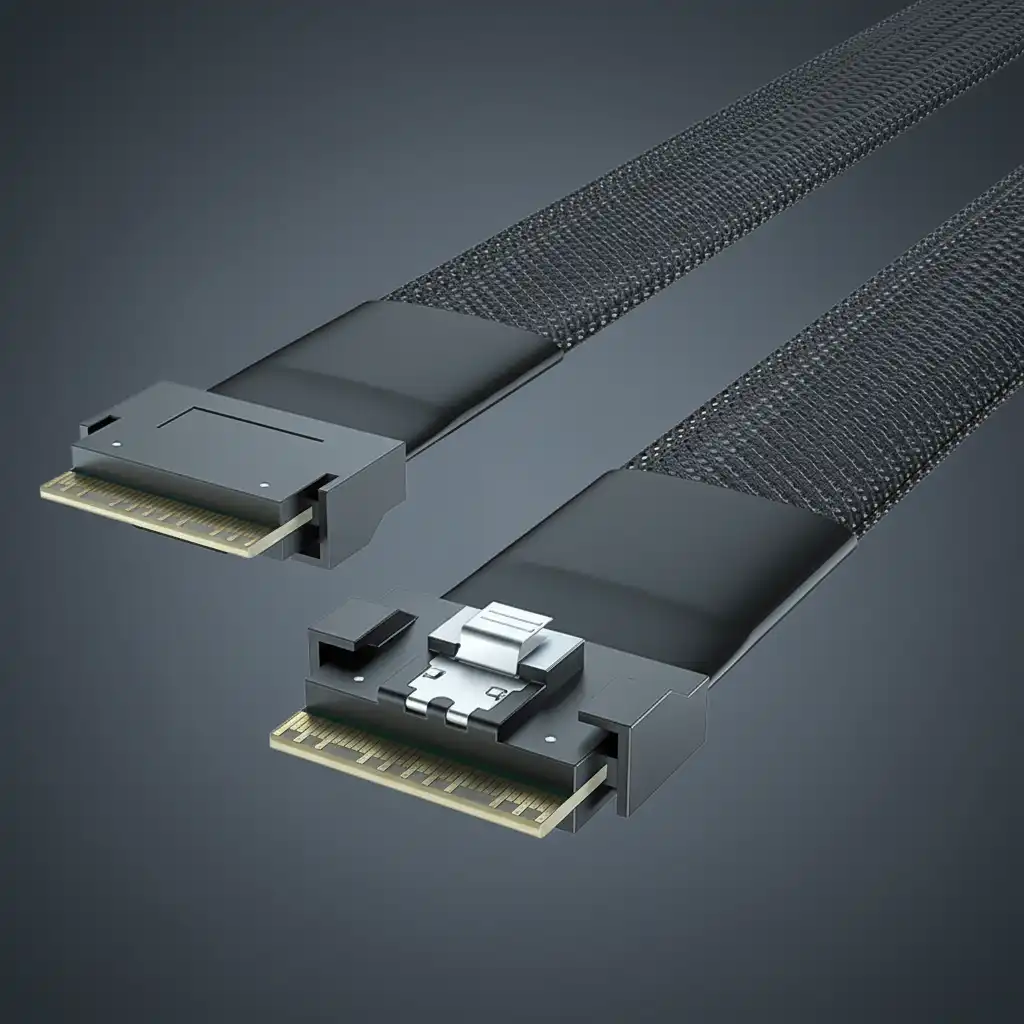
For any high-speed data cable, from a simple ethernet cable to a complex SlimSAS Cable, the first step in the assembly process is twisting the conductors into pairs. This is the fundamental defense against crosstalk. The precision of the machinery that performs this twisting is paramount. The “lay length,” or the distance of one complete twist, must be controlled to within fractions of a millimeter and must be varied between adjacent pairs to further reduce interference.
The next step is the application of shielding, the cable’s defense against external EMI. This is a multi-stage process:
- Foil Application: A thin layer of aluminum-polyester tape is wrapped around the cable core. The machinery must ensure a 100% coverage with a slight overlap to create a continuous, unbroken shield. A drain wire is laid in contact with the foil to provide a path to ground.
- Braiding: The cable then passes through a high-speed braiding machine, where dozens of spools of fine tinned copper wire are woven into a tight mesh around the cable. The density of this braid—typically specified as a percentage of coverage (e.g., 85% or 95%)—is a key quality metric. A denser braid provides better protection against low-frequency noise.
For a mission-critical assembly like a MINI SAS cable, both foil and braid shields are used to provide the most comprehensive protection. The synergy between these two types of shielding is a classic example of how a quality assembly is more than the sum of its parts.
Termination: The Moment of Truth
The most skill-intensive and critical phase of the entire process is termination—the attachment of the connectors to the prepared cable. This is where the majority of cable failures originate. A world-class termination process involves several key stages:
- Automated Stripping and Crimping: To ensure consistency, automated machinery is used to strip the insulation to the precise length and to crimp the pins onto the conductors with a perfectly calibrated amount of force. This creates a “gas-tight” connection that prevents oxidation and ensures a low-resistance electrical bond.
- Soldering and Inspection: For some high-performance connectors, soldering is required. This is often done under microscopes by highly trained technicians. Every solder joint is then inspected, often using automated optical inspection (AOI) systems, to check for flaws like “cold joints” or solder bridges.
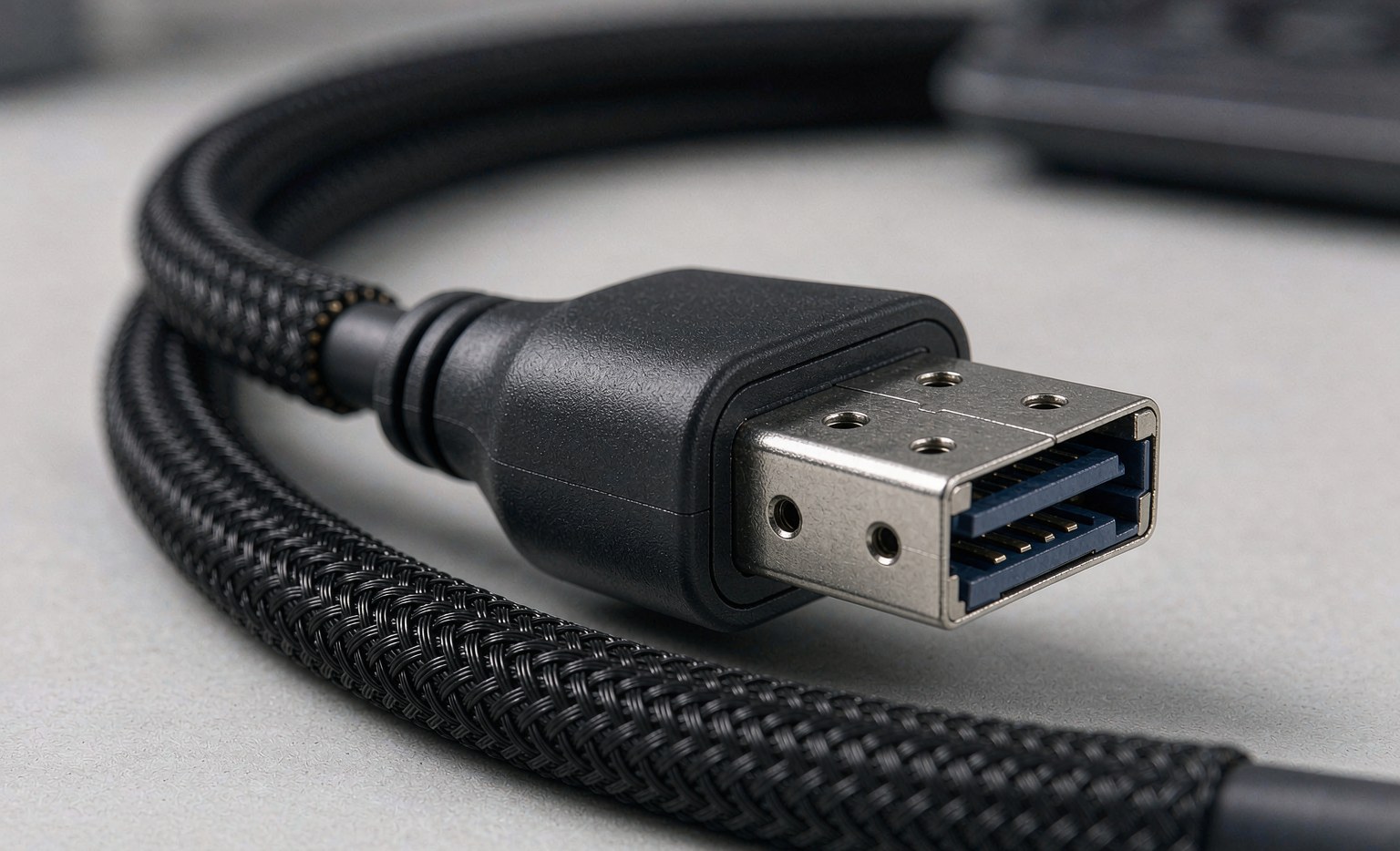
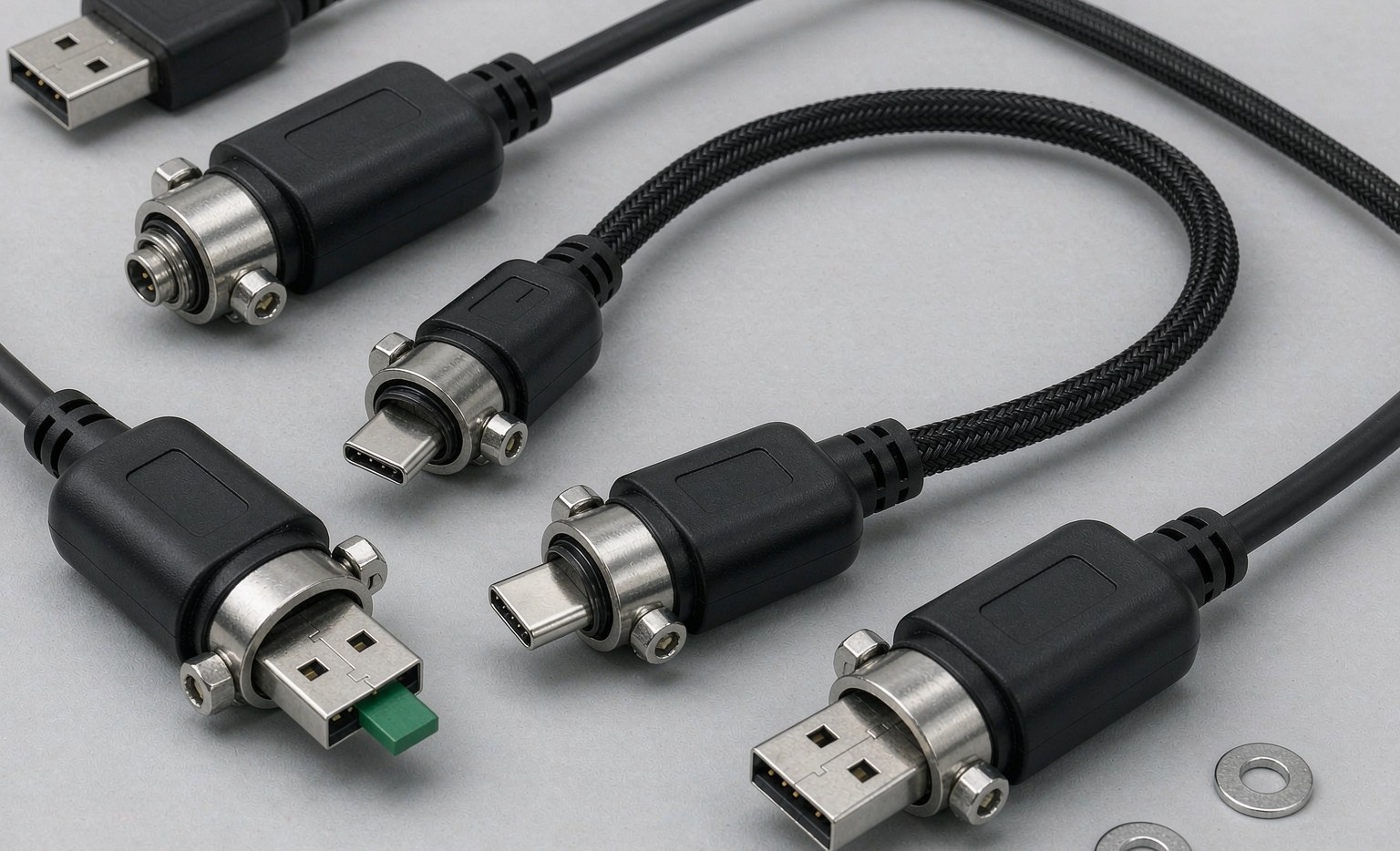
- Overmolding: The final step is to inject molten plastic around the terminated connector and the end of the cable. This process, known as overmolding, serves two critical purposes. It creates a robust strain relief that protects the delicate termination points from the stress of bending and pulling. It also provides an environmental seal, protecting the connection from moisture and dust. The quality of the mold design and the injection process determines the durability and longevity of the final product.
Part III: The Mandate of Verification — A Culture of Rigorous Testing
A commitment to quality is meaningless without a commitment to verification. A world-class manufacturer does not assume quality; they prove it, rigorously and repeatedly, through a multi-layered testing protocol. A finished cable does not leave the factory until it has passed a battery of tests designed to guarantee its performance in the real world.
In-Process Testing
Quality control is not just a final step; it is integrated into the entire manufacturing process. Lasers continuously monitor the diameter of the insulation, and spark testers check for microscopic breaches in the jacket. This in-process testing catches potential defects early, long before they can result in a failed final product.
Final Assembly Testing
Every single cable that comes off the assembly line undergoes a 100% continuity and pinout test. A specialized tester, called a Cirris tester, sends a small electrical signal through every pin to ensure that it is connected to the correct pin at the other end and that there are no shorts between adjacent pins. For a complex Wire Harness with dozens of conductors, this is an essential step to ensure it is wired correctly.
High-Performance Signal Integrity Testing
For high-speed data cables like a U4 Cable or a server Internal Cable, a simple continuity test is not enough. These assemblies must undergo a far more sophisticated battery of tests using advanced equipment like a Vector Network Analyzer (VNA). These tests measure the key parameters of signal integrity:
- Insertion Loss: Measures the amount of signal strength lost as it travels through the cable.
- Return Loss: Measures the amount of signal that is reflected back due to impedance mismatches.
- Crosstalk (NEXT and FEXT): Measures the amount of interference between wire pairs.
The results of these tests are often visualized in an “eye diagram.” A wide-open “eye” indicates a clean, high-quality signal path. A closed, distorted eye indicates a cable with poor signal integrity that will fail at high speeds. This level of testing is the ultimate proof of a cable’s performance and is a non-negotiable requirement for any mission-critical application.

Certification and Compliance
The final layer of verification is third-party certification. A manufacturer’s commitment to the Quality Equation is validated by its adherence to international standards. Certifications like ISO 9001 (for quality management systems), UL (for safety), and CE/FCC (for regulatory compliance) are not just logos on a datasheet. They are a testament to a culture of quality, a promise that the manufacturer has invested in the processes, people, and equipment necessary to deliver a world-class product.
Longkai Electronics was founded in 2012 on these very principles. Our entire operation is built around the Quality Equation. Our integrated R&D and production facilities, our globally recognized certifications, and our long-standing partnerships with over 100 industry leaders are the tangible results of our unwavering commitment to manufacturing excellence.
Conclusion: The Tangible Value of an Intangible Commitment
The journey from a spool of raw copper to a fully certified, high-performance Cable Assembly is a story of hidden complexity and relentless attention to detail. The quality of that final product is a direct reflection of the manufacturer’s commitment to solving the Quality Equation—the intricate formula of superior materials, precision processes, and rigorous verification. While this commitment may seem intangible, its results are not. They are the difference between a stable, high-performance system and one plagued by intermittent failures. They are the difference between a product that inspires confidence and one that causes frustration.
In the final analysis, the unspoken contract of connectivity can only be fulfilled by those who understand that a cable is never “just a cable.” It is a critical piece of infrastructure, an engineered solution, and a promise of reliability. It is a promise that is forged in the crucible of a world-class manufacturing process, and it is the foundation upon which our entire connected world is built.