
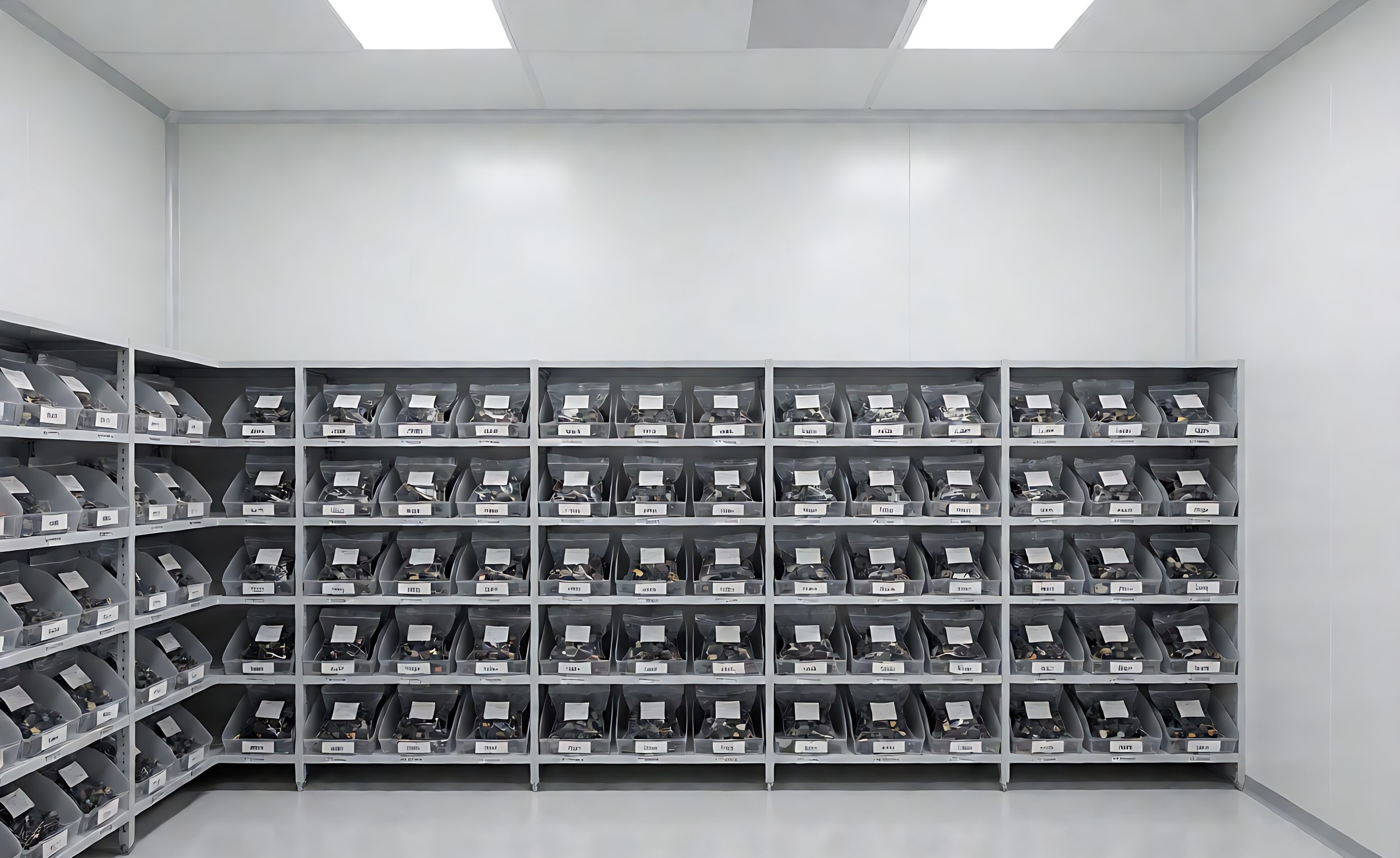
Plated contacts are the part of a cable assembly most sensitive to time, and the sensitivity is invisible until it causes a fault. A gold or tin plated surface that has sat in a humid storeroom for two years will not perform like a fresh one: contact resistance rises, solderability falls, and intermittency appears in service in a way that looks like a manufacturing defect and is not. Blaming the supplier for it is common, unproductive and usually wrong.
Shelf life on plated contacts is a specification and a storage discipline. Both are the buyer’s to manage once goods are received, and neither is expensive.
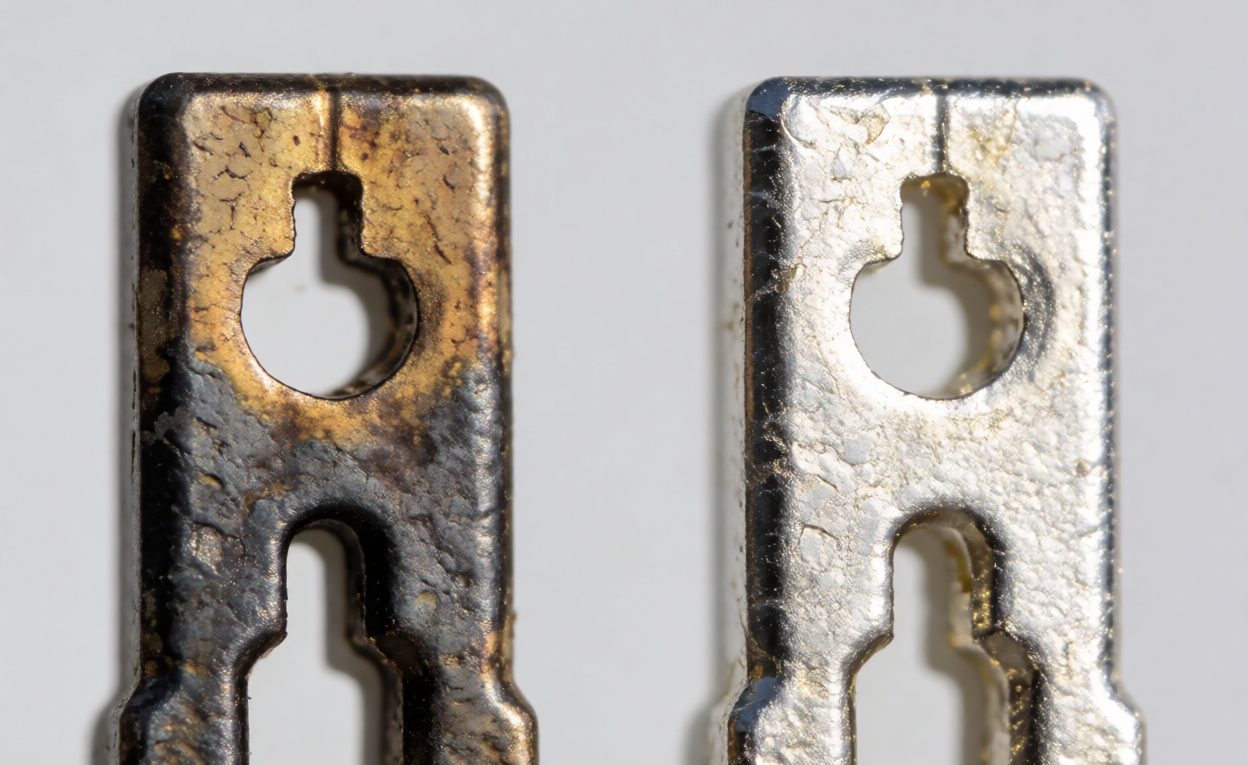
Why Plating Degrades
Three mechanisms, which often act together:
- Oxidation and tarnish of the contact surface, accelerated by humidity and by airborne contaminants including sulphur-bearing atmospheres.
- Diffusion, where the underlying metal migrates through a thin plating layer over time and reaches the surface, changing its properties.
- Contamination from handling, packaging materials or the storage environment, which deposits films that interfere with contact.
The plating type and thickness decide how much of this the part tolerates. A thin gold layer over nickel survives handling and storage far better than a very thin flash layer, and tin plating behaves differently again – it forms an oxide that is harder to displace during mating. This is why specifying plating thickness matters for product that will be stored rather than used immediately.
What Shelf Life to Expect
Shelf life is not a single number; it is a period under stated conditions. A connector stored sealed, dry and cool retains solderability and contact performance for years. The same part stored open in a humid environment can degrade within months. Suppliers state a period and conditions, and the buyer’s storage determines whether that period is achieved.
Ask for the stated shelf life and the conditions it assumes, then compare those conditions with the actual storeroom. Where they differ, either fix the storeroom or shorten the accepted shelf life – pretending the number applies regardless of conditions is how degraded stock reaches a production line.
Storage Practice That Works
Four practices cover most of it:
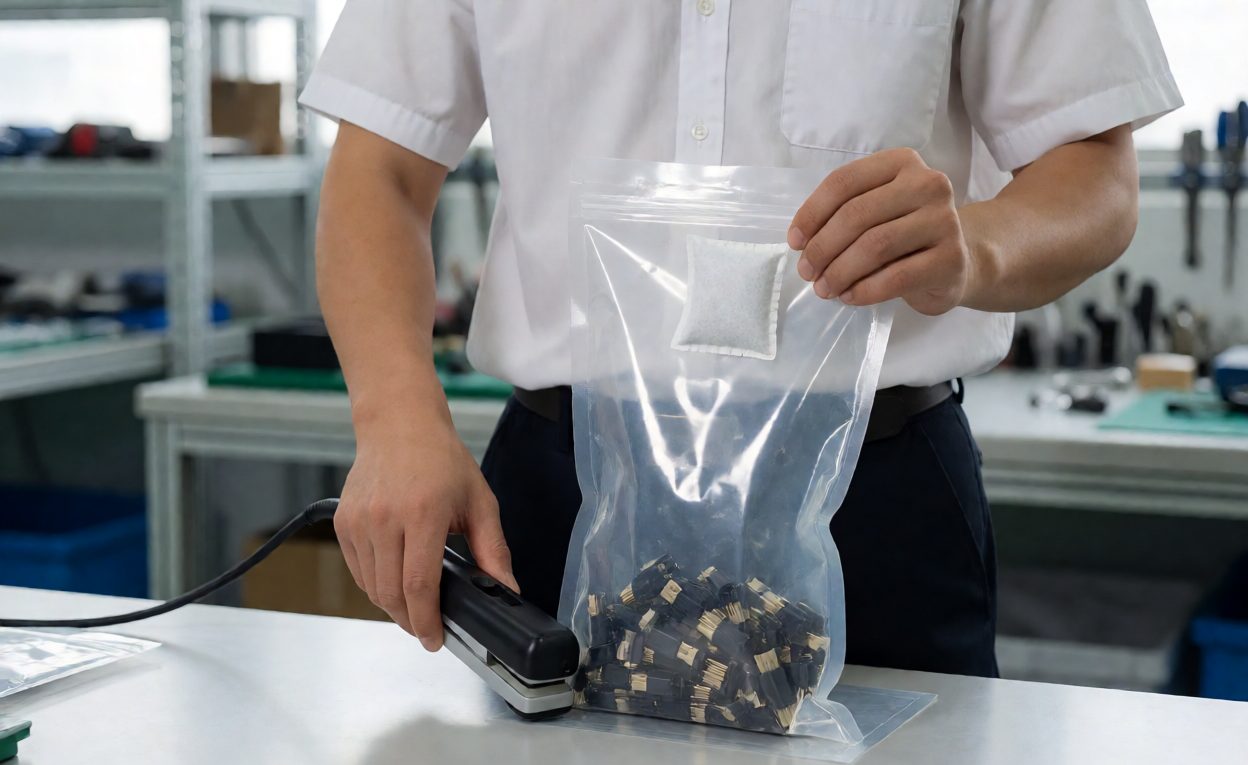
- Keep parts sealed until use, with desiccant and a humidity indicator where the supplier provides them.
- Control the environment: cool and dry, away from direct sun and away from any source of corrosive fumes.
- Rotate by date, oldest first, with date codes visible on the bin rather than only on the bag.
- Inspect before use where stock is old: a visual check for tarnish and, for soldered terminations, a quick solderability check on a sample.
Rotation discipline is the one most often missing, and it is the cheapest to fix. Stock that cannot be dated cannot be rotated, and stock that is not rotated will eventually supply the oldest unit to the most important build.

Technical Background
The interval in question is shelf life, which is defined against stated storage conditions rather than in the abstract. The surface change that matters is corrosion or tarnishing of the contact finish, and the finish itself is applied by electroplating, whose thickness determines how long the underlying metal stays sealed.
What to Specify on the Order
State the plating type and thickness where contact life matters, the maximum age of stock at delivery, the packaging – sealed with desiccant where the part is sensitive – and the date coding format. Then treat the delivery date as the start of the clock and manage stock from there.
Where a programme holds strategic stock, consider a re-verification interval rather than a fixed expiry: test a sample from older stock at a defined point and extend its life on evidence. That is more work than a fixed rule and considerably cheaper than scrapping usable stock on a calendar.
Storage and handling connect to the packing specification in cable packaging and labelling and to contact expectations in connector durability. Failure investigation is covered in failure analysis, qualification practice in second-source qualification, and quality systems in ISO certification in cable manufacturing.
Two Environments That Cause Most Damage
Humid, uncontrolled storage. A storeroom without humidity control, or with stock kept near a doorway or an exterior wall, subjects contacts to repeated condensation cycles. The damage is invisible under normal lighting and shows up as contact resistance during test or, worse, as intermittency in service.
Contaminated atmospheres. Storing connectors near processes that release fumes, or in packaging materials that outgas, deposits films on the contact surface. Sulphur-bearing environments are notably aggressive. Both cases are solved by environment rather than by specification: a dry cabinet costs a fraction of the value of the stock it protects, and it removes an entire class of unexplained field faults.
Finally, treat storage conditions as part of incoming inspection for sensitive parts. A humidity indicator that has changed colour is a finding rather than a decoration, and it should trigger a check before the stock is issued to a build.
ЧАСТО ЗАДАВАЕМЫЕ ВОПРОСЫ
Do cable assemblies have a shelf life?
Plated contacts do, defined under stated storage conditions. Sealed, cool and dry storage extends it; humid open storage shortens it sharply.
Why does plating thickness matter?
Because it determines how long the underlying metal stays sealed and how well the contact resists oxidation and handling wear.
What degrades contacts fastest?
Humidity, corrosive atmospheres and contamination from handling or packaging materials.
Should stock stay sealed?
Yes, until use, with desiccant and a humidity indicator where supplied.
How should stock be rotated?
Oldest first, with date codes visible on the bin so rotation does not depend on opening bags.
Can old stock be re-verified instead of scrapped?
Often yes, by sampling and testing at a defined interval and extending life on evidence.
What should the order specify?
Plating type and thickness, maximum stock age at delivery, packaging and date coding format.