Understanding High-Speed Data Center Cables
High-speed data center cables facilitate fast and reliable data transmission within data centers, supporting cloud computing, big data, and artificial intelligence demands. The increasing need for high-speed data transmission has driven the development of advanced cable technologies. To ensure optimal performance, it is crucial to understand the different types of high-speed data center cables, their applications, and the factors that influence their selection.
- High-speed data center cables come in various types, including copper and fiber optic cables, each with its own strengths and applications. For example, copper cables are suitable for shorter distances, while fiber optic cables are preferred for longer distances due to their higher bandwidth and lower signal attenuation.
- They are designed to meet specific standards for data transmission speed and reliability, such as TIA/EIA and IEEE standards. Compliance with these standards ensures that cables perform optimally and meet the required safety and performance criteria.
- The choice of cable depends on factors like distance, bandwidth, environmental conditions, and scalability. For instance, a data center handling large-scale cloud services may require high-bandwidth fiber optic cables for longer distances, while a smaller data center may opt for copper cables for shorter distances.
- For instance, a data center handling large-scale cloud services may require high-bandwidth fiber optic cables for longer distances. The selection of cables should be based on a thorough assessment of the data center’s specific needs and future scalability requirements.
- When selecting high-speed data center cables, it is essential to consider factors such as cable construction, materials, and certifications. High-quality cables with robust construction and materials can ensure reliable performance and minimize downtime.
Types of High-Speed Data Center Cables
Common types include copper cables, fiber optic cables, QSFP cables, and DAC cables. Each type is suited for different applications and offers unique benefits. Understanding the characteristics and applications of each type is crucial for selecting the right cables for a data center.
- Copper cables are used for shorter distances and are available in categories such as Cat6 and Cat8, supporting speeds up to 25 Gbps. They are suitable for applications like server connectivity and storage.
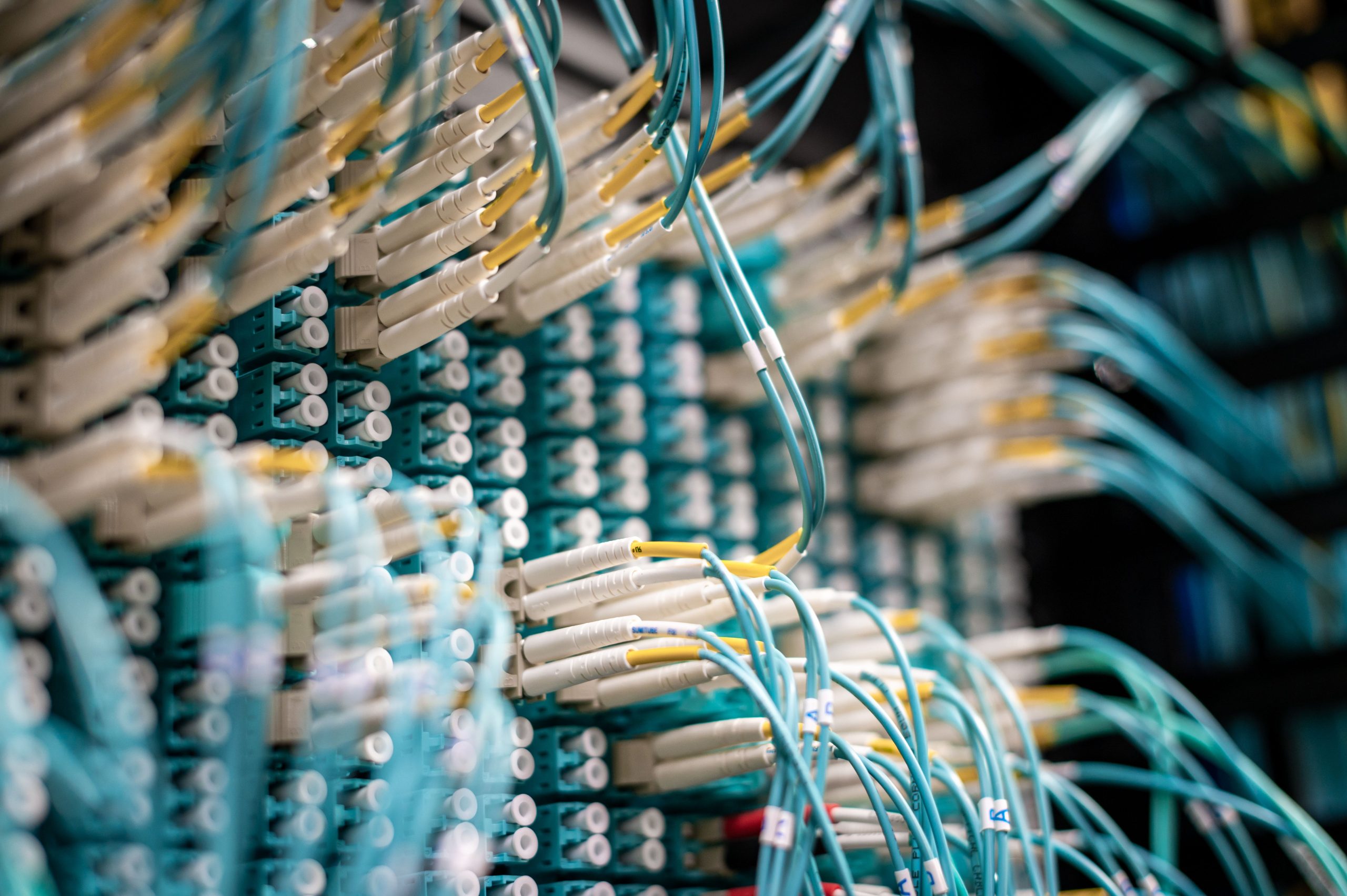
- Fiber optic cables are preferred for longer distances due to higher bandwidth and lower signal attenuation, making them ideal for high-speed data transmission. They are available in single-mode and multimode types, each with its own applications and benefits.
- Specialized cables like Mini SAS SFF-8643 to 4-port SATA High-Speed Data Cable are used for specific applications, such as storage and server connectivity. These cables are designed to meet the specific requirements of these applications.
- QSFP (Quad Small Form-factor Pluggable) cables are used for high-speed interconnects, supporting speeds up to 400 Gbps. They are ideal for applications that require high-bandwidth and low-latency connectivity.
- DAC (Direct Attach Copper) cables offer a cost-effective solution for shorter distances, with speeds up to 100 Gbps. They are suitable for applications like server connectivity and storage.
- Other types of high-speed data center cables include AOC (Active Optical Cables) and breakout cables. AOC cables offer a high-bandwidth and low-latency solution for longer distances, while breakout cables provide a cost-effective solution for connecting multiple devices.
| Cable Type | Bandwidth | Distance | Application |
|---|---|---|---|
| Copper | Up to 25 Gbps | Shorter distances | Server connectivity, storage |
| Fiber Optic | Higher bandwidth | Longer distances | High-speed interconnects, data center interconnects |
| QSFP | Up to 400 Gbps | Short to medium distances | High-speed interconnects, data center interconnects |
| DAC | Up to 100 Gbps | Short distances | Server connectivity, storage |
| AOC | Higher bandwidth | Longer distances | High-speed interconnects, data center interconnects |
| Breakout | Varies | Short to medium distances | Connecting multiple devices |
Best Practices for Selecting High-Speed Data Center Cables
Consider distance, bandwidth, environmental conditions, and scalability when selecting cables. A thorough assessment ensures optimal performance and reliability. By following best practices, data center operators can ensure that their cable infrastructure meets their current and future needs.
- Assess environmental conditions within the data center, such as temperature and humidity, to ensure cable compatibility. Cables should be selected based on their ability to operate within the data center’s environmental conditions.
- Ensure compliance with industry standards for cable performance and safety, such as UL and ETL certifications. Compliance with these standards ensures that cables meet the required safety and performance criteria.
- Evaluate total cost of ownership (TCO) of cables, including factors like cable lifespan, maintenance, and upgrade costs. TCO analysis helps data center operators make informed decisions about their cable infrastructure.
- Consider future scalability and potential upgrades when selecting cables. Cables should be selected based on their ability to support future upgrades and expansions.
- Consult with cable manufacturers and industry experts to determine the best cable solution. Collaboration with experts can help data center operators make informed decisions about their cable infrastructure.
- Develop a comprehensive cable management plan to ensure that cables are properly installed, maintained, and upgraded. A well-planned cable management strategy can help minimize downtime and ensure optimal performance.
Testing and Validation of High-Speed Data Center Cables
Testing and validation ensure performance and reliability. Regular testing identifies potential issues and ensures cables meet performance standards over time. By testing and validating their cables, data center operators can ensure that their cable infrastructure is operating optimally.
- Cable performance testing involves assessing parameters like insertion loss, return loss, and crosstalk. These tests help identify potential issues and ensure that cables meet performance standards.
- Advanced cable testing techniques, such as time-domain reflectometry (TDR) and frequency-domain analysis, optimize cable performance. These techniques provide detailed insights into cable performance and help identify potential issues.
- Regular testing and validation ensure cables continue to meet performance standards as data center environments evolve. Regular testing helps identify potential issues before they become major problems.
- Cable certification programs, like those offered by cable manufacturers, provide assurance of cable quality and performance. Certification programs help ensure that cables meet the required performance and safety standards.
- Develop a comprehensive testing and validation plan to ensure that cables are properly tested and validated. A well-planned testing and validation strategy can help ensure optimal performance and minimize downtime.
Frequently Asked Questions (FAQs)
- Q: What are the different types of high-speed data center cables? A: Copper cables, fiber optic cables, QSFP cables, DAC cables, and specialized cables.
- Q: How do I select the right high-speed data center cables? A: Consider bandwidth, distance, environmental conditions, and scalability.
- Q: What are the benefits of fiber optic cables? A: Higher bandwidth, lower signal attenuation, and longer distance capabilities.
- Q: How often should I test my high-speed data center cables? A: Regular testing is recommended to ensure ongoing performance and reliability.
- Q: Can I use copper cables for longer distances? A: Copper cables are generally limited to shorter distances due to signal attenuation.
- Q: What is the difference between single-mode and multimode fiber optic cables? A: Single-mode cables are designed for longer distances and higher bandwidth, while multimode cables are suitable for shorter distances.
- Q: What is the role of cable certifications in ensuring cable quality? A: Cable certifications, such as UL and ETL, ensure that cables meet the required safety and performance standards.

Case Studies: Successful Implementation of High-Speed Data Center Cables
Several data centers have successfully implemented high-speed data center cables to enhance performance and reliability. These case studies demonstrate the benefits of selecting the right cables for a data center.
- A cloud services provider upgraded to high-speed fiber optic cables, resulting in a 30% increase in data transmission speeds.
- A financial institution implemented QSFP cables for high-speed interconnects, reducing latency by 25%.
- A research institution used DAC cables for server connectivity, achieving a 20% reduction in costs.
- A data center operator implemented a comprehensive cable management plan, resulting in a 15% reduction in downtime.
- A cloud services provider used AOC cables for high-speed interconnects, achieving a 40% increase in bandwidth.
Steps for Implementing High-Speed Data Center Cables
Implementing high-speed data center cables involves several steps:
- Assess current data center infrastructure and identify areas for improvement.
- Determine cable requirements based on bandwidth, distance, and environmental conditions.
- Select the appropriate cable type and vendor.
- Plan and execute cable installation, ensuring compliance with industry standards.
- Test and validate cable performance to ensure optimal operation.
- Develop a comprehensive cable management plan to ensure that cables are properly maintained and upgraded.
- Monitor and analyze cable performance to identify potential issues and optimize cable infrastructure.
Conclusion
High-speed data center cables play a critical role in enhancing performance and reliability within data centers. By understanding the different types of cables, best practices for selection, and testing and validation procedures, data center operators can ensure optimal operation and future scalability. By following the steps outlined in this article, data center operators can implement high-speed data center cables that meet their current and future needs.