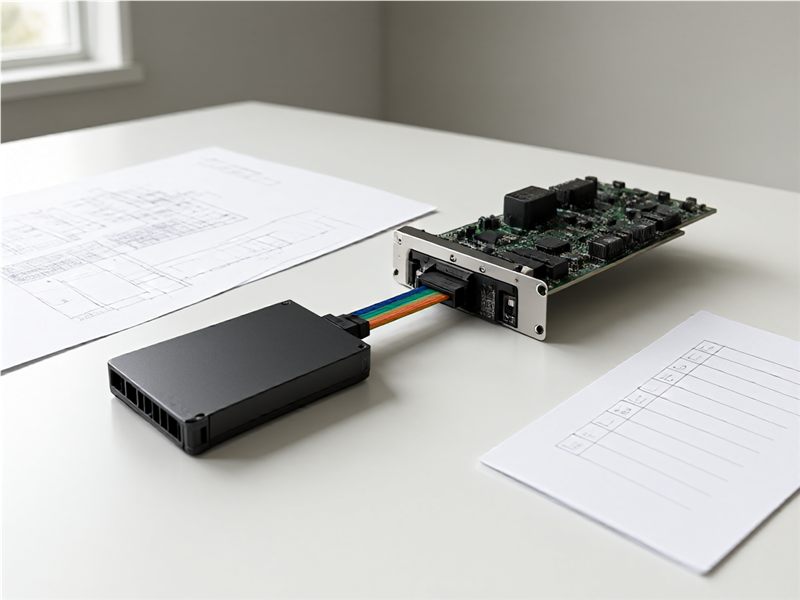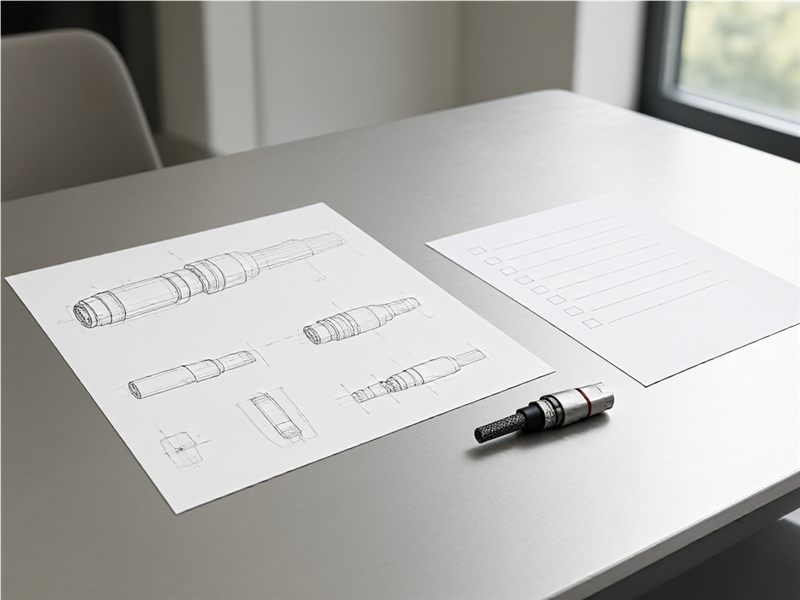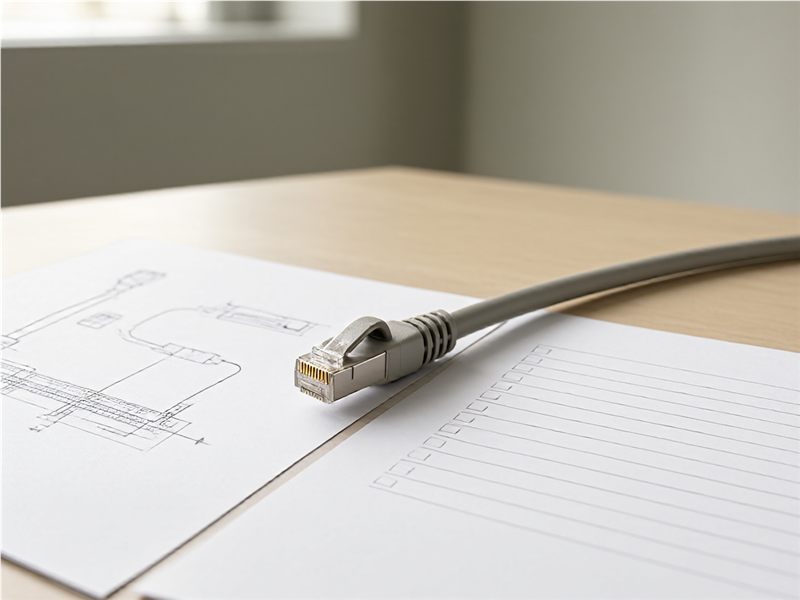
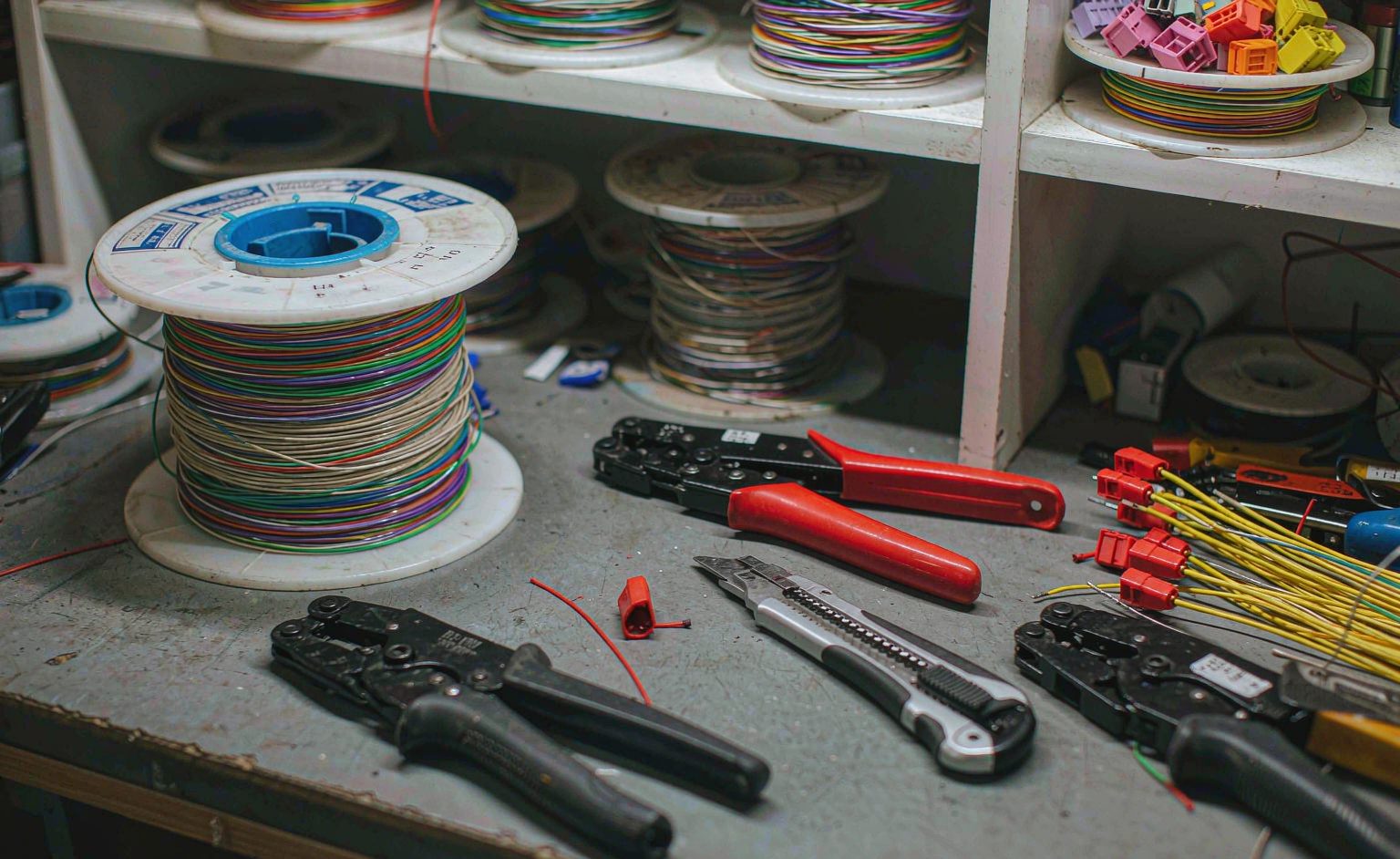
A custom cable assembly is not a product you buy; it is a program you run with a supplier. The difference matters, because programs fail at the handoffs. A drawing that does not state the connector part number, a sample approved without a written specification, a production run that starts before the test report exists — each produces a cable that works and cannot be repeated. This guide walks the sequence and what each stage must deliver.
Key Takeaways
- Every stage ends with a document, not an impression; the document is what makes the cable repeatable.
- Drawing review before quoting is where cost and feasibility problems are cheapest to solve.
- The sample must be approved against a written specification, including its test data.
- Production must reference the approved sample and its test report, not a new interpretation.
- Ask what documents come with the bulk shipment — that answer separates an OEM from an assembler.
Stage 1: Drawing and Specification Review
The program starts with the drawing, and the first job is to check whether it can actually be built as drawn.
| Review item | What to confirm | Cost of getting it wrong |
|---|---|---|
| Connector part numbers | Exact manufacturer and part number at both ends | Wrong connector discovered at sample stage |
| Wire gauge and construction | AWG, shielding, jacket material | Cable that mates but fails in service |
| Length and tolerance | Exact length plus acceptable tolerance | Assembly too short for the application |
| Routing and exit | Straight or right-angle, boot type | Does not fit the enclosure |
| Label and marking | What is printed, and where | Traceability lost in the field |
Send the drawing for review before requesting a price. A supplier who returns questions rather than a number is doing the review that protects you. The specification fields are detailed in our custom cable specification guide.
Stage 2: Sample Build and Approval
The sample is the reference for everything that follows, and its approval must be written.
| Sample deliverable | What it establishes |
|---|---|
| Physical assembly | That the design builds and mates |
| Continuity test data | That every conductor is correctly terminated |
| Dimensional verification | That length and geometry match the drawing |
| Approved specification sheet | The written reference the production run must match |
Approve the sample against the specification, not against a photograph. Retain the physical sample as the reference — it settles disputes about colour, jacket texture and boot shape that no drawing describes well. This is the same first-article discipline used across manufacturing.
Stage 3: Test Reports and Certification
Test reports are what make a cable assembly defensible, and their scope must match the application.
| Test | What it verifies | When it applies |
|---|---|---|
| Continuity / wire map | Every conductor terminates correctly | Every assembly |
| Insulation resistance | Dielectric integrity between conductors | Every assembly |
| Signal integrity | Performance at the rated generation | High-speed links |
| Environmental | Flex, temperature, chemical exposure | Where the application demands it |
| Safety / certification | Compliance with the applicable safety regime | Where the market requires it |
Ask which tests are performed on every unit and which on a sample basis, and get the answer in writing. A supplier who tests every unit for continuity and samples for signal integrity is describing a real process; one who says “we test them” is not. The gauge and rating discipline that determines which tests apply is covered in our guide to specifying an assembly that delivers.
Stage 4: Production and Document Delivery
Bulk production must reference the approved sample, and the shipment must arrive with its documents.
| Production control | Document with shipment |
|---|---|
| Same components as the approved sample | Test report for the production batch |
| Same process parameters | Certificate of conformance referencing the report |
| Lot / batch traceability | Lot number on labels and paperwork |
| Defined inspection at final stage | Any deviation record and its disposition |
The document package is the practical test of a supplier. An OEM delivers reports traceable to your batch; an assembler delivers boxes. Ask for a sample document package before the bulk order, and check that the lot number on the report matches the lot number on the labels. Routing and flex-life considerations for the finished assembly are covered in our bend radius guide.
Frequently Asked Questions
What is the custom cable assembly process?
Drawing and specification review, sample build and written approval, test reporting, then production referencing the approved sample, with documents delivered with the shipment.
Why review the drawing before quoting?
Because feasibility and cost problems are cheapest to solve before tooling and material are committed. A supplier who returns questions is doing the review that protects you.
How should a sample be approved?
Against a written specification covering dimensions, test data and connector part numbers — not against a photograph. Retain the physical sample as the reference.
What test reports should a cable OEM provide?
At minimum continuity and insulation resistance; signal integrity for high-speed links; environmental and safety testing where the application or market requires it.
Are all tests run on every unit?
Usually continuity and insulation are per-unit, while signal integrity and environmental tests are sample-based. Ask which is which, in writing.
What documents should arrive with a bulk shipment?
A test report for the production batch, a certificate of conformance referencing it, and lot numbers that match between labels and paperwork.
How do I tell an OEM from an assembler?
Ask for a sample document package before ordering. An OEM delivers reports traceable to your batch; an assembler delivers boxes.
Technical background: cable assemblies, technical drawings and first article inspection explain the product, the specification medium and the approval discipline referenced above.