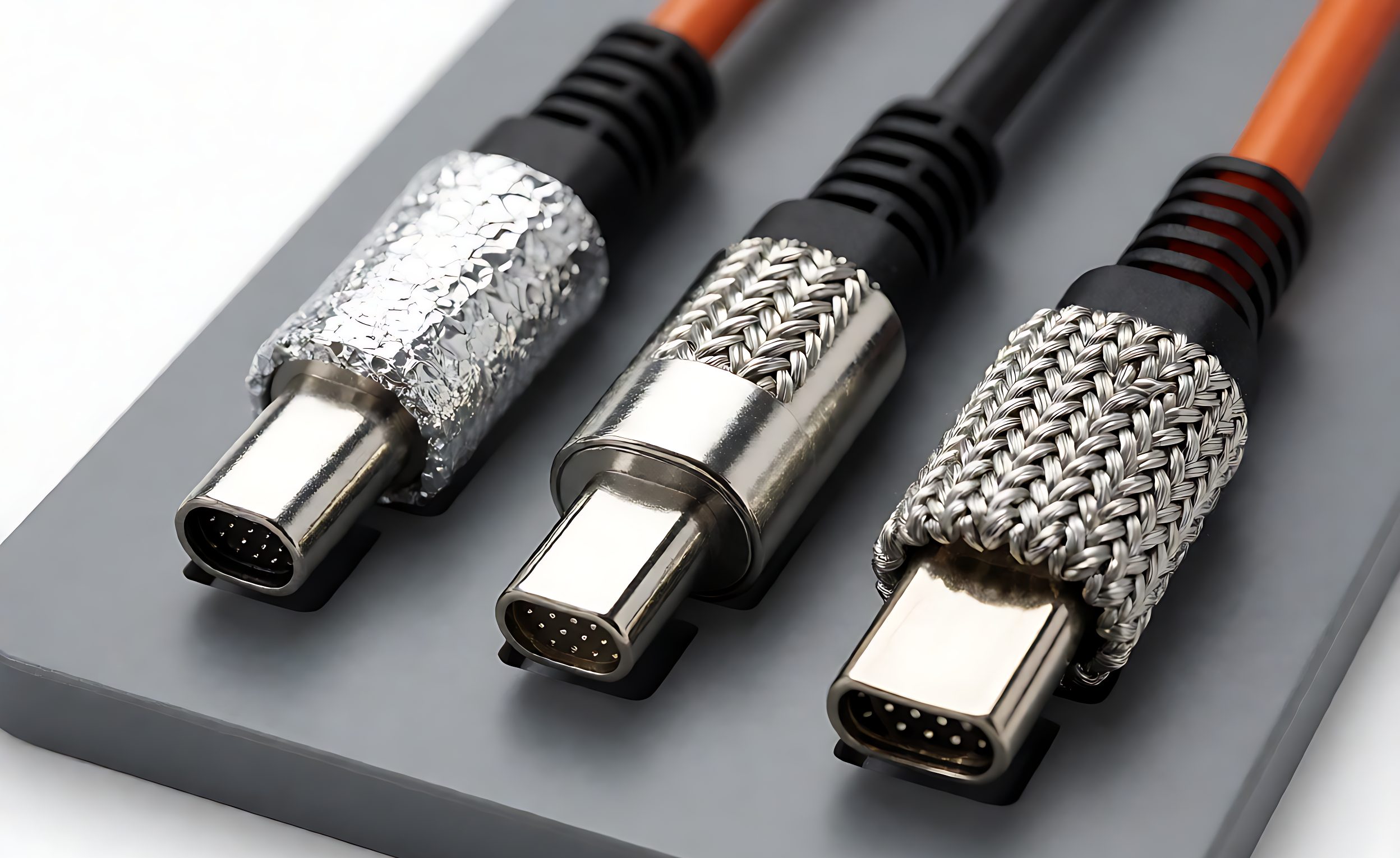
Shielding is one of the few cable decisions that changes both electrical behavior and mechanical feel. Choose the wrong type and the assembly either fails emissions testing or survives testing and cracks after a few thousand flex cycles. Foil, braid and combination shields are not grades of the same thing; each solves a different problem, and the differences show up in the two places buyers care about: high-frequency coverage and flex life.
This article sets out what each construction actually does, how the shield gets terminated, and where the extra cost of a combination shield is genuinely justified rather than habitually applied.
Foil Shield: Coverage at High Frequency
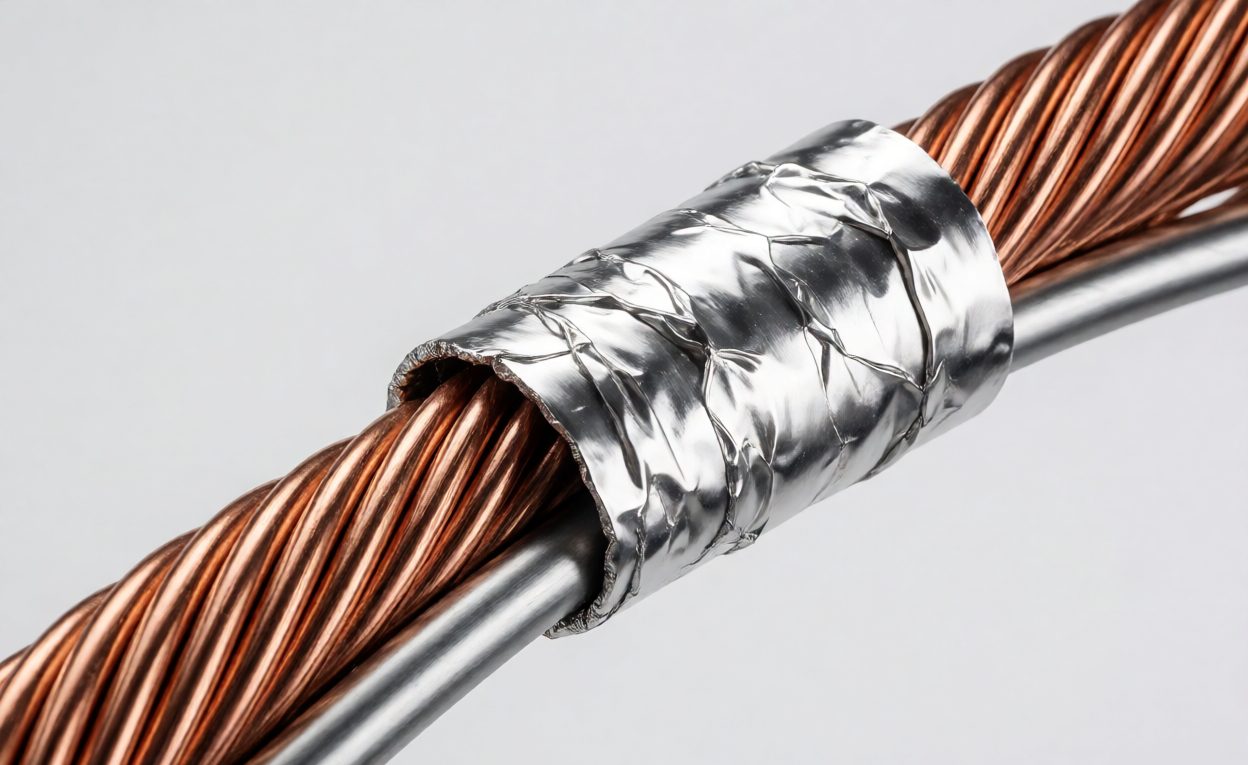
A foil shield is a thin aluminium layer bonded to a polyester carrier film, wrapped around the conductor bundle. Because it is a continuous sheet it provides close to one hundred percent coverage, which is why it dominates at high frequency, where the job is to close the gaps that let fields leak.
The weakness is mechanical. Foil tears, so it is always paired with a drain wire – a tinned copper conductor running in contact with the aluminium, providing the ground path the foil cannot reliably carry. Folded and flexed repeatedly, foil work-hardens and cracks. It is the standard choice for fixed installations and the wrong one for continuous motion.
Braided Shield: Strength and Low-Frequency Performance
A braid is a woven sleeve of tinned or bare copper wires. Its coverage is expressed as a percentage and typically sits somewhere between sixty and ninety-five percent, so it is never as complete as foil. What it gives up in coverage it returns in mechanical strength, current-carrying capacity and low-frequency performance, because a braid is a genuinely substantial conductor with real cross-sectional area.
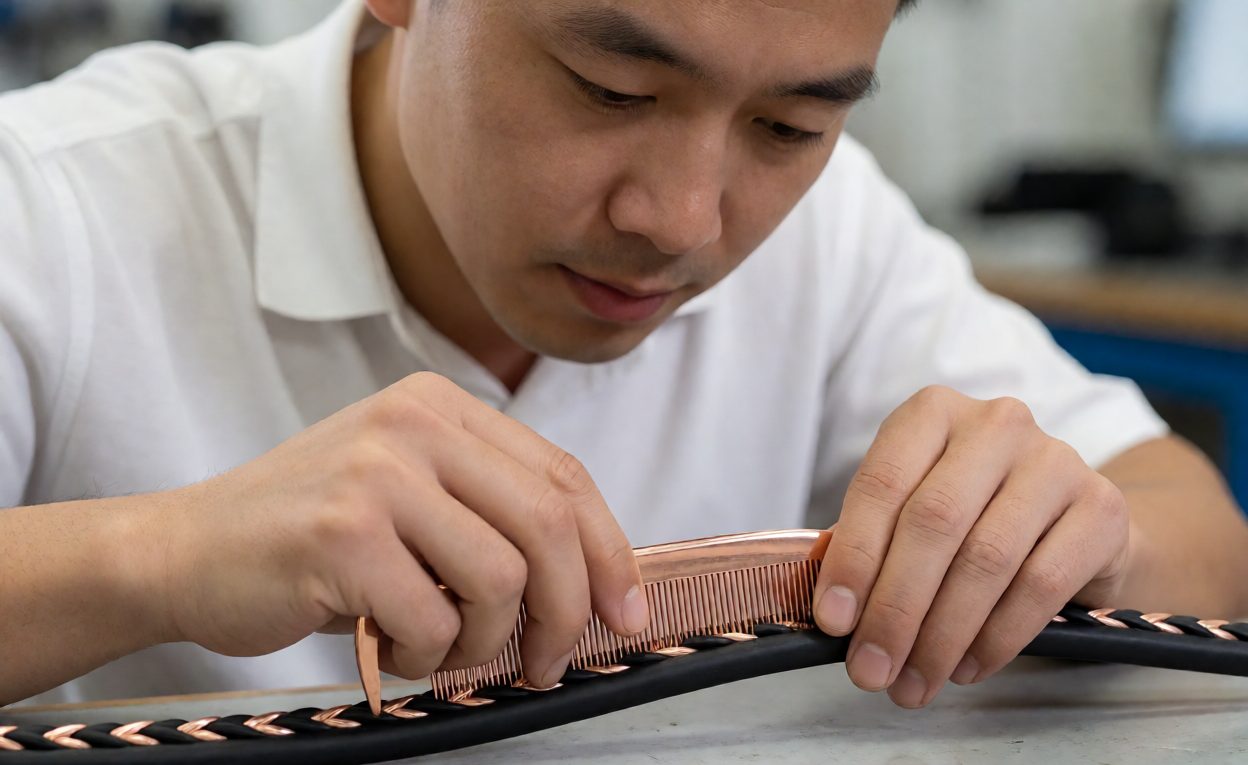
A braid is also the easiest shield to terminate well: it combs back over the jacket and clamps under a conductive backshell or ferrule, and it survives handling. The trade-offs are cost, weight, diameter and reduced high-frequency coverage, since the woven structure leaves apertures whose size relative to wavelength sets performance as frequency rises.
Combination Shields
A combination shield is foil plus braid in the same cable: the foil closes the apertures and the braid carries current, adds strength and provides the termination surface. The result covers a wider frequency range than either alone, which is why it is the default for demanding data, vision and servo applications.
- Foil plus braid over the whole bundle is the general-purpose combination and the most common specification for industrial data links.
- Individual pair foil plus an overall braid controls crosstalk between pairs while still giving a robust overall shield; it is the construction behind most high-speed differential cabling.
- Braid plus foil reversed in layer order changes which layer is easiest to terminate, so it should be specified deliberately rather than left to the mill.
The cost is real: extra material, extra process steps and a slightly larger, stiffer cable. It is justified when the installation has both high-frequency content and a mechanical or grounding requirement. It is wasted on a static, low-frequency run where a foil shield would pass.
Termination Decides Whether the Shield Works
A shield is only as good as its connection to ground, and most shielding failures are termination failures. The ideal is a 360-degree bond: the braid or foil folded back and clamped circumferentially against a conductive connector shell or a grounding ferrule, so the shield continues the Faraday cage through the connector.
The common alternative – gathering the braid into a pigtail and soldering a wire to ground – is cheaper and slower to assemble but adds inductance that grows with length. At high frequency a pigtail is effectively an open circuit, which is why an otherwise excellent cable can fail when terminated with one. Where a pigtail is unavoidable, keep it as short as physically possible and make that instruction part of the work instruction rather than the assembler’s discretion.
Technical Background
The underlying phenomenon is electromagnetic interference, and the function a shield performs is electromagnetic shielding, which works by reflection and absorption rather than by blocking in any absolute sense. The classic shielded geometry, and the one most of these constructions descend from, is coaxial cable, where the shield is a structural part of the transmission line rather than an accessory wrapped around it.
Choosing for the Application
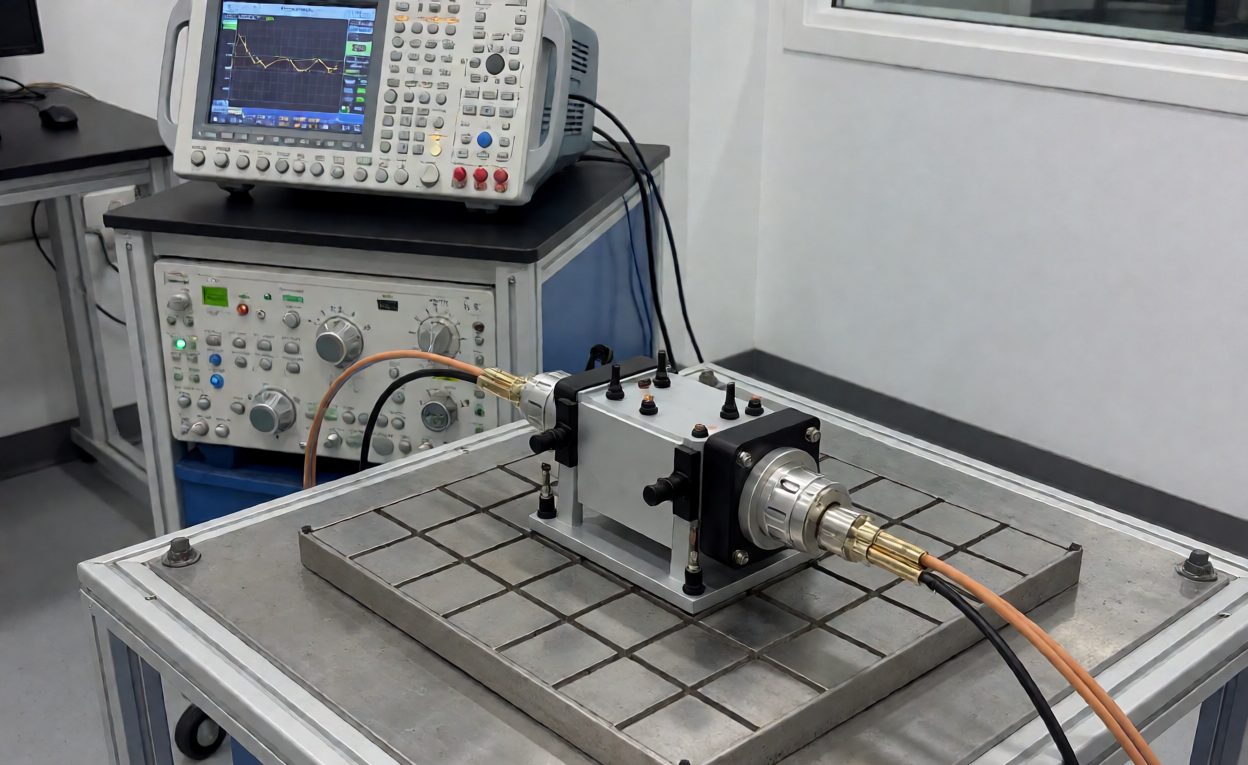
Three questions resolve most selections. Is the cable moving? Continuous flex rules out a foil-only shield and favors a braid or a braid-based combination with a high-flex construction. What frequency range matters? High-frequency content pushes toward foil or foil-plus-braid. How will it be grounded? A design that cannot achieve a 360-degree bond should not be specified into a high-frequency application at all.
Then check the mechanical consequences. Braid adds diameter, weight and stiffness, and it changes the minimum bend radius, which matters in tight machine layouts. Foil keeps the cable slim and cheap but punishes repeated motion. The most expensive mistake is specifying a heavy combination shield by default on a static installation, and the second most expensive is specifying foil alone on a cable that moves.
Shield selection connects to the comparison in EMI-shielded versus unshielded cable selection and to the construction detail in designing EMI-shielded industrial cables. Installation practice, including how shields are grounded at both ends, is covered in best practices for installing shielded cable, and the material options in industrial cable EMI shielding techniques.
Frequently Asked Questions
What is the difference between foil and braid shielding?
Foil gives near-total coverage and better high-frequency performance but flexes poorly; braid gives lower coverage but more strength and better low-frequency performance.
Why does a foil shield need a drain wire?
Foil is too thin to carry ground current reliably or to be soldered, so a tinned copper drain wire in contact with it provides the ground path.
What is typical braid coverage?
Usually between about sixty and ninety-five percent, expressed as the optical coverage of the woven copper over the underlying layer.
When is a combination shield worth the cost?
When the application has both high-frequency content and a mechanical or grounding requirement that foil alone cannot satisfy.
What is a 360-degree shield termination?
The shield is folded back and clamped circumferentially to a conductive connector shell or ferrule, preserving the shield through the connector.
Why are pigtail shield terminations a problem?
A pigtail adds inductance that rises with length, so at high frequency it behaves close to an open circuit and defeats the shield.
Can a foil-shielded cable be used in continuous flex?
Not for long. Foil work-hardens and cracks under repeated motion, so a braid-based construction is the correct choice for moving cable.