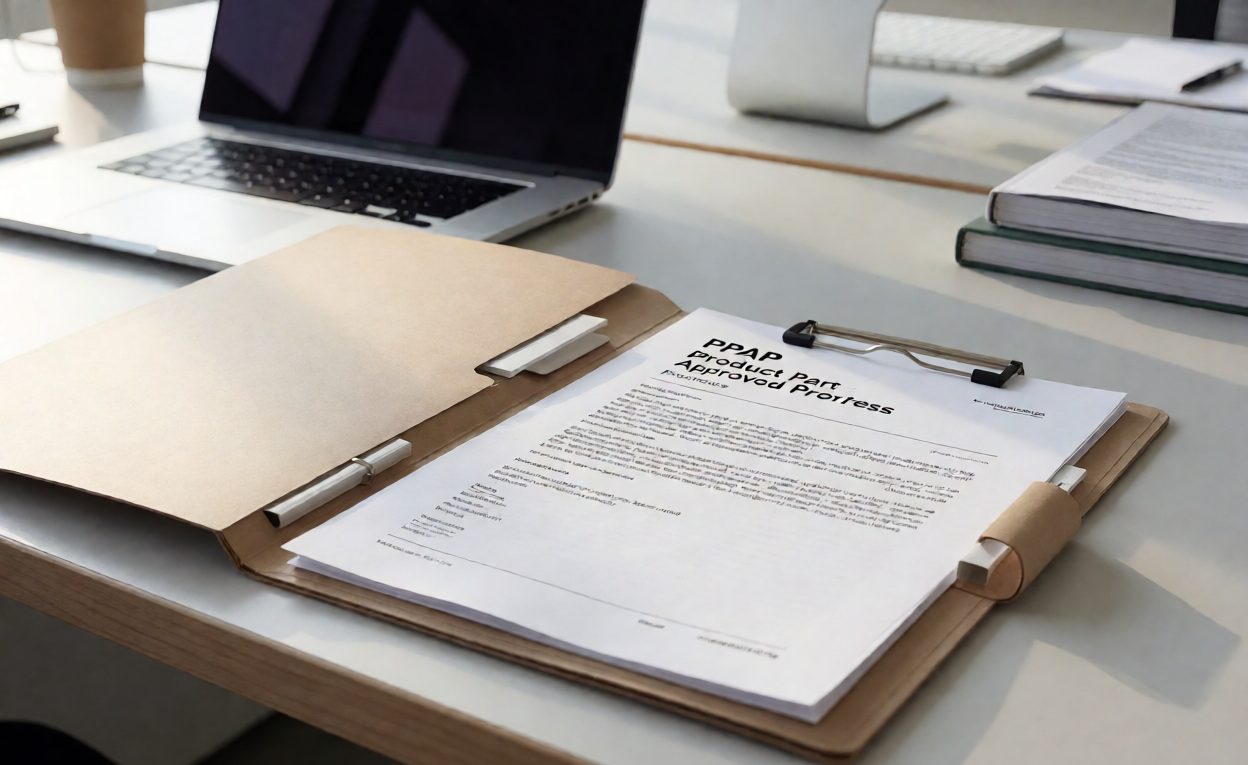
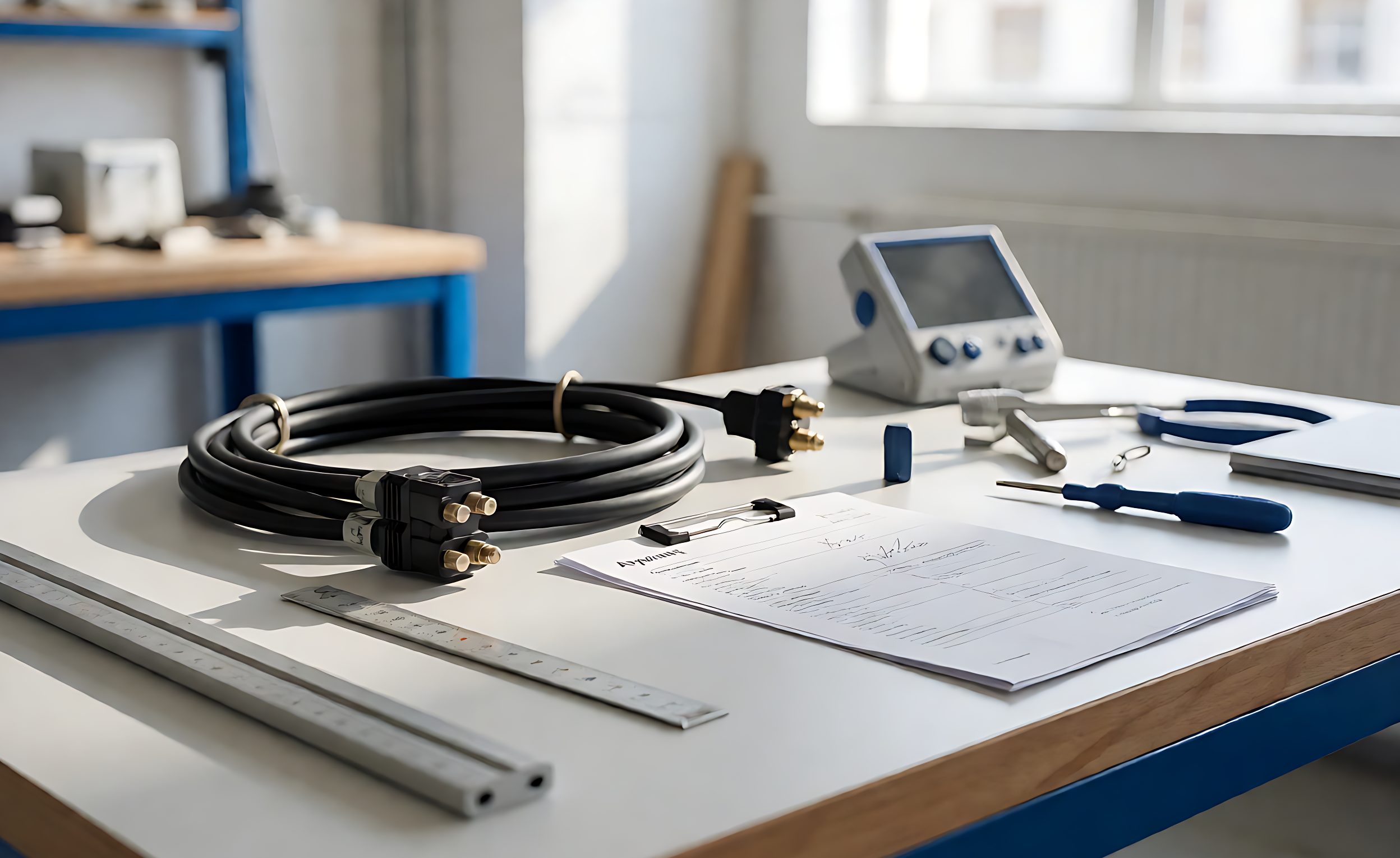
The first production run of a cable assembly is where most quality arguments begin. The buyer expected the sample; the supplier built to the drawing; the two differ in a dimension neither party had discussed. The mechanism that prevents this is a documented sample approval, and for higher-consequence assemblies the fuller version of that document set is known as a production part approval process.
The principle is the same at any scale: before volume production, prove that the process can build the part correctly, record the proof, and use that record as the reference for every subsequent run. The cost is administrative and it is incurred once.
What Sample Approval Covers
A sample approval compares a built unit against the specification, dimension by dimension and function by function. The output is not a signature alone; it is a record of what was measured, what the result was, and what the approved configuration is. That record is what later runs are compared against.
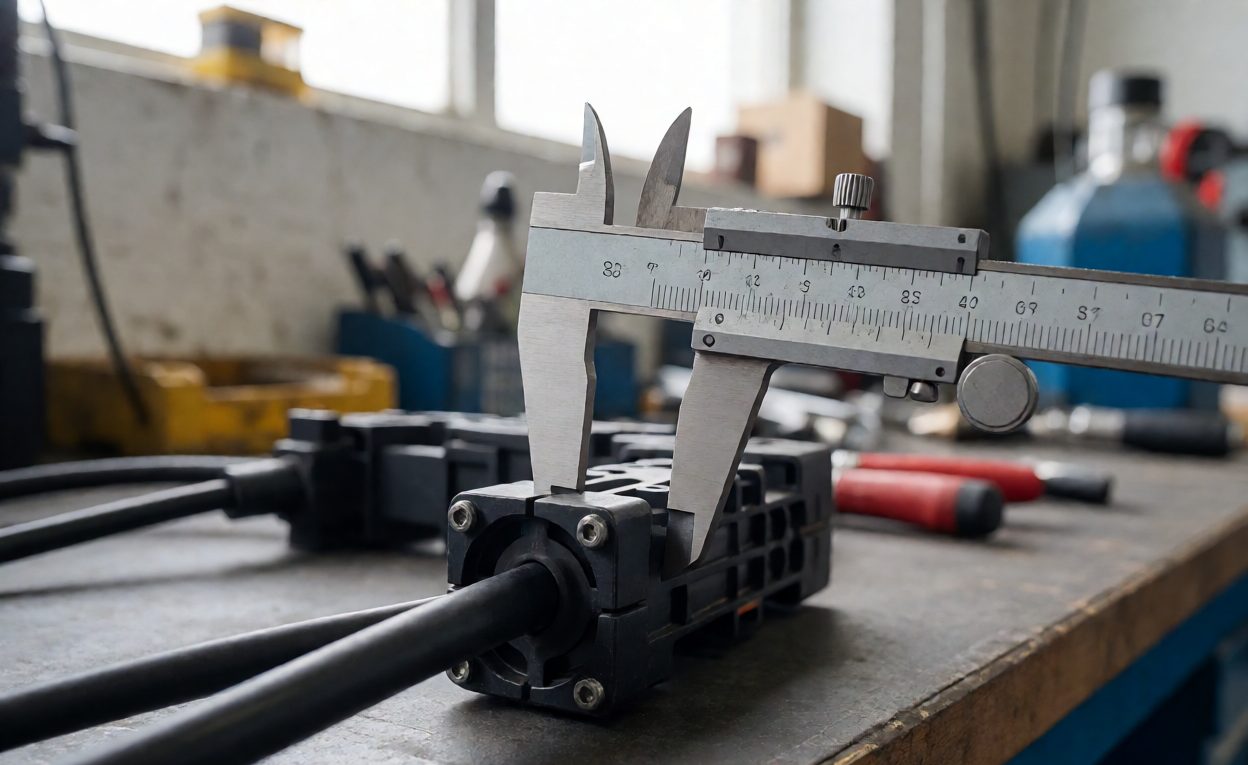
- Dimensional – lengths, strip lengths, crimp heights and connector positions against the drawing.
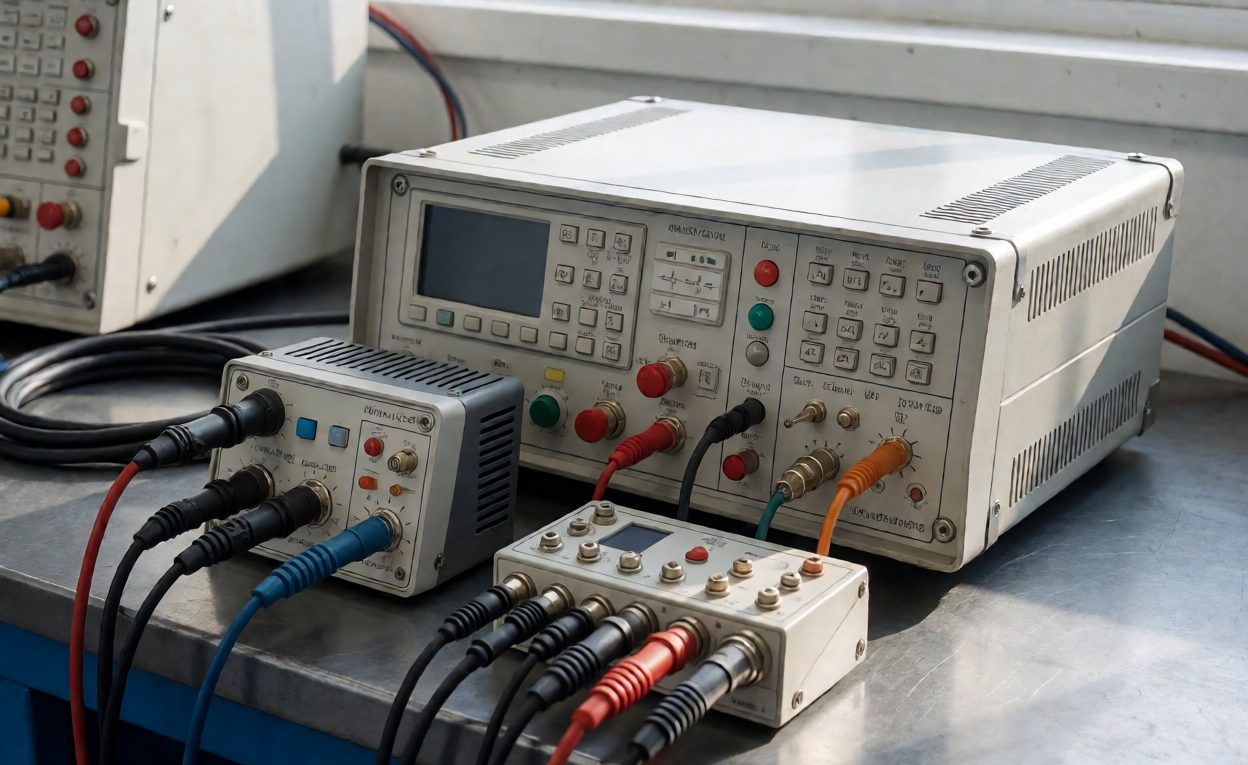
- Electrical – continuity, resistance and any required performance test.
- Visual and workmanship – the standards that are obvious to inspect and rarely written down.
- Documentation – the drawing revision, the materials used and the test results.
The Fuller Package
For assemblies where failure has consequences, the document set extends beyond the sample. The production part approval process family of requirements adds the process definition, the equipment used, the control plan and the capability evidence. Not every order needs the full set, and the level should be chosen deliberately.
The level decision follows the consequence. A commodity harness for a low-risk application needs the sample record. An assembly in a safety circuit needs the process evidence as well, because the sample proves the part and the process evidence proves the run.
What the Package Must Contain
Whatever the level, the package should answer one question: what exactly was approved, and against what? The answer requires the drawing revision, the measured results, the materials and the process definition. A package that contains only a signature answers nothing and protects nobody.
The first article inspection record is the core of that answer, and it is the document a buyer should insist on regardless of the level chosen, because it is what converts an approved sample into a repeatable reference.
Using the Package Later
The value of the package appears at the first dispute. A run arrives with a dimension the buyer did not expect; the buyer compares it against the approved sample record and the question becomes whether the run matches the approval. Without the record, the question becomes what was agreed, and that question has no answer.
The package also supports change control. A supplier proposing a material or process change compares it against the approved configuration, and a buyer evaluates the change against the same reference. Both conversations are short when the reference exists.
One final practical point: agree the approval criteria before the sample is built. A buyer who states the acceptance criteria in advance gets a sample measured against those criteria; a buyer who states them after seeing the sample gets a negotiation about what was originally intended, and that negotiation usually costs more than the package would have.
Where the assembly is produced at more than one site, the package should cover each site separately. A process approved at one facility does not automatically transfer to another, and the statistical process control evidence that supports one line says nothing about the line next to it.
It is also worth agreeing who signs the approval and what that signature commits to. A signature against a stated specification commits the configuration; a signature without one commits nothing and protects neither party when the specification is later read differently.
Where the assembly is produced at more than one site, the package should cover each site separately. A process approved at one facility does not automatically transfer to another, and the process control evidence that supports one line says nothing about the line next to it, which is why a transfer needs its own approval rather than a reference to the original.
Related reading for buyers working through the same question: 12 gbps cable specifications for high speed data transfer applications, a diagnostic guide to common cable failures identifying and solving connectivity issues and a strategists guide to high speed cable selection from specification to application cover the surrounding decisions this specification depends on.
Frequently Asked Questions
Is PPAP needed for every order?
No. The level should match the consequence of failure. Commodity assemblies need the sample record; safety-relevant ones need the process evidence too.
What is the minimum acceptable package?
The drawing revision, the measured results, the materials used and a signature against a stated specification. Anything less cannot be compared against a later run.
Who owns the approved sample?
Both parties should hold one, each signed and dated. The buyer’s copy is what a returned unit is compared against.
Does the package need to be updated?
Yes, whenever the design, material or process changes. An approval against a superseded revision protects nothing.
How long does approval take?
The measurement and test time is short; the document assembly is what takes longer. Start the package at sample stage rather than after approval.
What if the sample fails approval?
The failure is recorded, the cause is corrected and a new sample is submitted. A failed sample that is quietly accepted becomes the first production argument.
Can the buyer skip the package to save time?
It saves days now and costs weeks at the first dispute. The package is the cheapest insurance in the order.
One final practical point: agree the approval criteria before the sample is built. A buyer who states the acceptance criteria in advance gets a sample measured against those criteria; a buyer who states them after seeing the sample gets a negotiation about what was intended.