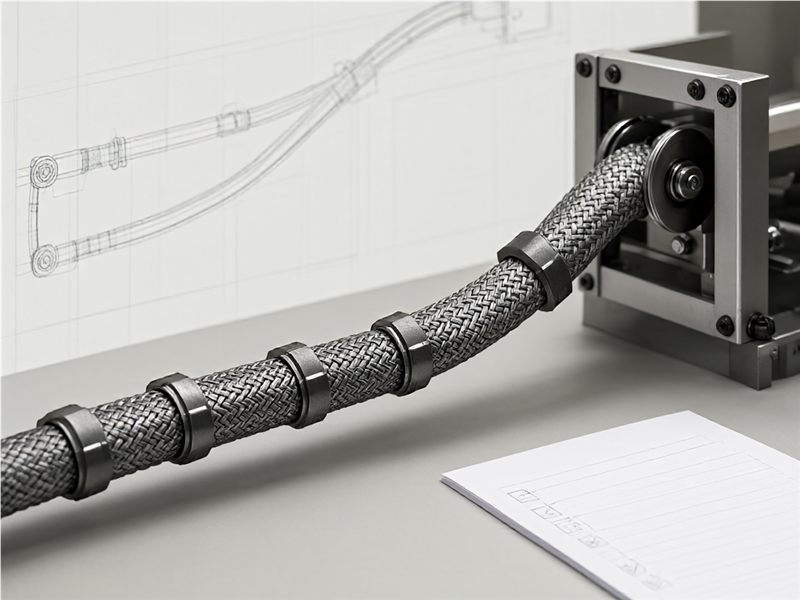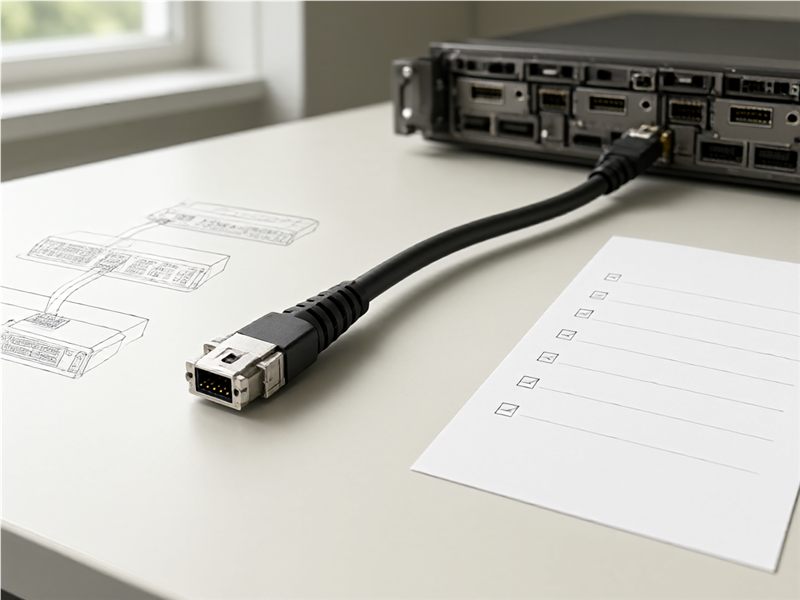

Most cost reduction programmes start with the supplier’s margin, which is the smallest and most contested pool. The larger pool sits in the design: lengths, terminations, materials and process choices that were set when the drawing was first drafted and never revisited. A joint design review between buyer and supplier routinely finds savings that neither party would find alone, because the supplier knows the process cost and the buyer knows the application requirement.
The review works when it is framed as engineering rather than negotiation. A supplier asked to cut price defends the quote; a supplier asked how a design could be built more efficiently usually answers, because the answer is something they already know.
Where the Savings Usually Are
The recurring sources of avoidable cost in cable assemblies are predictable, and each has a characteristic magnitude. Reviewing them in order of typical impact keeps the session focused.
- Cut lengths – lengths specified with generous margins cost wire on every unit; a review against the actual routing recovers it permanently.
- Termination choice – a connector specified for reasons that no longer apply can often be replaced with a cheaper equivalent that still meets the requirement.
- Process steps – operations added for one application and never removed, such as extra labelling or intermediate tests.
- Material substitution – jacket or insulation materials specified conservatively where the environment does not require it.
Running the Review
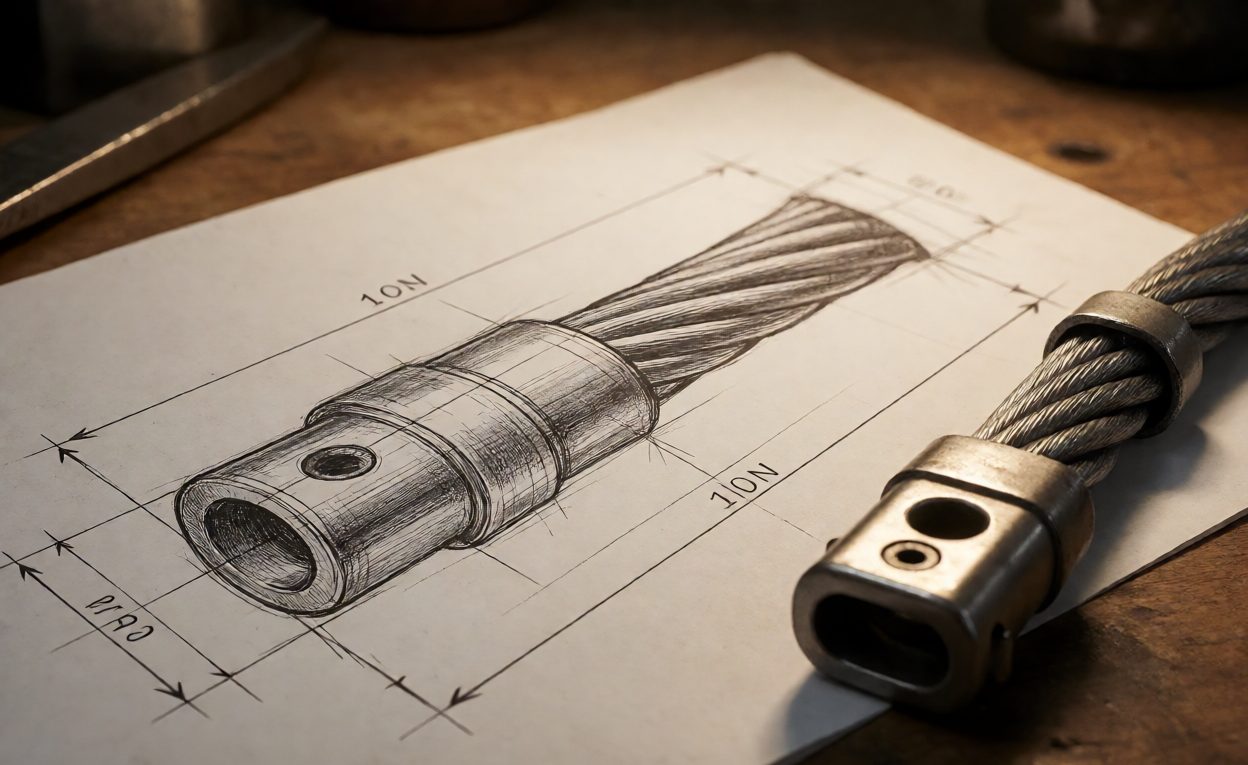
The review needs three inputs: the drawing, the physical assembly and the cost breakdown. The drawing shows what was specified, the assembly shows what is actually built, and the cost breakdown shows where the money goes. The design for manufacturability questions follow naturally once all three are on the table.
Frame each proposed change as a question rather than an instruction. Asking whether a length could be shortened without affecting routing invites an engineering answer; instructing a shortening invites a compliance answer that avoids the question. The distinction determines whether the supplier engages or defends.
What Must Not Change
Every proposed change needs a stated boundary: the requirement it must still satisfy. A length change that affects routing, a material change that affects a rating, or a termination change that affects an interface all have boundaries, and the review should name them before the change is evaluated. A change that saves cost and crosses a boundary is not a saving.
Where a change affects a certified or qualified configuration, the qualification impact is part of the cost. Re-qualification can exceed the annual saving, which is why the review should ask the question rather than assume the answer.
Measuring the Result
Savings should be measured against the previous cost breakdown rather than asserted. A change that reduces a documented line item is a saving; a change that shifts cost into a line item nobody was watching is a transfer. Track the before and after breakdown per SKU, and review the realised saving a quarter after implementation rather than at approval.
The cost engineering discipline that makes this work is treating the cost breakdown as a living document rather than a one-time quote, so that the next review starts from where the last one finished.
One practical scheduling note: run the review before the annual price discussion rather than after it. A review that finds engineering savings changes the basis of the price conversation, while a price conversation that precedes the review usually ends before the engineering questions are asked at all.
It is also worth recording the rejected changes. A change that was evaluated and rejected for a stated reason should not be re-proposed next year without new information, and the value engineering record of what was tried is what prevents the review from repeating itself.
It is also worth keeping the review short. A session that covers the top volume assemblies in depth produces more realised saving than a session that touches every SKU superficially, and the volume ranking is the same list the obsolescence review uses.
Finally, assign an owner to each agreed change. A change without an owner is a change that appears in the next review unchanged, and the change route that carries it into production is what makes the saving real rather than theoretical.
Related reading for buyers working through the same question: 12 gbps cable specifications for high speed data transfer applications, a diagnostic guide to common cable failures identifying and solving connectivity issues and a strategists guide to high speed cable selection from specification to application cover the surrounding decisions this specification depends on.
Frequently Asked Questions
How often should a design review be held?
Annually for stable products, and whenever volume changes materially. Volume changes the economics of length, termination and process choices.
Who should attend from the supplier?
Engineering and production, not only sales. The process knowledge that identifies savings sits with the people who build the assembly.
What is the typical saving range?
It varies, but length and termination choices on mature designs commonly deliver more than margin negotiation, because the design was set before current volumes were known.
Does a change require re-qualification?
Sometimes. Where the configuration is certified, the qualification impact must be counted in the saving, and that calculation is part of the review.
Can the buyer propose changes too?
Yes, and it helps. The buyer knows which requirements are actually enforced and which are legacy, and that knowledge is what unlocks the biggest savings.
How is a saving verified?
Against the cost breakdown, per SKU, before and after, with a review a quarter after implementation to confirm the saving was realised.
What if the supplier resists a change?
Ask what would have to be true for it to work. The answer usually identifies a constraint neither party had articulated, which is often a different and cheaper change.

One practical scheduling note: run the review before the annual price discussion rather than after it. A review that finds engineering savings changes the basis of the price conversation, while a price conversation that precedes the review usually ends before the engineering questions are asked.