SFF-8654 — SlimSAS — carries PCIe and NVMe traffic in storage enclosures, 1U servers, and increasingly in external cabling. It is mechanically compact and electrically demanding, and cable length is the variable most often chosen by habit rather than calculation. This guide explains why length matters, the practical length bands, and how to recognise a link that is failing because of its cable run.
Why Length Matters at PCIe Speeds
Every PCIe link is a timing budget: transmitter, package, PCB traces, connector, and cable each consume margin. A cable adds insertion loss, impedance discontinuities at both terminations, and skew between differential pairs. At PCIe 3.0 (8 GT/s) there is meaningful slack; at PCIe 4.0 (16 GT/s) and especially 5.0 (32 GT/s), the eye diagram closes fast, and every extra 10 cm of cable spends margin you may need elsewhere.
Length Bands in Practice
Vendor datasheets vary, but field experience clusters into bands. These assume quality assemblies with proper shielding and the link running at its rated generation:
| Link | Comfortable length | Workable with care | Risky |
|---|---|---|---|
| PCIe 3.0 (8 GT/s) | ≤ 1 m | 1–2 m | > 2 m |
| PCIe 4.0 (16 GT/s) | ≤ 0.5 m | 0.5–1 m | > 1 m |
| PCIe 5.0 (32 GT/s) | ≤ 0.3 m | 0.3–0.5 m (retimed/redriven) | > 0.5 m passive |
The bands shrink because the unit interval shrinks: 32 GT/s leaves half the timing window of 16 GT/s for the same physical imperfections. Passive cables beyond the comfortable band do not always fail — they fail sometimes, at temperature, after firmware updates change equalisation. That intermittency is what makes length overruns expensive to diagnose.
Routing and Bend Practices Inside a Chassis
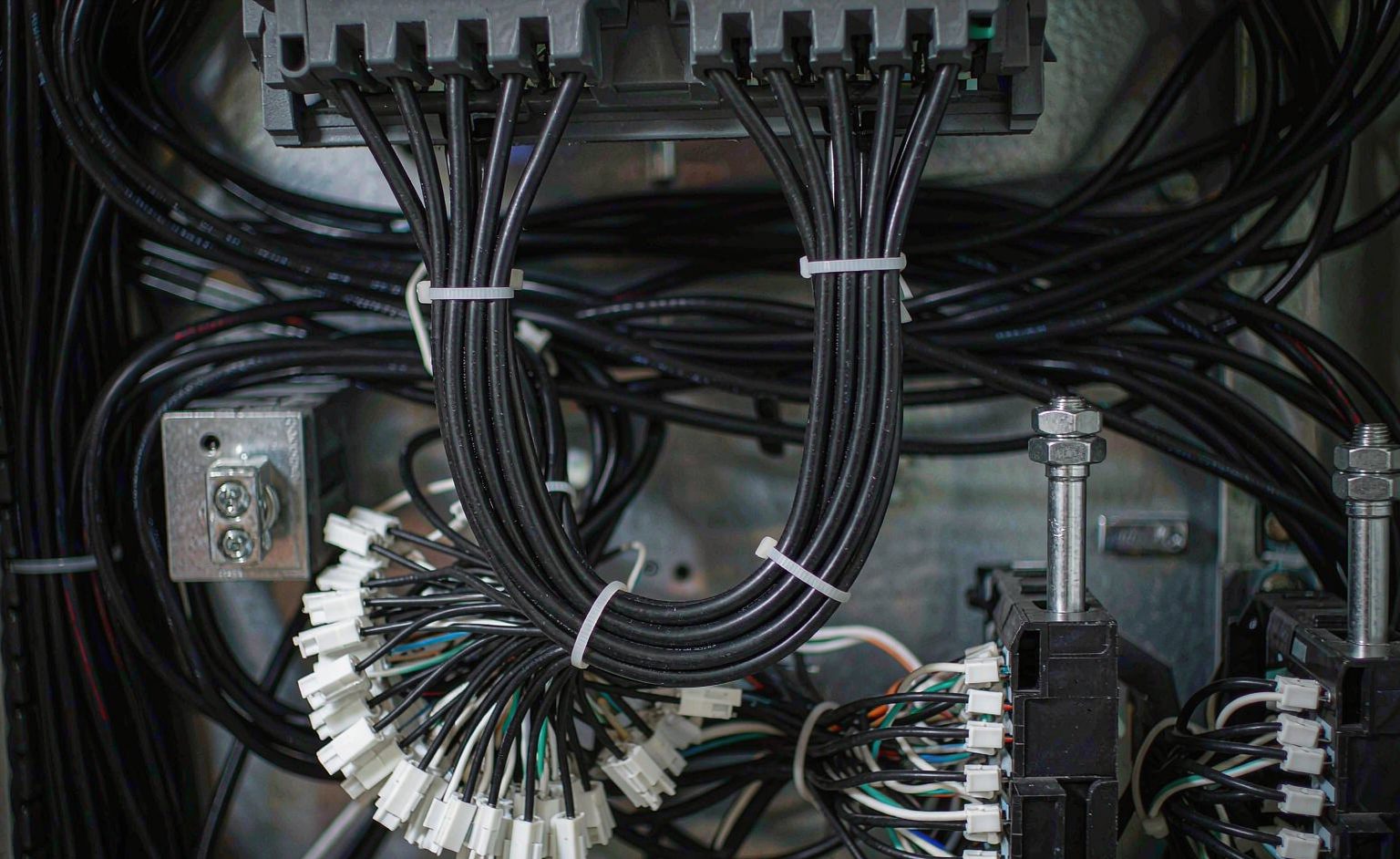
Length is not the only geometric factor. Respect the assembly’s minimum bend radius (typically 25–30 mm for SlimSAS), keep cable bundles away from power supplies and fan motor leads, and avoid running parallel to high-current wiring for long stretches. Route with slack rather than tension: a cable pulled taut across a chassis edge suffers both mechanical stress and a characteristic-impedance pinch at the contact point.
Symptoms of a Length-Induced Unstable Link
- NVMe drives drop from the array under load but pass offline diagnostics.
- The link retrains to a lower width or speed after thermal events.
- Correctable errors accumulate in PCIe AER logs on one specific cable path.
- Symptoms move when you swap cables — the failure follows the cable, not the slot.
Each of these has other causes, but the diagnostic is cheap: temporarily substitute a shorter, known-good assembly. For specification guidance on what to demand from a supplier, see our SlimSAS custom cable specification guide.
Matching Length to Your Topology
Measure the actual route — chassis entry, around the shroud, up to the backplane — not the straight-line distance. Then add 10% service slack and buy the next standard length down, not up. Keeping total channel length within budget also means accounting for the host PCB traces; a short cable cannot rescue a long motherboard run, and combined channel budgets are what the standard actually limits.
Часто задаваемые вопросы
Можно ли использовать кабель SFF-8654 длиной 2 метра для PCIe 4.0?
Пассивно, то есть за пределами того, что большинство линков могут гарантированно выдерживать. Силикон ретаймеров или ридрайверов может увеличить дальность, но честный ответ — спланировать топологию так, чтобы пассивный прогон оставался менее примерно половины метра при Gen4.
Позволяет ли кабель более высокого качества прокладывать более длинные трассы?
Лучшие материалы и защита приносят резерв, а не новый режим физики. Премиальная сборка может поднять вас на одну ступень в таблице, но ограничения интервала единиц на уровнях Gen4 и Gen5 по-прежнему действуют.
Почему моя ссылка срабатывает только под нагрузкой?
Наличие нагрузки повышает температуру и изменяет поведение равновесия, что расходует тот самый запас прочности, которого не хватает слишком длинному кабелю. Это классический признак неустойчивости целостности сигнала, а не отказа компонента.
Обратимоет ли SFF-8654 обратную совместимость с SFF-8643?
Electrically both carry four PCIe lanes, but the connectors differ. Adapters and cables bridging the two families exist for Gen3-class use; check the mechanical and SI specifications before mixing them in Gen4 or newer systems.