Jacket compound is the specification that decides whether a cable survives its environment, and it is the one most often left to the supplier’s default. PVC is cheap and adequate indoors; low-halogen compounds matter where smoke and corrosion are concerns; high-flex compounds are a different product for moving duty. Specifying the default and discovering the environment later is how a cable that passes every electrical test fails in service. This guide compares the compounds on the properties that matter.
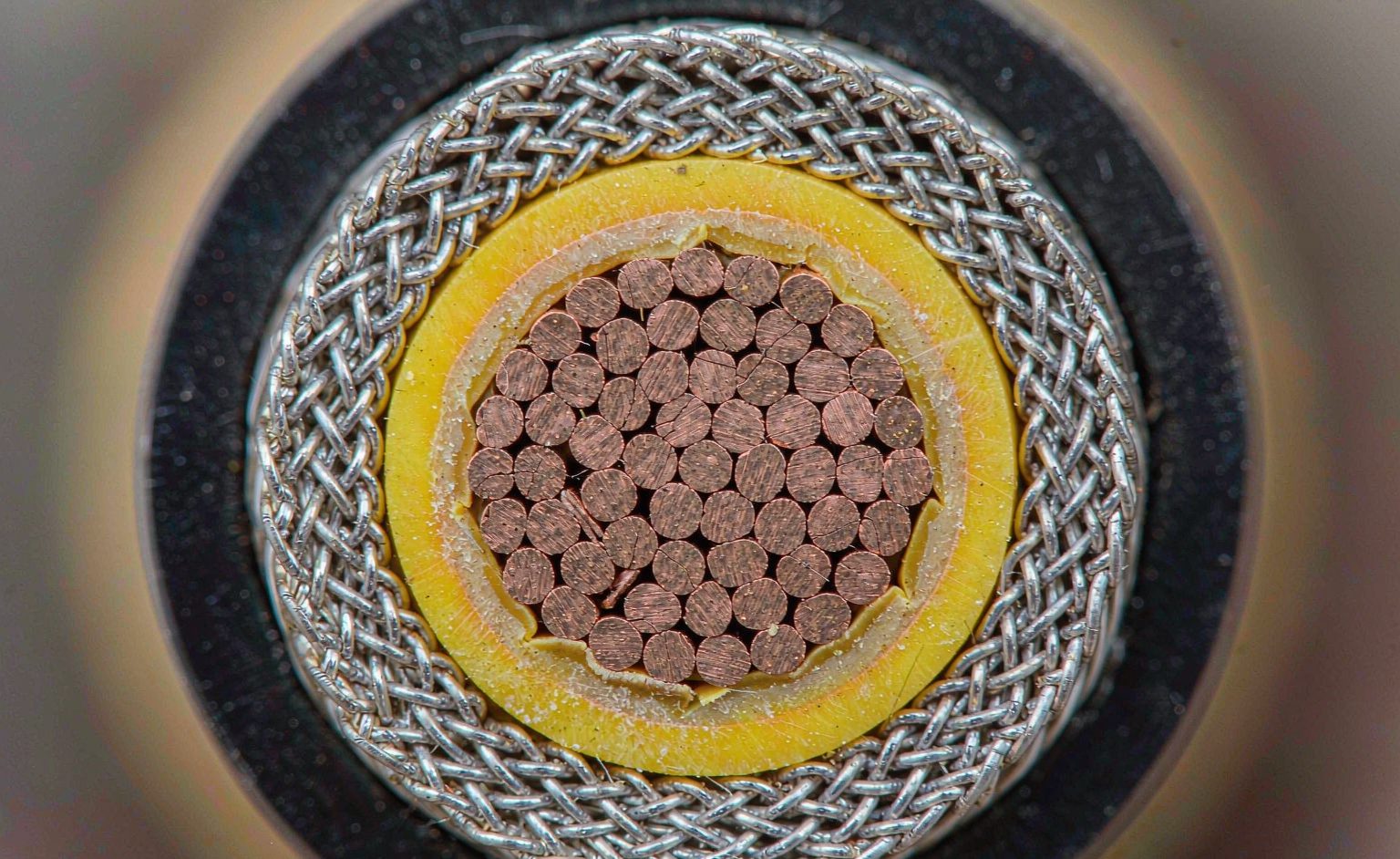
Key Takeaways
- Jacket compound is an environment specification, not a cost line.
- PVC is the low-cost default; it is not the universal answer.
- Low-halogen compounds matter where smoke, toxicity or corrosion is a concern.
- High-flex construction is a different product, not a PVC variant.
- Specify the compound in the drawing, not in a conversation.
The Three Compound Families
Three families cover most industrial applications, and each has a characteristic strength.
| Compound | Characteristic strength | Limitation |
|---|---|---|
| ПВХ | Low cost, good abrasion, wide availability | Halogen content; narrower temperature range; stiffens when cold |
| Low-halogen (LSZH / HFFR) | Reduced smoke and corrosive gas in fire; no halogens | Higher cost; can be less abrasion-resistant than PVC |
| High-flex (TPE / PUR variants) | Excellent flex life; oil and chemical resistance | Highest cost; needs the right compound for the duty |
The PVC row deserves the caveat: it is the default because it is cheap and works indoors, not because it is the best material. Its halogen content is the reason it is excluded from occupied enclosed spaces in many specifications. The chemistry behind the halogen distinction is explained in halogen references.
Choosing by Environment
The environment decides the compound, and the decision is usually quick.
| Среда | Likely compound | Why |
|---|---|---|
| Dry indoor, static | ПВХ | Adequate and lowest cost |
| Occupied enclosed space, transit, public buildings | Low-halogen | Reduced smoke and corrosive gas in a fire |
| Oil, coolant or chemical exposure | High-flex compound suited to the chemical | PVC degrades with many oils and solvents |
| Continuous motion, drag chain, cable tray | High-flex construction | Flex life is the binding requirement |
| Low temperature | Compound rated for the temperature | PVC stiffens and cracks when cold |
The chemical-exposure row is the one most often assumed. Resistance is chemical-specific: a compound that survives cutting oil may fail with a common solvent, so name the exposure rather than describing it as “some oil”.
High-Flex Is a Different Product
Continuous-flex duty changes the whole construction, not just the jacket.
| Элемент | Standard cable | Continuous-flex cable |
|---|---|---|
| Conductor stranding | Coarser strands | Fine-stranded for flex life |
| Jacket compound | General-purpose | Flex-rated compound, often PUR or TPE |
| Fill and shielding | Standard lay | Lay lengths optimised for motion |
| Overall construction | Optimised for cost | Optimised for cycle count |
Buying a standard cable with a flex-rated jacket does not produce a continuous-flex cable; the conductor construction and lay lengths matter as much as the jacket. If the application involves motion, specify the duty and cycle count, not the compound alone. The flex-rated elastomers are described in thermoplastic elastomer references.
How to Specify It
Four fields make the jacket specification complete.
| Поле | What to state |
|---|---|
| Compound family | PVC, LSZH/HFFR, or a named high-flex compound |
| Environmental exposure | The specific oils, solvents or chemicals present |
| Temperature range | Both operating and storage extremes |
| Motion duty | Static, occasional flex, or continuous flex with cycle count |
Put all four in the drawing rather than in an email, because the jacket is the specification most often lost between the enquiry and the build. The routing constraints that interact with compound choice are covered in our bend radius guide, the gauge interaction in our guide to specifying an assembly that delivers, and the industrial application context in our industrial cable selection guide. The PVC chemistry behind the default choice is described in polyvinyl chloride references.
Часто задаваемые вопросы
Какой материал оболочки лучше всего подходит для промышленного кабеля?
Зависит от условий среды. PVC — для сухих стационарных помещений с внутренним использованием, low-halogen — для обитаемых замкнутых пространств, а гибкий состав — для движения или химического воздействия.
Почему я должен выбирать безгалогеновый материал вместо ПВХ?
Where smoke toxicity and corrosive gas in a fire matter — occupied enclosed spaces, transit and public buildings. The trade-off is higher cost and sometimes lower abrasion resistance.
Is a flex-rated jacket enough for a drag chain?
No. Continuous-flex duty also needs fine-stranded conductors and appropriate lay lengths. A standard cable with a flex jacket is not a continuous-flex cable.
Does PVC resist oil?
Poorly, with many oils and solvents. Resistance is chemical-specific, so name the actual exposure rather than describing it generally.
What happens to PVC at low temperature?
It stiffens and becomes prone to cracking, which matters for outdoor, refrigerated or unheated installations. Specify a compound rated for the actual temperature range.
What should the jacket specification include?
Compound family, the specific environmental exposures, the temperature range, and the motion duty with cycle count if applicable.
Why is the jacket specification often lost?
Because it is usually discussed in the enquiry email rather than written into the drawing. Put it in the drawing, since that is what the build references.
Technical background: polyvinyl chloride, halogen content и thermoplastic elastomers explain the compound chemistry referenced above.