When a supplier quotes six weeks for a custom cable assembly, the number is rarely the time it takes to build the cable. Most of it is waiting: waiting on connectors, waiting on a jacket compound that has to be run, waiting on a molded part that sits in someone else’s tool queue. The build itself, once every part is on the bench, is usually measured in days. Buyers who treat the quoted lead time as one block of time end up negotiating against the wrong half of it.
Splitting the number into its two halves changes what can be done about it. Component lead time is largely fixed by the supply market and can only be managed through planning, substitution and committed volume. Assembly lead time is the supplier’s own schedule, and it responds to order structure, drawing completeness and how quickly the buyer approves samples. The two need different tools, and the first step is knowing which one you are actually looking at.
The Two Clocks Inside Every Lead Time
A first order typically breaks down as follows. The first two or three days go to engineering: drawing review, a bill of materials check and the questions that come back to the buyer. Then comes component procurement, running in parallel with tooling if a mold is involved. First article build, testing and approval follow, and production comes last.
The critical path is almost always the longest single component. If a connector is quoted at four weeks and the cable at three days, the assembly cannot start before week four no matter how fast the line runs. Everything else in the schedule is slack, and slack is where schedule recovery hides.
- Component clock. Connectors, contacts, backshells, specialty cable, molded parts, labels and heat-shrink. Set by manufacturers and distributors, not by the assembler.
- Assembly clock. Engineering review, tooling where required, first article, test setup, the production run and packing. Set by the supplier’s queue and by how responsive the buyer is.
- Approval clock. The buyer’s own first-article review, which is frequently longer than either of the others and sits entirely under buyer control.
The one question worth asking a supplier at quotation stage is which item is on the critical path. A competent supplier answers immediately; a vague one usually means nobody has looked.
Which Components Actually Take the Longest
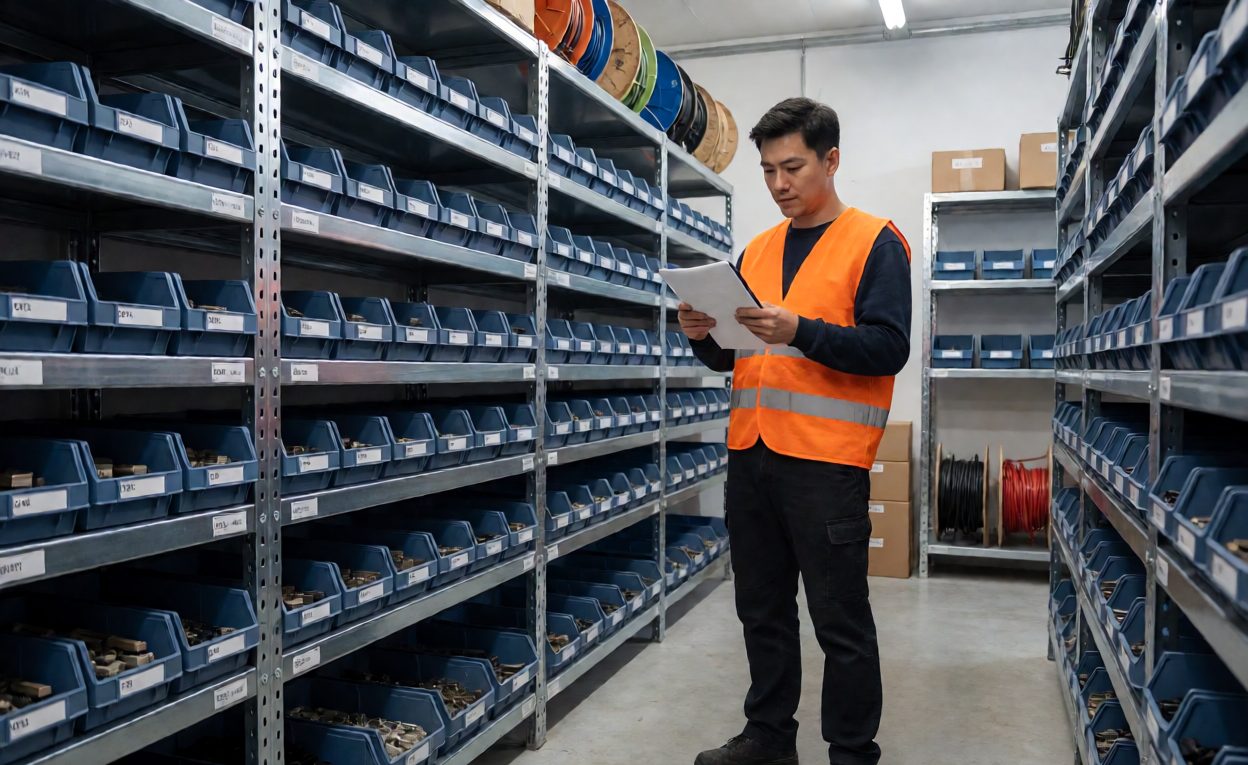
Connectors lead the list, and within connectors the plating and keying variant matters more than the series. A standard shell in a common plating may be distributor stock; the same shell in an unusual plating or a non-standard keyway becomes a factory order with a minimum quantity and a multi-week queue. Circular industrial connectors and high-density board-level interconnects are the usual offenders, and cable-side contacts are often a separate line item with a separate date that nobody checks.
Specialty cable is second. Standard hook-up wire in PVC is available immediately. A fluoropolymer, a low-smoke compound in a specific color, or a coax with a controlled impedance requirement is frequently a make-to-order run with a minimum length far above what the assembly actually needs. That minimum is the hidden problem: the buyer needs forty meters, the mill run is five hundred, and the surplus either becomes inventory or the order waits for the next run.
Molded parts come third and interact badly with everything else. A new overmold tool has its own queue, its own sampling loop and its own revision risk. Because first shots usually reveal geometry or fill problems, a program that needs a new mold should assume at least one iteration, and that iteration costs calendar time rather than money.
What the Assembly Half Really Contains
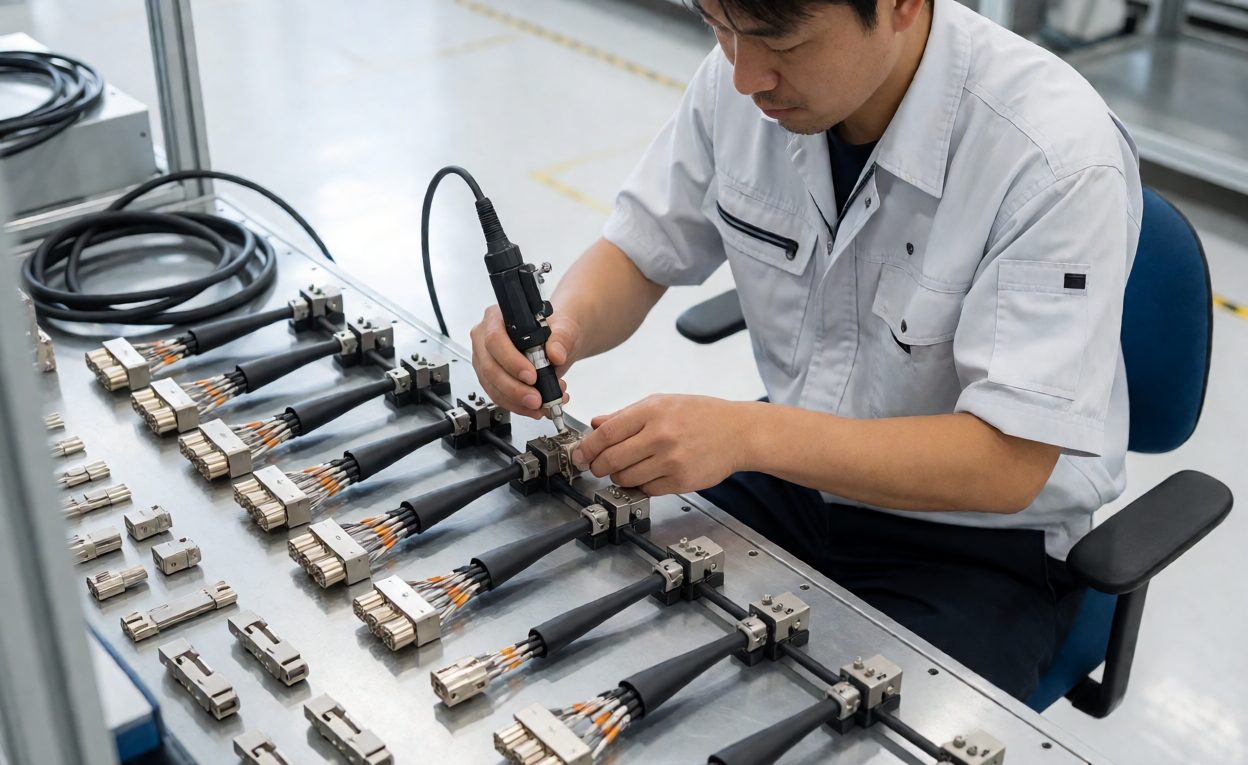
Once parts are present, the sequence is short but not instant: cut and strip, termination, molding if any, backshell and hardware assembly, electrical test, inspection and packing. For a straightforward assembly in the hundreds, that is days. What stretches it are rework and test setup.
Test setup is the most commonly underestimated item. A continuity and insulation resistance check on a fixture that already exists takes minutes. A high-voltage sequence, an impedance measurement needing a calibrated setup, or a custom fixture built for the part number takes engineering time, and the fixture has to be built and verified before the first production unit can pass. Buyers who add a test requirement after the sample is built routinely discover that the fixture, not the cable, is on the critical path.
Production queue matters too. A supplier with spare capacity absorbs a rush order; one committed to automotive or medical programs cannot, and urgency does not move an order ahead of a contractual release. Asking where a rush order would slot into the schedule beats asking whether a rush is possible, because the second question always gets a yes.
Technical Background
The flow of material and information from raw material through to a finished assembly is managed as a supply chain, and what a customer experiences as delivery time is the lead time of that chain rather than the working time of the factory floor. The items being procured are listed on a bill of materials, and the longest line on that list sets the schedule regardless of how small or cheap that line happens to be.
Shortening the Half You Control
- Name the critical path item. Then decide whether a substitute, a stock variant or an earlier commitment removes it.
- Release blanket orders for long-lead parts. Scheduled releases let the supplier buy connectors against forecast instead of reacting to each order.
- Freeze what is expensive to change. Connector and cable choices drive the schedule; length and labeling can stay flexible into the final week.
- Approve first articles quickly. Set an internal review deadline before the sample ships, since this is time the buyer owns.
- Specify testing at enquiry stage. A fixture built during component wait costs no calendar time; one requested after first article adds weeks.
- Price the expedite before needing it. Air freight on connectors and overtime on the line are both purchasable, and knowing the price makes the decision fast.
Order structure is the biggest lever available to a buyer, and the mechanics are set out in realistic expectations on MOQ and lead time. Releasing volume against forecast rather than order by order is covered in blanket orders and scheduled releases, and the availability risk on specific parts in connector end-of-life and lifetime buys. What the supplier needs from the drawing to avoid an engineering loop is listed in the drawing package buyers must specify, and the full sequence from enquiry to bulk production appears in the custom cable assembly process.
Часто задаваемые вопросы
What makes up a cable assembly lead time?
Two halves: component procurement, usually the longer one, and the supplier’s own engineering, first article and production schedule.
Which component usually takes longest?
Connectors, particularly uncommon plating or keying variants, followed by specialty cable made to order and any new molded tooling.
How long does assembly itself take?
Once parts are on the bench, a straightforward run is typically days, plus test setup and any first-article approval loop.
Why does adding a test requirement delay the order?
Custom test fixtures need engineering, build and verification before the first production unit can pass, and that work is often on the critical path.
Can a supplier expedite a rush order?
Sometimes, if capacity is free. Ask where the order would slot into the current queue rather than whether a rush is possible.
Do cable minimum order lengths cause delays?
Yes. A mill run far larger than the assembly demand either waits for the next run or leaves surplus inventory on the buyer’s books.
What shortens lead time most reliably?
Committed volume through blanket orders, early specification of testing, and fast first-article approval on the buyer’s side.