Jacket compound is the single material decision on a cable that a buyer can feel. It sets how stiff the assembly is in the hand, how it behaves in cold weather, how long it survives abrasion on a machine frame, and how much it costs. It is also the decision most often inherited from a previous project without review, which is how a cable designed for a fixed indoor installation ends up specified on equipment that flexes continuously.
Three compounds cover most industrial and OEM work: PVC, thermoplastic elastomer and polyurethane. They are not a simple good-better-best ladder. Each wins clearly in some applications and fails visibly in others.
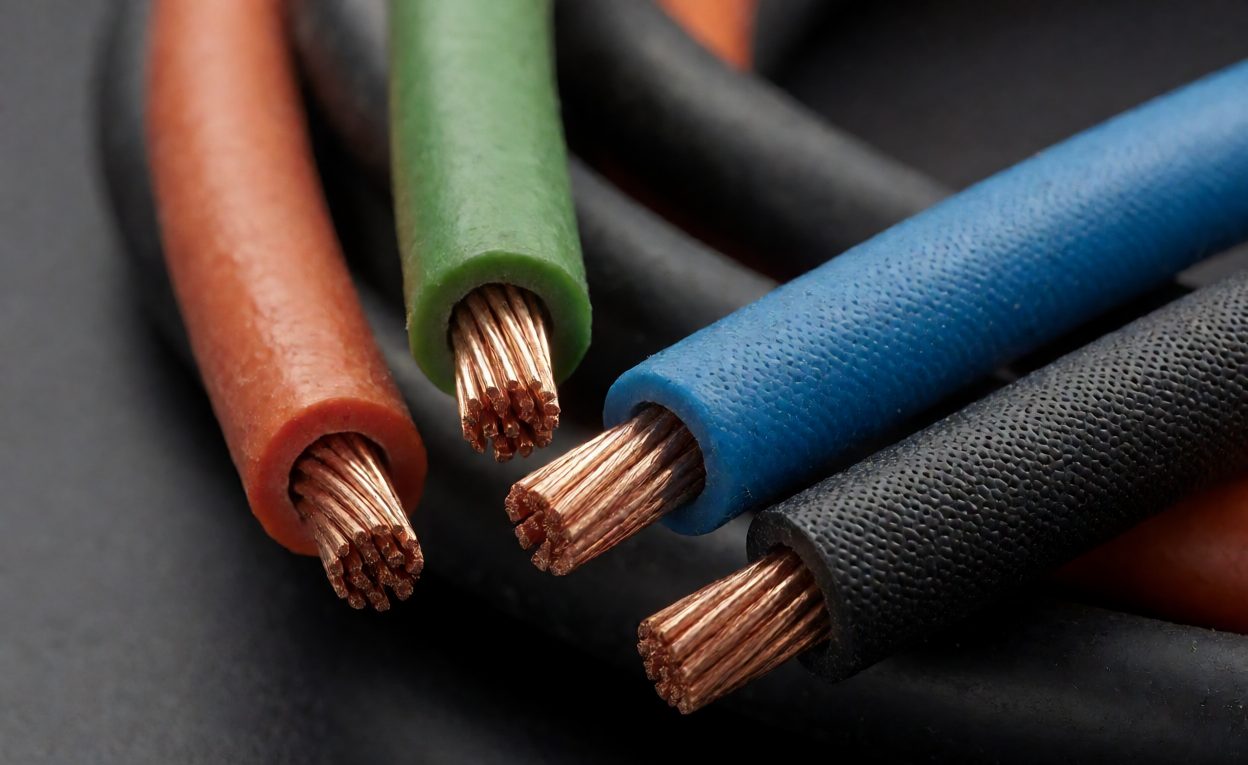
PVC: The Default That Earns Its Place
Polyvinyl chloride is the most widely used jacket material for good reasons. It is inexpensive, extrudes predictably, accepts color readily, strips cleanly and can be formulated across a very wide hardness range. Flame retardance comes almost for free because the polymer is inherently resistant to burning, and a PVC jacket ages acceptably in normal indoor environments.
Its limits are equally clear. Standard PVC stiffens markedly in the cold, which is why a PVC-jacketed cable that is fine in a warehouse becomes unmanageable on outdoor equipment in winter. Plasticizers migrate over time, so older jackets harden and can crack, especially near heat sources. And PVC contains chlorine, which is the reason it is ruled out wherever low-smoke and halogen-free performance is required.
TPE: Flexibility Without the Processing Penalty
Thermoplastic elastomers sit between conventional rubber and thermoplastics. They process on ordinary thermoplastic extrusion equipment, which keeps cost reasonable, but the end product feels and flexes like a much softer material. TPE holds flexibility across a wider temperature range than PVC, resists plasticizer migration because it does not depend on plasticizers in the same way, and offers good low-temperature performance.
The trade-off is that TPE generally gives up some abrasion and tear resistance compared with polyurethane, and it is more sensitive to certain oils and solvents. It is also a broad family rather than one material, so a TPE callout without a compound reference is close to meaningless: two TPE jackets from different suppliers can differ more than a PVC and a TPE from the same one.
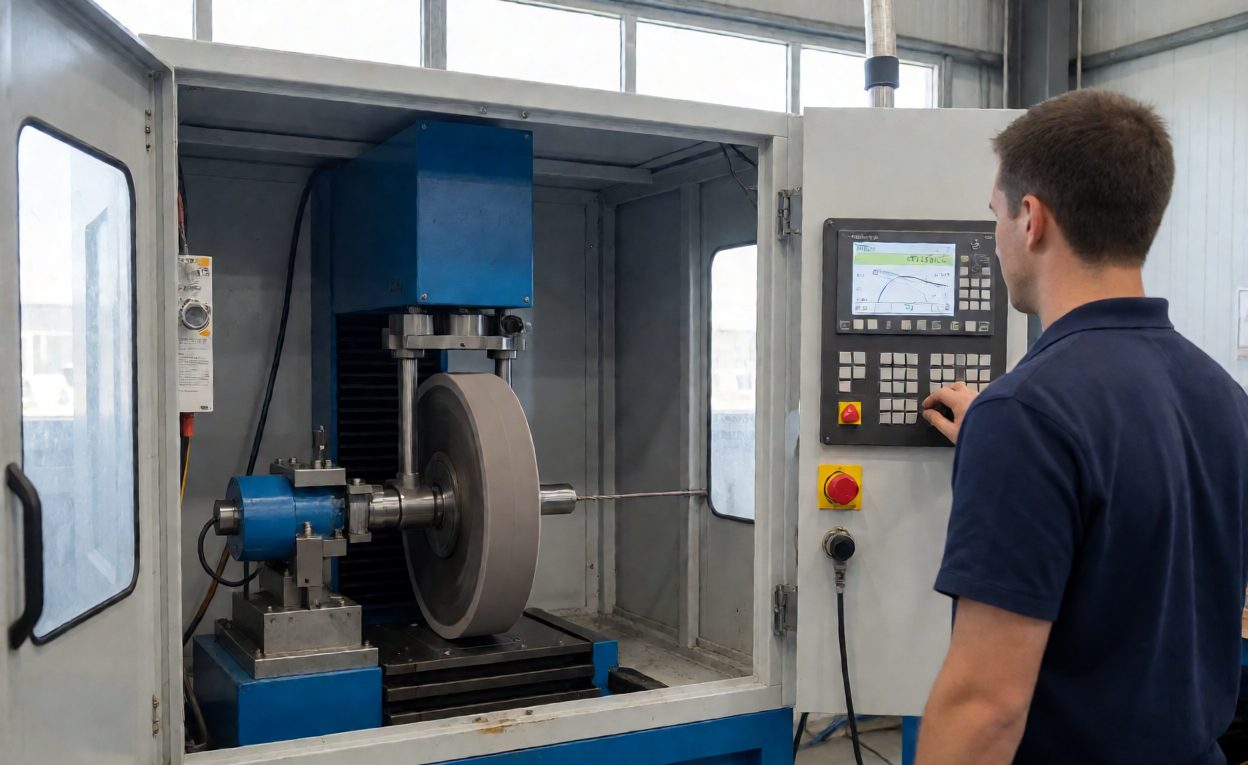
Polyurethane: The Abrasion Answer
Polyurethane is the compound to reach for when the cable is dragged, abraded or coiled over rough surfaces. Its abrasion and cut resistance are substantially better than either PVC or TPE, it stays flexible at low temperature, and it resists oils, fuels and many solvents. It also has a characteristically low coefficient of friction and a slightly tacky feel, which is why retractile and portable equipment cables are so often polyurethane.
What it costs is money and process tolerance. Polyurethane compound is more expensive per kilogram, extrudes more slowly and is fussier about moisture and temperature control, and it is harder to strip cleanly. It can also be more prone to hydrolysis in hot, humid environments unless a suitable grade is chosen, and it is not inherently flame retardant, so a flame-rated polyurethane jacket is a specific formulation rather than a default.
Comparing Them on the Properties That Matter
- Abrasion and cut resistance. Polyurethane clearly best; TPE generally ahead of standard PVC.
- Flexibility and low-temperature handling. TPE and polyurethane both stay workable well below PVC’s practical limit.
- Chemical and oil resistance. Polyurethane strongest; TPE variable by compound; PVC vulnerable to many solvents.
- Flame retardance. PVC inherently good; TPE and polyurethane need specified flame-retardant grades.
- Cost and processability. PVC cheapest and most forgiving; TPE modest premium; polyurethane highest material and processing cost.
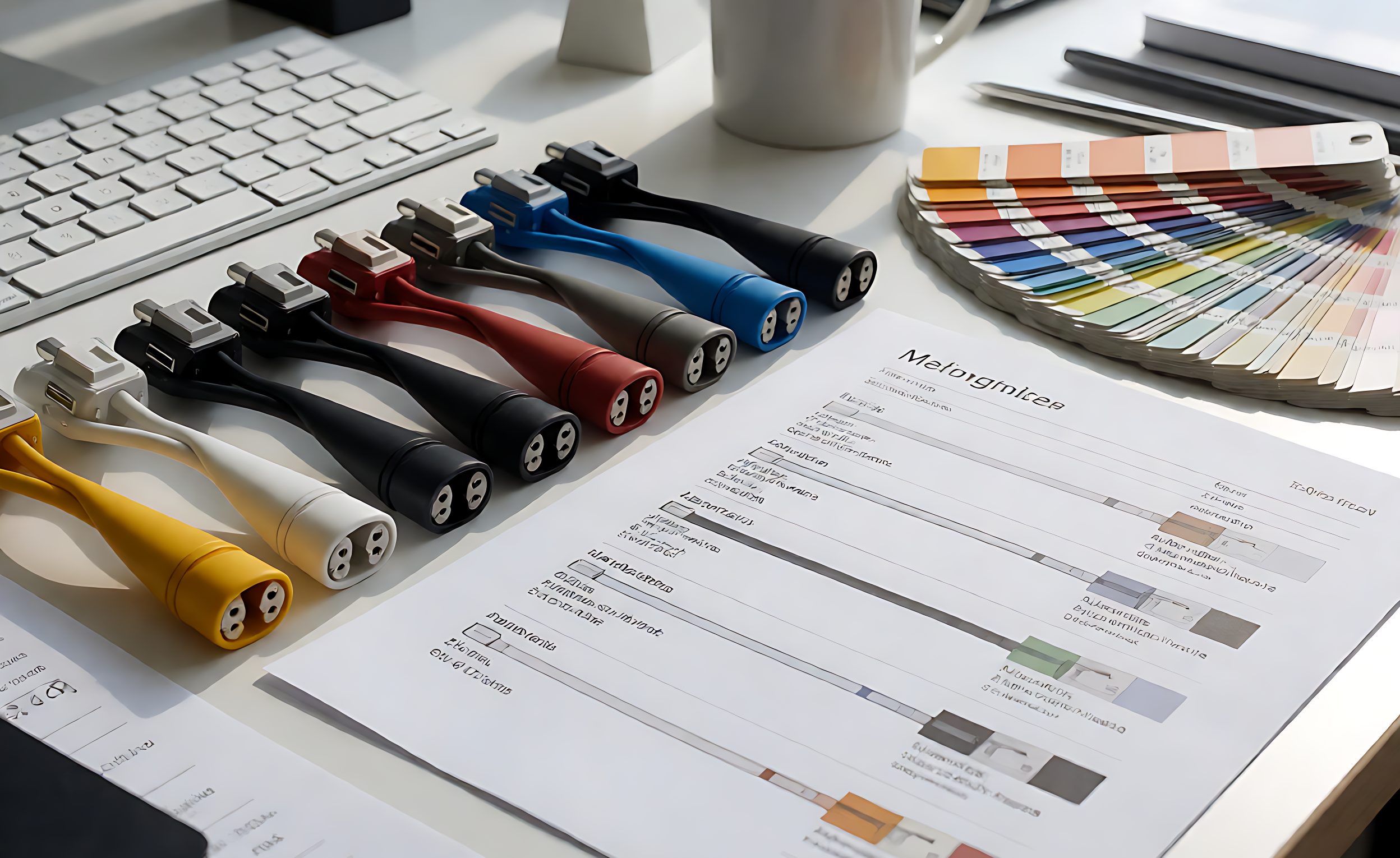
- Color and marking. PVC widest palette; TPE good; polyurethane more limited and more prone to marking difficulty.
Reading that list per application rather than in general is the point. There is no compound that wins every line, and a specification that does not say which lines matter will be quoted with the cheapest compound that satisfies the drawing as written.
Technical Background
The baseline material is polyvinyl chloride, a halogenated thermoplastic whose properties are adjusted with plasticizers and stabilizers. The middle ground is thermoplastic elastomer, a family that combines rubber-like elasticity with melt processing. The high-performance option is polyurethane, a polymer class whose abrasion resistance and elasticity come from its segmented hard-and-soft domain structure.
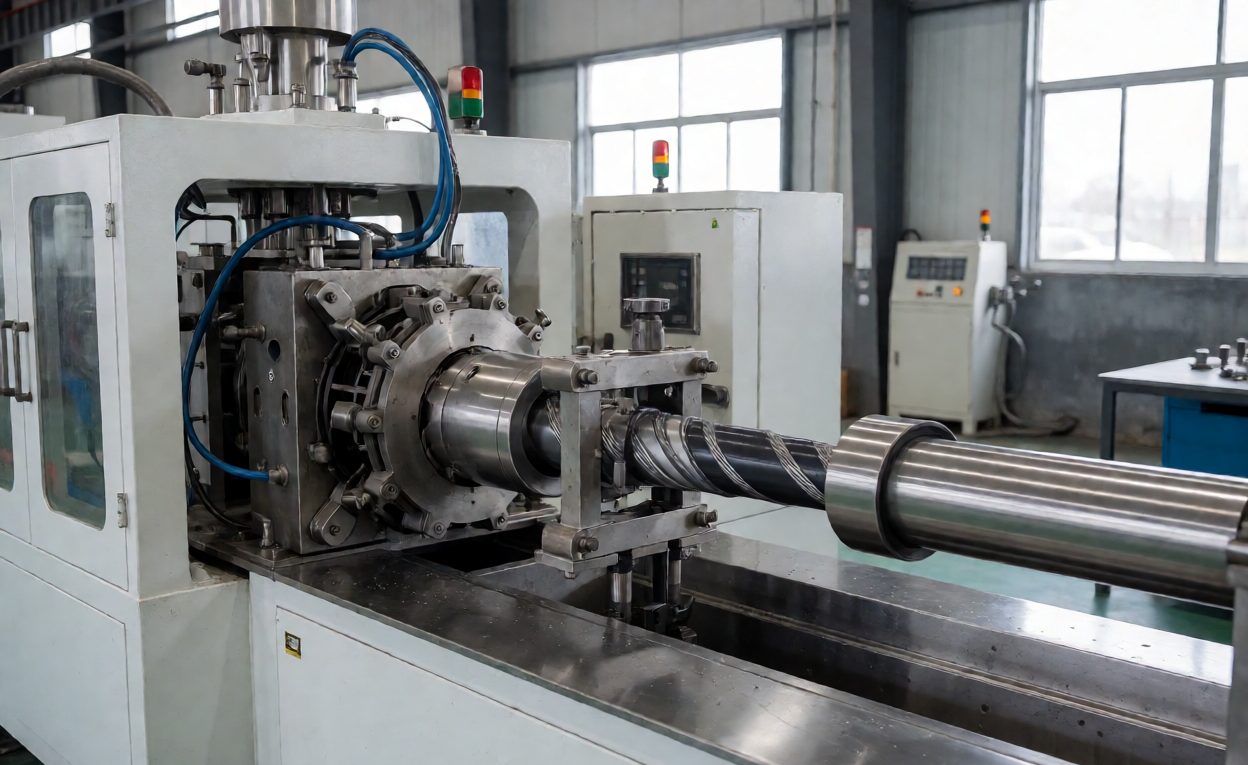
Writing the Material Into the Specification
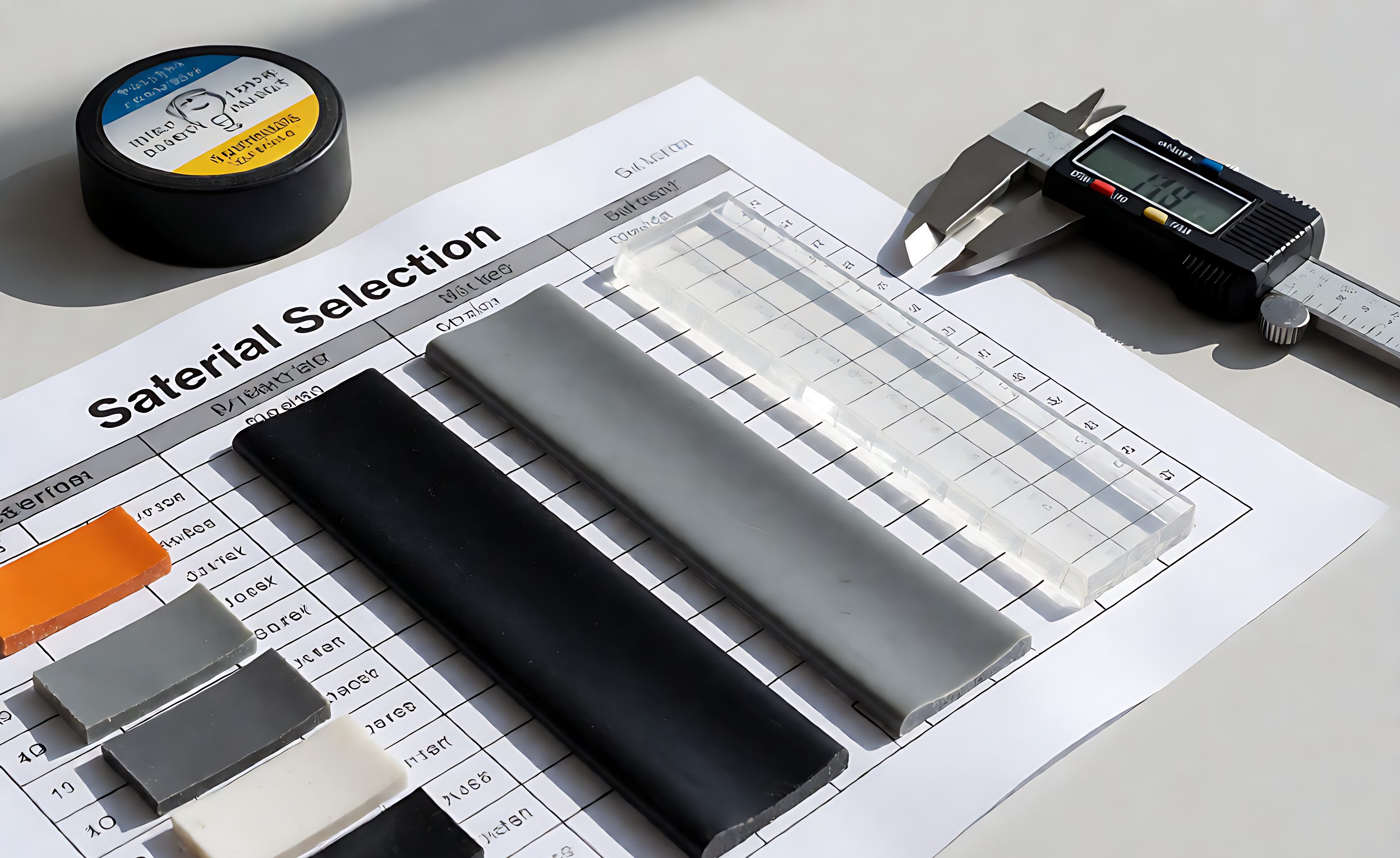
Four lines make the choice enforceable. Name the compound family and the specific compound or grade, since families vary internally. State the hardness, usually as a Shore durometer value, because two compounds of the same family behave very differently across the hardness range. State the temperature range the installation actually sees, including the coldest start-up condition rather than the average. And state every secondary requirement that constrains the compound – flame class, oil resistance, UV exposure, halogen-free, food or medical contact – because each one eliminates candidates.
Then ask for evidence tied to the part number. A compound callout is only auditable through the jacket printing and a declaration covering the material used, and the cheapest quoting exercise in the industry is substituting a generic compound for the specified one while the drawing still says the right word.
Compound choice is set out further in industrial cable materials and jacket compounds, and the fire-performance side in flame-retardant jacket construction. Where halogen content is regulated, see halogen-free and low-smoke requirements, and where the jacket interacts with installation geometry, see the cable bend radius guide.
Perguntas Frequentes
Which cable jacket material lasts longest?
For abrasion and dragging, polyurethane. For general indoor use with no abrasion, PVC lasts well and costs far less.
Is TPE better than PVC?
For flexibility, low-temperature handling and plasticizer stability, yes. For cost, color range and inherent flame retardance, PVC is still ahead.
Why does PVC cable get stiff in cold weather?
The compound stiffens as temperature falls and plasticizers migrate over time, so cold-start handling degrades well before the cable fails.
Is polyurethane jacket worth the extra cost?
Yes where the cable is dragged, coiled over rough surfaces or exposed to oils; no for static indoor runs where abrasion is not a factor.
Does jacket hardness matter on a specification?
Yes. Two compounds of the same family behave very differently across the hardness range, so state a Shore value.
Are TPE and polyurethane inherently flame retardant?
No. Unlike PVC, both need a specifically formulated flame-retardant grade to meet a flame class.
How do I verify the compound I specified was used?
Check the jacket printing against the specification and file a part-specific material declaration with each delivery.