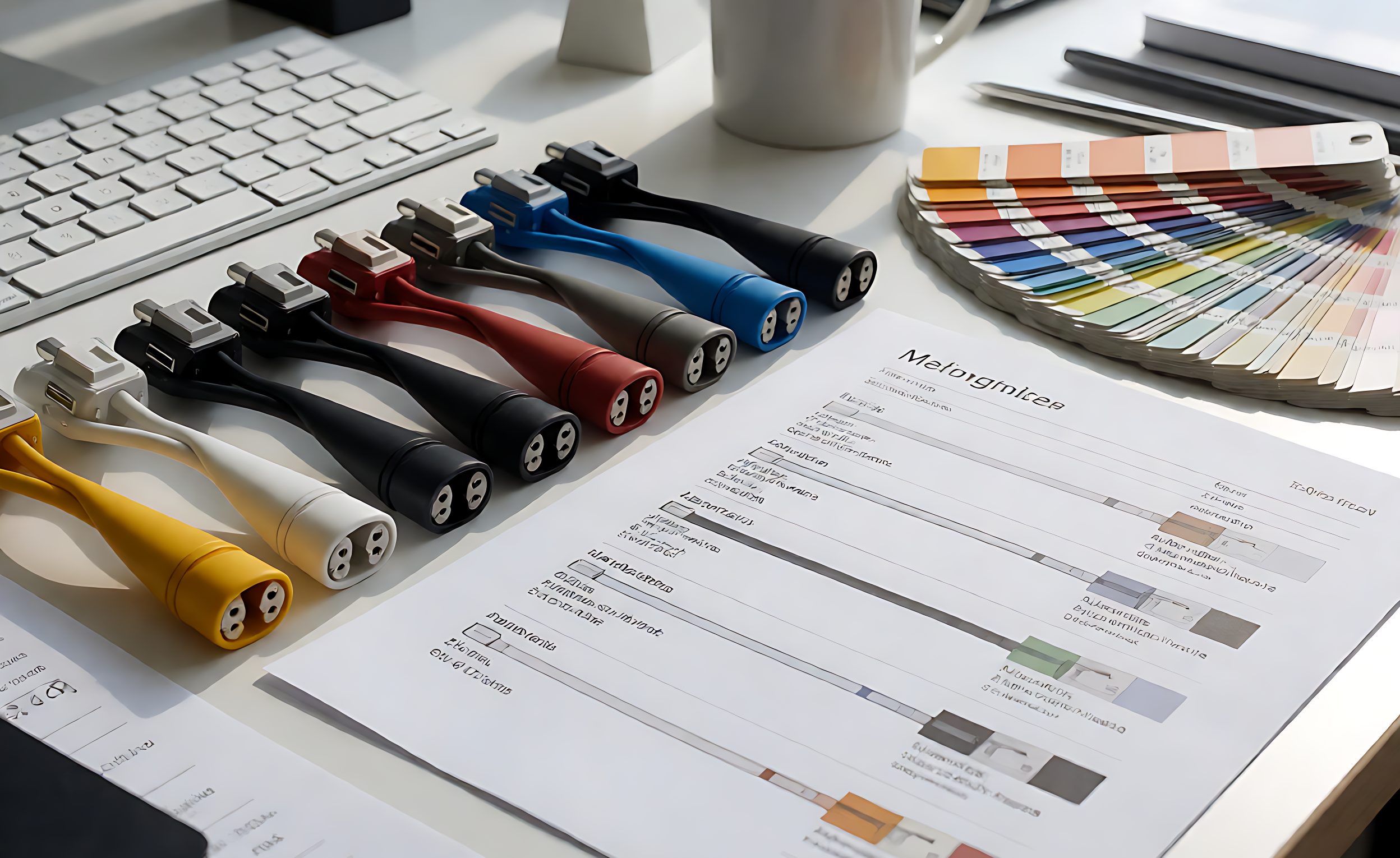
On a custom cable order, color and marking are treated as cosmetics and specified as afterthoughts, which is why they generate more small disputes than electrical performance does. A jacket color that misses the sample, a print that fades in a month, a private logo on an unauthorized batch – each is trivial in engineering terms and expensive commercially, because these are the parts of the product the customer sees.
All three problems share one cause: the requirement existed as a conversation rather than as a specification. Color and marking are cheap to define and easy to verify; this article sets out how.
Why Color Coding Is a Specification Item
Color on cable does three jobs, and a scheme should know which of them it is doing:
- Function identification. Distinguishing power from signal or circuit from circuit, so an installer works by sight instead of by meter; color is the cheapest defense against misconnection.
- System identification. Tying the cable to a product family or customer program, so staff sort parts at a glance.
- Brand and presentation. Where the cable is visible in the finished product, the jacket color is part of its face and judged by people who never read the datasheet.
The three jobs conflict: a functional scheme wants high-contrast conventional colors; a brand scheme wants an exact corporate shade. Deciding which job dominates per part number settles most downstream arguments.
Building a Color Scheme That Works in Production
Jacket color is pigment compounded into the material: each new color carries a minimum compound order, a purging cost on the extrusion line and a premium over black. Batch consistency degrades across suppliers and jacket materials: a PVC grey and an LSZH grey are different greys.
A workable scheme therefore follows a few rules:
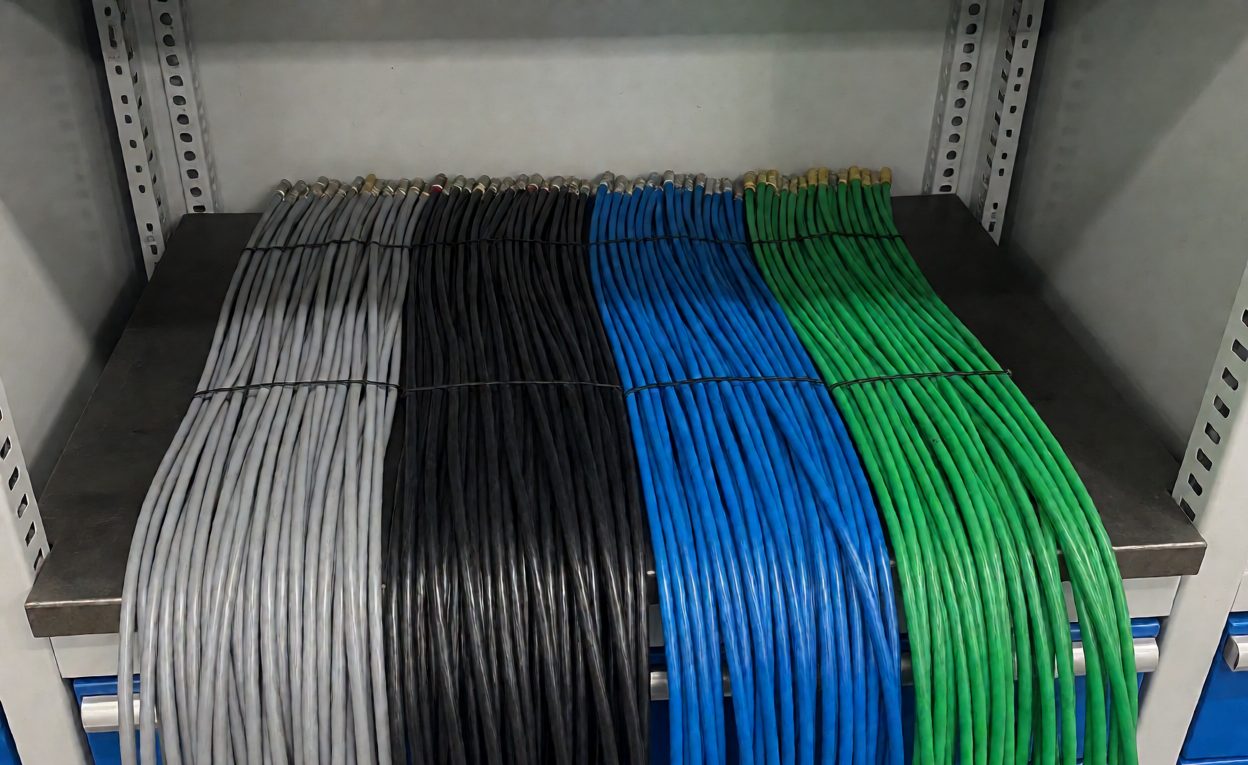
- Standard colors where possible. Black, grey, blue, green, red and white are stocked compound colors with tight batch consistency and no premium worth arguing about.
- One master color sample per color. Agreed as a physical retained sample, not a Pantone number alone, since pigment on polymer does not track print standards exactly.
- Tolerance stated as visual match. “Match to retained master within normal batch variation” is enforceable; “Pantone 432 C” on a jacket is a starting point, not a guarantee.
- Color as the second identifier. Where function depends on color, add printing as the primary identifier; color vision deficiency and shop-floor lighting both exist.
Jacket Printing: Content and Method
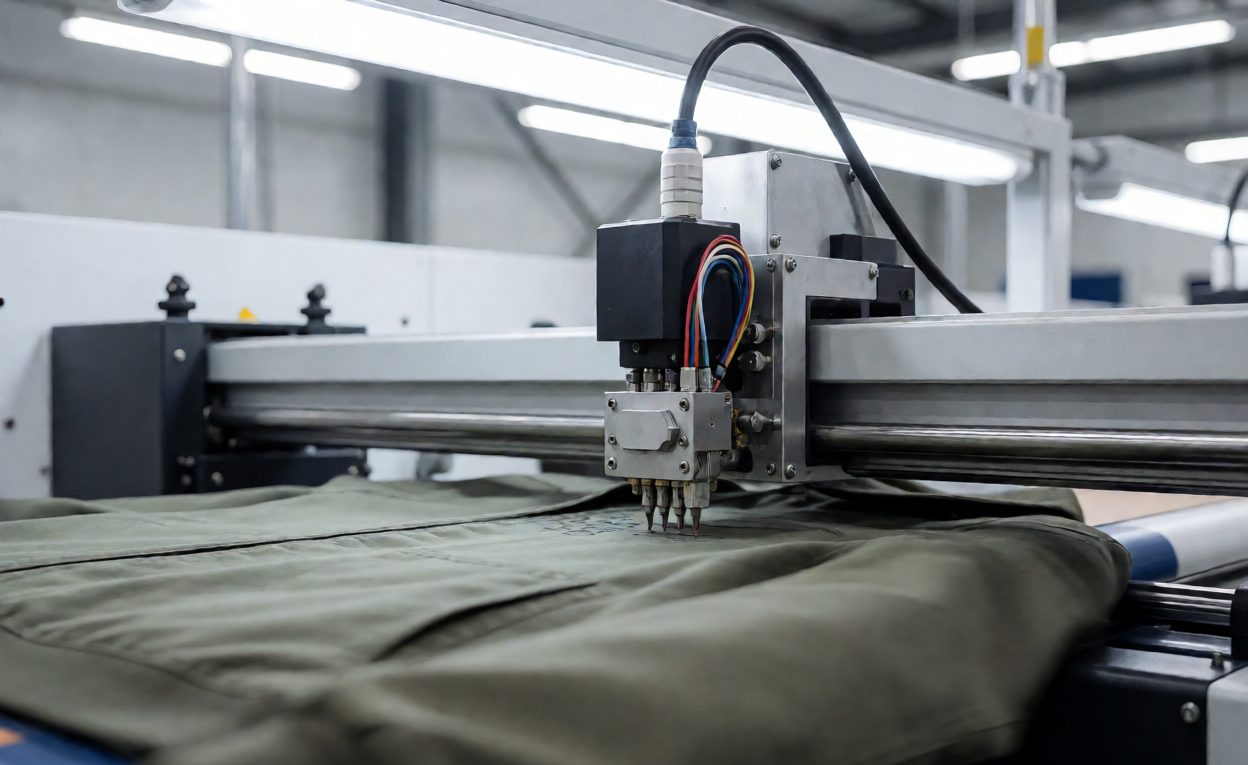
Jacket marking is applied by ink jet or hot foil embossing during extrusion. Ink jet prints fast but sits on the surface, so abrasion resistance depends on ink grade; embossing deforms the jacket and survives abrasion. Cable pulled through ducts wants embossing or durable ink; cable installed and left wants either.
Specify the print as a repeating line with defined content, interval and legibility. A useful default repeats every meter: name, product code, rating and approvals. State what must not appear – on private label work, notably the manufacturer’s own name and factory codes. Verify legibility against a retained printed sample, because ink lots drift.
Private Label Marking: What to Agree Upfront
Private label – manufacturing to the buyer’s brand – is routine in the cable industry and fails commercially only when scope is assumed. Four points belong in writing before the first production run:
- Exact marking content. The buyer’s name as it will appear, artwork for any logo, and placement on the jacket or in the mold tool.
- Exclusions. The manufacturer’s identity must not appear on print, overmolds, bags or cartons, and certificates should name the buyer where the market requires.
- Artwork and tool ownership. Who supplies artwork, who owns a mold carrying the buyer’s logo, and what happens to it when the program ends.
- Authorization control. Who may order production carrying the buyer’s mark, so branded goods cannot be built for other accounts.
The last point is the one buyers forget: a logo in a mold tool can produce branded product for years, and control of it belongs in the tooling clause, not in trust – a core part of the private label relationship.
Technical Background
Color as information has formal structure: a color code maps colors to meanings by convention, and wiring practice runs on such conventions, which is why schemes should deviate deliberately rather than accidentally. The marking itself is a printing process – thermal transfer printing is common for labels alongside the ink jet and embossing used on jackets – and every process holds detail best when artwork is designed for it, not scaled down from a brochure.
Verifying Color and Marking at Goods-In
Verification is visual. Compare jacket color against the retained master under the light where the parts will be judged, not warehouse lamps. Read the print on a sample from each carton: content, interval, legibility, and nothing present that was excluded. File a reference photo per lot beside the retained sample, so discrepancies are arguable with evidence, not memory.
For new colors or artwork, the check belongs at first article: approving a shade from a production-line sample prevents the classic screen-approval, carton-dispute sequence.
Color and marking connect to the jacket compounds behind the shades in industrial cable materials and jacket compounds and to custom color programs in custom jacket colors for OEM orders. Marking durability on molded parts relates to overmolding and strain relief, shelf behavior of marked parts to connector plating, shelf life and storage, and the documentation that should accompany marked shipments to the test reports buyers should require.
Perguntas Frequentes
Posso casar uma cor Pantone exata em uma jaqueta de cabo?
Approximately. Pigment in polymer does not track print standards exactly, so agree a retained physical master rather than a Pantone number.
Por que uma cor de jaqueta personalizada custa mais?
Each color is a compound batch with minimum order and purging cost on the extrusion line, so standard stocked colors are cheaper.
A cor deve identificar sozinha um circuito?
No. Use color as the second identifier and printing as the primary, because lighting conditions and color vision deficiency both vary.
Which jacket printing method is more durable?
Embossing survives abrasion best; ink jet is faster, with durability set by the ink grade.
What must a private label agreement cover?
Marking content and artwork, exclusions of the maker’s identity, tool ownership, and authorization control.
Can my logo go in the overmold instead of the print?
Yes, molded marking is durable, but the logo becomes part of a tool whose ownership and reuse terms should be in writing.
How do I verify color and print on arrival?
Compare against the retained master under realistic lighting, read the print per carton, and file a reference photo with the lot.