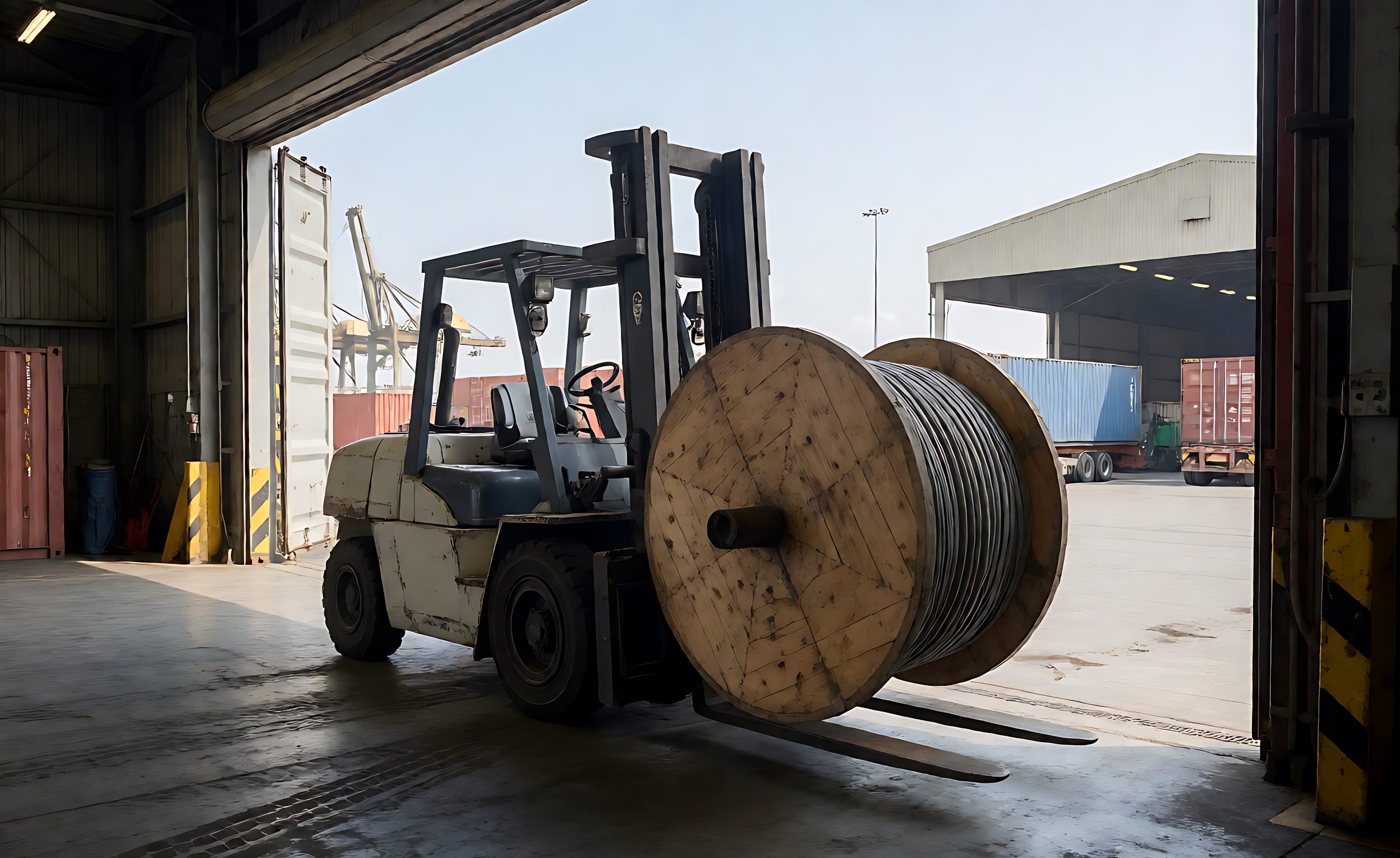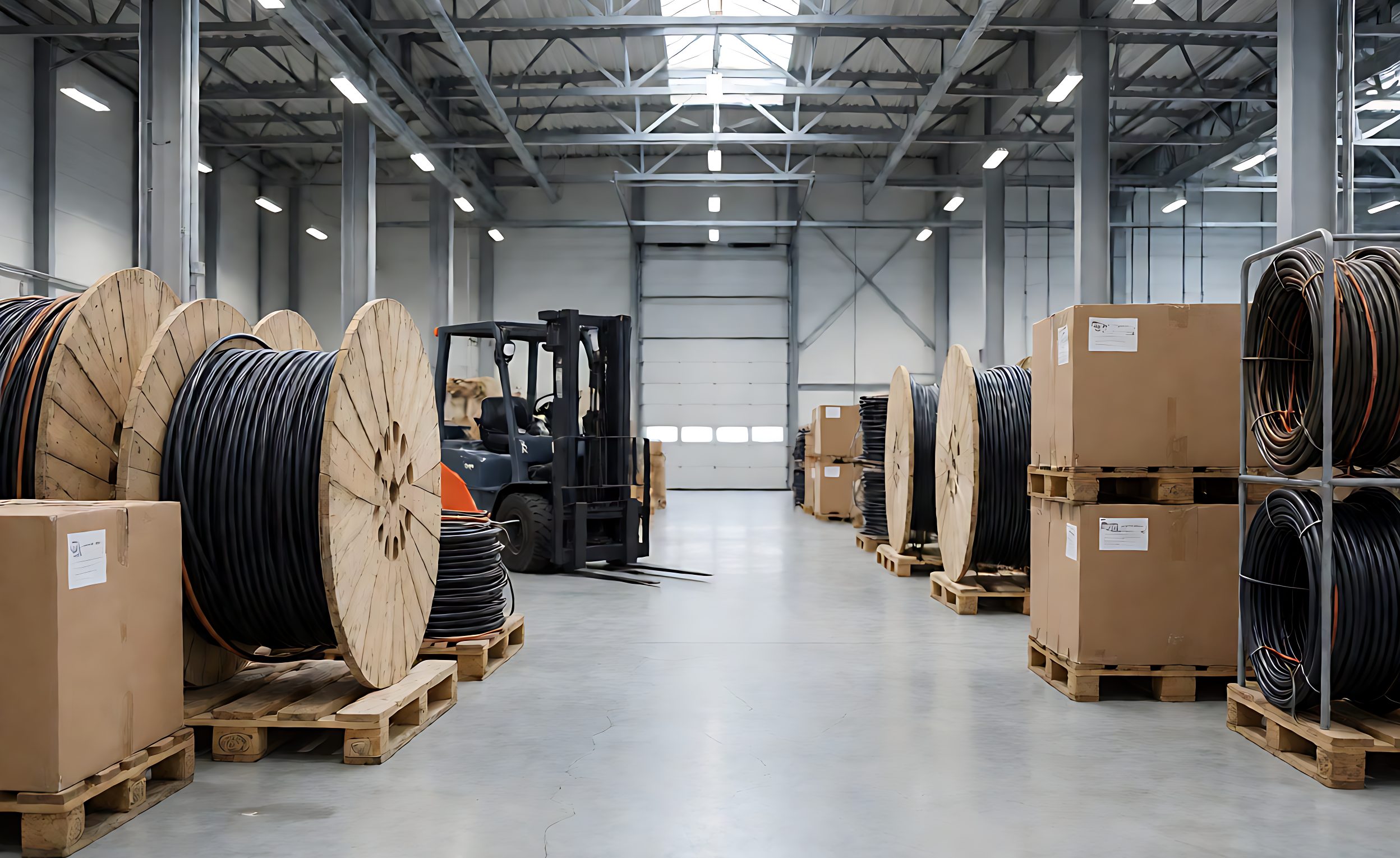
How cable physically arrives at your door is a purchasing decision that most specifications leave to the supplier’s habit. It should not be. The same conductor, jacket and print can be delivered on a wooden reel, coiled and bagged, or pre-cut to working lengths, and the format chosen changes receiving labor, scrap, kinked cable, production line speed and unit price – often by more than the difference between two suppliers quoting the same cable.
Neither format is better in general. Reels win where cable is consumed continuously; cut lengths win where cable is consumed as discrete units. The mistakes happen when the format follows habit from a previous project instead of following the application.
What the Reel Format Does Well
A reel is the native format of cable manufacture: produced, tested and printed continuously, so supplying it adds the least handling on the maker’s side, which is why bulk pricing always looks best per meter on a reel. The advantages concentrate where consumption is continuous too:
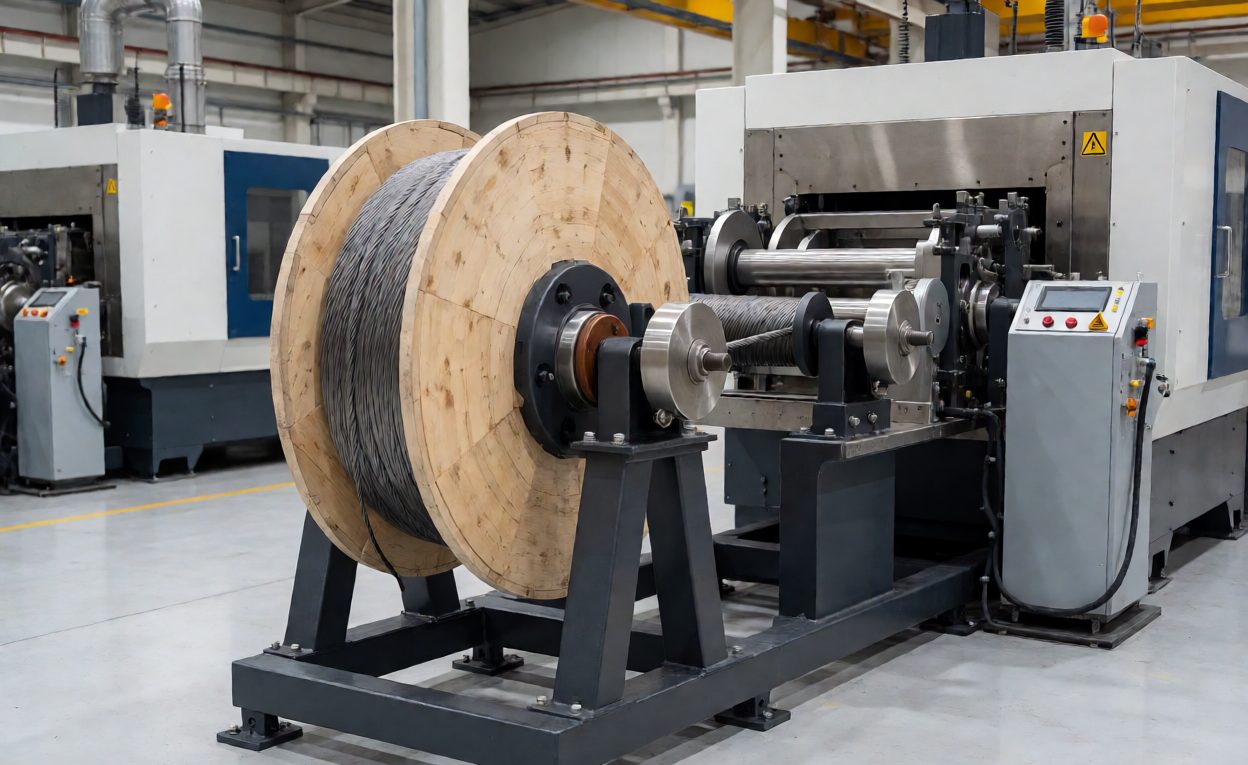
- Direct feed into processing. Cutting, stripping and termination machines pay off from reels without repacking, and the pay-off speed matches machine speed.
- No intermediate kinks. Cable that has never been coiled small arrives with its natural lay, which matters for jacket appearance and for higher-speed processing.
- Lowest waste per meter where long runs are the norm, because offcuts are only generated at reel ends.
- Clean metering. Meter-marked jacket and a known reel length make consumption measurable against production output.
The costs sit on the buyer’s side: storage space, a pay-off stand or at minimum a rotating aid, and returning or disposing of wooden reels is a logistics task someone owns. Where the application needs short pieces, every cut creates an offcut, and offcuts from expensive specialty cable are the waste buyers discover at their first stock take.
Where Cut-and-Bagged Lengths Win
Cut lengths convert cable into a component. Each piece is the working length, tied or bagged, countable at goods-in and deliverable straight to an assembly station or a kit. When the application consumes fixed lengths – a harness line, a service kit, a per-machine spares set – cut supply removes the cutting operation, the measuring step and the offcut entirely from the buyer’s floor.
Cut supply also concentrates quality control where it belongs: length and appearance checks happen on the supplier’s line for every piece instead of on yours for a sample, and a short or damaged piece is the supplier’s yield problem rather than your rework. For small and medium volumes this is usually the decisive argument.

Compromise formats exist too: buying a reel but having the supplier cut and pack from it combines bulk pricing with piece delivery, and for high-volume fixed-length consumption a scheduled cut from qualified reel stock beats both formats.
The Cost Mechanics Behind the Formats
Three mechanisms set the price difference. First, handling: cable on a reel passes through the factory once; cut lengths pass through a cutting and coiling operation, with labor that scales per piece. Second, yield: cutting from bulk produces offcuts unless lengths nest perfectly, and the supplier prices that scrap somewhere. Third, packaging: bags, ties and labels per piece cost more than one reel.
The result is a crossover. Per meter, the reel is cheaper; per usable working piece, cut supply often is, once the buyer’s own cutting labor, offcut rate and receiving time are charged to the reel option honestly. The arithmetic combines supplier-side scale effects with your own process costing, and both sides belong in the comparison for it to mean anything.
Technical Background
The packaging discipline behind all of this is standard packaging and labeling practice: the pack protects, identifies and enables handling, and the reel is simply the pack optimized for continuous feed, descended from the cable reel used by the wire industry for over a century. Which format minimizes total cost is an inventory question as much as a manufacturing one, decided by consumption pattern rather than catalog default.

Writing the Format Into the Order
Supply format is specified per part number in a few lines: reel, spool or cut length; for reels, the nominal length per reel, reel type and whether meter marking is required; for cut lengths, the length and tolerance, coil diameter, tie or bag per piece, and pieces per carton. These lines sit alongside the packing and labeling clause rather than replacing it.
Two details prevent most friction: state whether the last reel of an order may be short, and for cut lengths agree the length datum, conductor length between cut ends or overall including terminations, so the drawing and the cutting machine agree.
Finally, revisit the format when volumes change; a project that starts with bagged cut lengths can outgrow that format by its second year, and suppliers will usually say so when asked.
Format choice connects to the packing and labeling specification in cable assembly packaging and labeling for bulk shipments and to scheduled supply in blanket orders and scheduled releases. The unit economics are covered in total cost of ownership for OEM buyers, lead time effects in MOQ and lead time expectations, and the verification that should follow any first shipment in the test reports buyers should require.
Perguntas Frequentes
Is cable always cheaper per meter on a reel?
Yes, because it needs the least handling from the maker. But per usable working piece, cut lengths can be cheaper once your own labor and offcuts are counted.
When should I order cut lengths instead of reels?
When the application consumes fixed working lengths in discrete units, such as kits, harness lines or per-machine spares sets.
What causes offcut waste on reel supply?
Cutting short working lengths from bulk generates offcuts at every cut and at reel ends, which is priced into the cable either way.
Can I get bulk pricing with piece delivery?
Often, by having the supplier cut and pack from qualified reel stock on a schedule, combining bulk rates with piece-level handling.
What should I specify for cut lengths?
Length with tolerance, the measurement datum, coil diameter, tie or bag per piece, and pieces per carton.
Are partial reels acceptable at delivery?
Only if agreed. State whether the final reel of an order may be short, because suppliers differ and the assumption surfaces late.
Does supply format affect quality?
Yes. Cut supply moves length and appearance verification to the supplier’s line for every piece instead of a sample on yours.