A buyer wants price certainty and guaranteed capacity. A supplier wants volume visibility so it can plan materials and line time. A blanket purchase order with scheduled releases is the instrument that gives both, and it fails in predictable ways when either side treats it as an option rather than a commitment.
The structure is simple: one agreement covering a total quantity over a period, with individual releases issued against it as stock is needed. Price and lead time are fixed by the agreement; timing and quantity flexibility sit in the releases.

What Each Side Commits
The buyer commits to a total quantity over the period and to a release pattern. The supplier commits to a price for that quantity, a lead time per release, and – the part that matters most – reserved capacity and material cover for the agreed volume.
The buyer’s commitment is the one that tends to be treated loosely, and it is why suppliers become cautious. A blanket order whose total is never taken is not a commitment, and a supplier that has been burned will price the next one accordingly. Where volume genuinely cannot be committed, say so: a smaller firm commitment plus agreed pricing for additional volume is more honest and usually better received.
The supplier’s commitment should include what happens if it cannot meet a release. Capacity reservation is only meaningful if there is a defined remedy, and that belongs in the agreement rather than in a conversation.
Structuring the Release Mechanism
Four parameters define how the mechanism works in practice:
- Release lead time: how much notice the supplier needs before each delivery date.
- Release quantity flexibility: how far an individual release can vary from the forecast, usually expressed as a percentage band.
- Firm versus forecast window: releases inside the firm window are committed; those beyond it are indicative and can move.
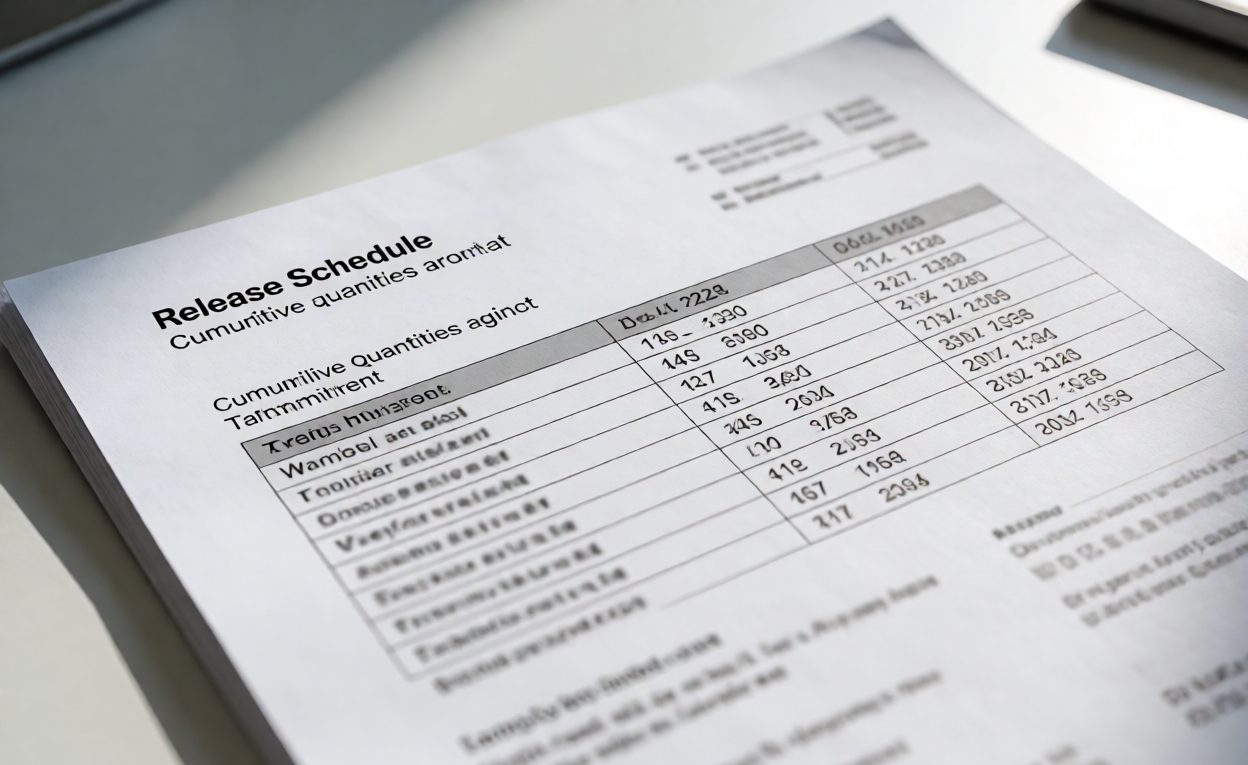
- Cumulative reconciliation: how taken quantity is tracked against the total, and what happens at the end of the period.
The firm window is the key parameter. A rolling window – for example, the next eight weeks firm and the following sixteen indicative – gives the supplier enough to plan materials while leaving the buyer room to react to demand.
Where These Arrangements Fail
Three failure modes recur. Material price movements make the supplier want to reopen price, which is why a raw material adjustment clause should be agreed upfront rather than argued later. Demand falls and the buyer stops releasing, leaving the supplier with material bought against the commitment. And the end of the period arrives with a shortfall and no agreed treatment.
The last two are the same problem seen from opposite sides, and both are solved by stating what happens to un-released quantity: whether it carries over, expires, or is invoiced. Leaving it unsaid guarantees an argument at exactly the point the relationship is being renewed.

Technical Background
The instrument is a form of purchase order covering a period rather than a single delivery, with releases issued against it. Physically it supports a just-in-time supply pattern, where deliveries arrive close to need rather than being held. The quantity the buyer is trying to avoid carrying is inventory, and the mechanism trades inventory holding against commitment risk.
Making It Work
Review the schedule monthly with the supplier rather than only at renewal. A short call comparing forecast against taken quantity, and flagging any upcoming demand change, prevents most surprises and keeps the supplier’s material planning aligned with reality.
Hold two numbers visible to both sides: cumulative quantity taken against the commitment, and the current firm window. Disputes about blanket orders are almost always disputes about one of those two, and both are trivial to track.
Alignment with the supplier’s planning rhythm matters as well. Releases issued weekly or monthly on a predictable cycle are easier to serve reliably than sporadic demands, even where the total quantity is identical, so it is worth asking what rhythm suits their production planning and adopting it where demand allows. The mechanism also suits more than commodity parts: assemblies with long material lead times, for which a spot order would always be late, and parts whose demand is predictable but whose storage cost is not.
Keep the agreement visible to both planning teams, because a blanket order that only procurement knows about tends to be ignored when schedules get tight.
Supply planning connects to realistic MOQ and lead time expectations and to the volume effects described in quotation cost drivers. Order planning is also discussed in the MOQ, lead time and quality checklist, and continuity planning in second-source qualification.
Finally, treat storage conditions as part of incoming inspection for sensitive parts. A humidity indicator that has changed colour is a finding rather than a decoration, and it should trigger a check before the stock is issued to a build.
FAQ
O que é uma ordem de compra global?
An agreement covering a total quantity over a period, with individual releases issued against it as stock is needed, fixing price and lead time.
O que o fornecedor se compromete a fazer?
Price, lead time per release, and reserved capacity and material cover for the agreed volume, ideally with a remedy if a release is missed.
O que é uma janela firme?
The period in which releases are committed rather than indicative. Beyond it, quantities can move, which gives the buyer flexibility.
What happens to un-released quantity?
It should be stated in the agreement: carried over, expiring, or invoiced. Leaving it unsaid guarantees a dispute.
Should price be adjustable for material costs?
Agree an adjustment clause upfront, so movement is handled by a rule rather than by renegotiation.
How often should the schedule be reviewed?
Monthly, comparing forecast against taken quantity and flagging demand changes early.
Can a blanket order work at low volume?
Yes, but the commitment should match reality. A smaller firm commitment with agreed pricing for additional volume is better than a large one that is never taken.