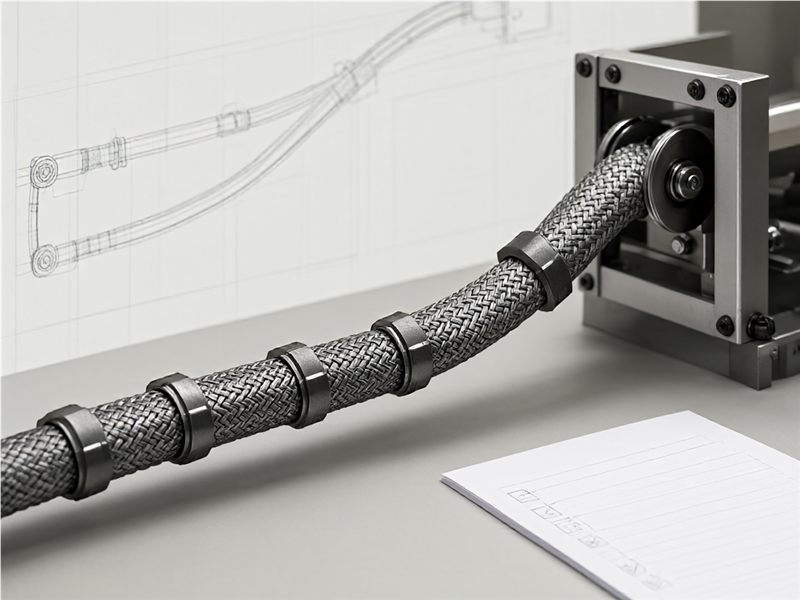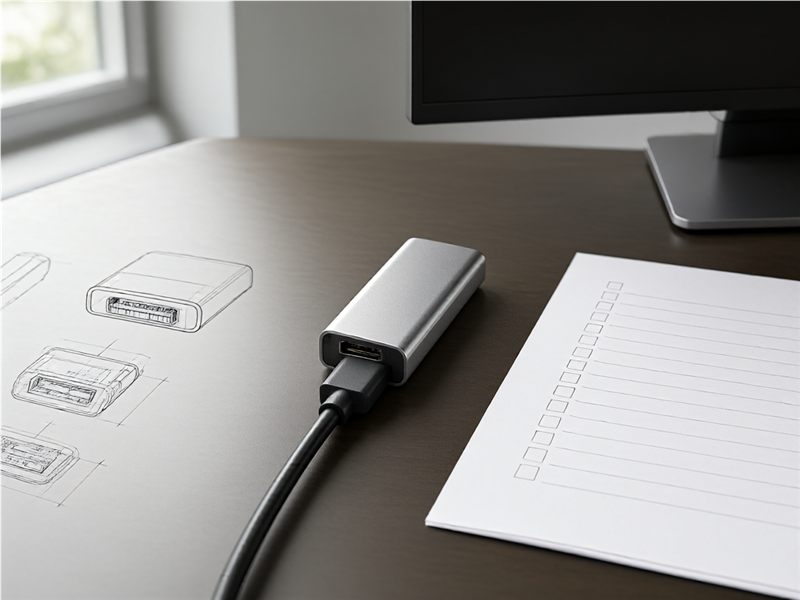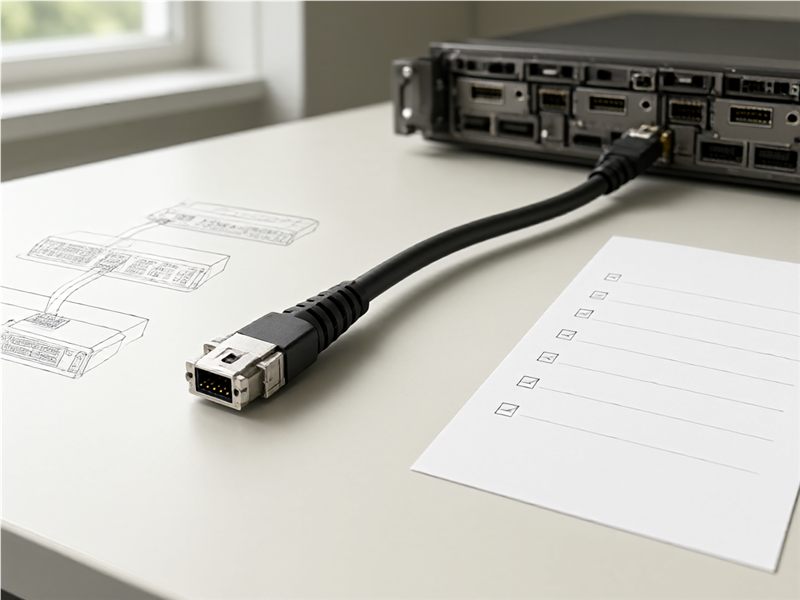
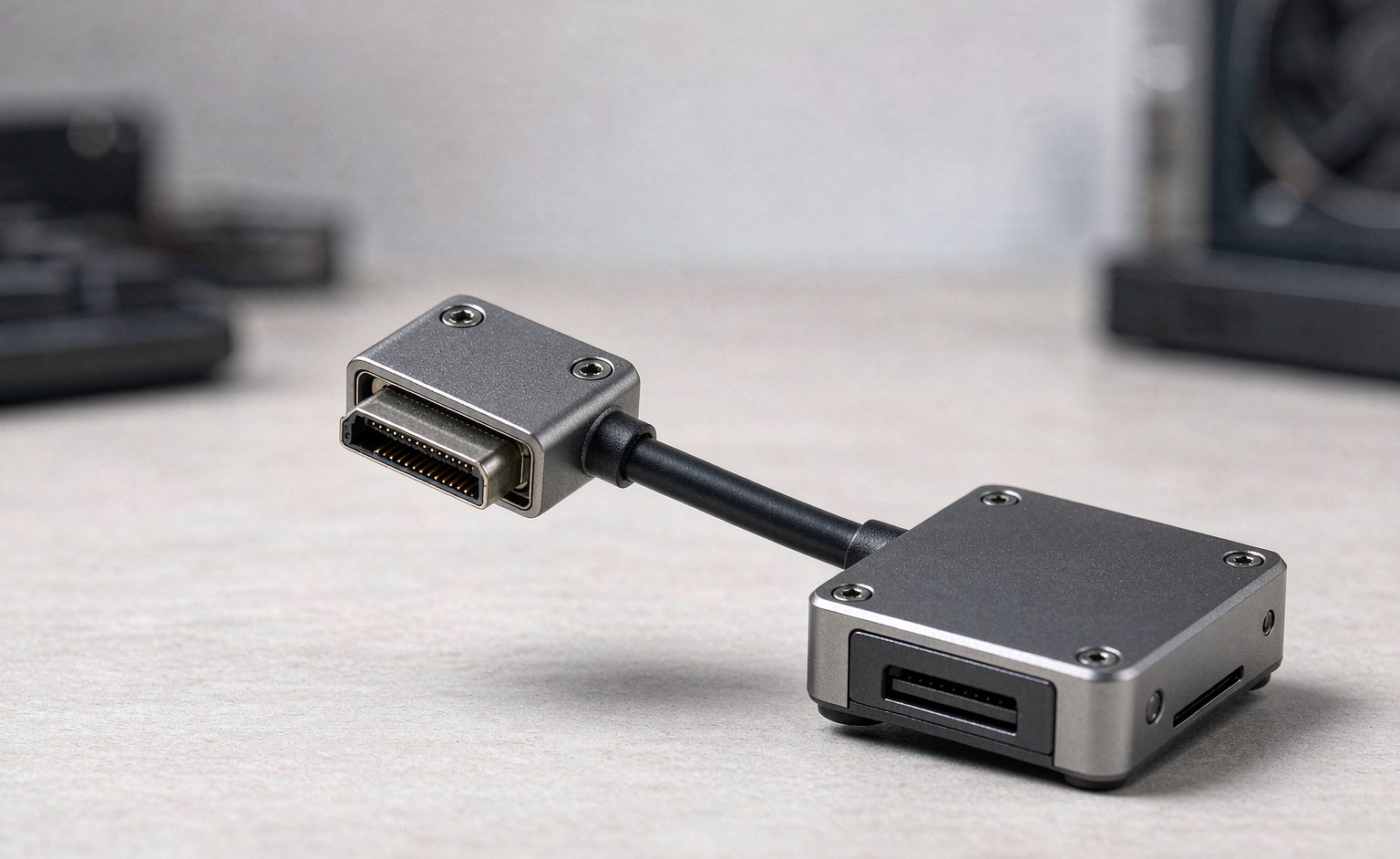
OCuLink is the connector that lets PCIe leave the motherboard and reach an external device, and it is increasingly found in compact systems where a full PCIe slot is not available. It also generates more specification questions than most connectors, because the 4i and 8i variants look similar, the locking mechanisms vary by vendor, and the length limits are tighter than buyers expect. This guide covers what to confirm.
Key Takeaways
- 4i and 8i are different lane widths; they are not interchangeable and are not adapter-compatible.
- Locking mechanism varies by implementation — confirm the mating port’s latch before ordering.
- Passive OCuLink length limits are short; treat length as a design constraint, not a preference.
- Custom lengths are cut to order; the tolerance and strain relief must be specified.
- Confirm the mating-port photo before shipping, because visual similarity hides real differences.
4i vs 8i: The Lane Decision
The lane width is the first specification decision, and it is set by the port, not by preference.
| Variant | Lanes | Typical use | Note |
|---|---|---|---|
| OCuLink 4i | 4 lanes | Compact devices, bandwidth-constrained links | Lower bandwidth, longer practical reach |
| OCuLink 8i | 8 lanes | Higher-bandwidth external devices | Higher bandwidth, shorter practical reach |
The trade-off between the two is the standard high-speed trade-off: more lanes means more bandwidth and less reach. If the application is bandwidth-limited, 8i is the answer; if it is distance-limited, 4i buys margin. The physical limits that set reach are explained in our cable length and signal integrity guide.
Locking and Retention
Locking is the most common source of OCuLink ordering errors, because implementations differ and the connectors look alike.
| Retention type | How it works | What to confirm |
|---|---|---|
| Screw-locking | Captive screws secure the connector to the port | Thread size and standoff height |
| Latch / clip | A spring latch engages a feature on the port | Latch geometry and release direction |
| Friction / guided | Held by connector fit alone | Whether the application involves vibration or movement |
The rule is simple: the cable’s retention must match the mating port, and the only reliable confirmation is a photo of the actual port. Where the application involves movement, vibration or repeated mating, screw-locking is usually the right specification — the reliability reasoning is the same as for industrial USB applications, covered in our guide to specifying an assembly that delivers.
Length and Custom Cutting
OCuLink passive cables are short by nature, and custom lengths are cut to order rather than selected from a catalogue.
| Specification | What to state | Why |
|---|---|---|
| Length | Exact required length plus routing slack | Passive reach is the binding constraint |
| Tolerance | Acceptable length tolerance | Too short strains the port; too long complicates routing |
| Strain relief | Boot type and length at both ends | Prevents port damage from cable movement |
| Exit direction | Straight or right-angle | Clearance in compact enclosures |
Order the shortest length that routes without straining the connector, plus slack. In compact systems the temptation is a tight length, and a tight length transfers every cable movement into the port. Routing and bend-radius constraints are covered in our Mini SAS guide and the gauge discipline in our custom cable specification guide.
What to Confirm Before Ordering
Five fields make a complete OCuLink specification: lane width, locking type, exact length with tolerance, gauge and construction, and exit direction with strain relief. Two checks before shipping: a photo of the mating port to confirm retention, and a test report covering continuity at the rated generation.
Frequently Asked Questions
What is OCuLink used for?
Bringing PCIe signalling outside the chassis or motherboard, typically to a compact external device where a full PCIe slot is not available.
What is the difference between OCuLink 4i and 8i?
Lane width. 4i carries four lanes with lower bandwidth but longer practical reach; 8i carries eight lanes with higher bandwidth and shorter reach. They are not interchangeable.
How do I know which locking mechanism I need?
Inspect the mating port and confirm with a photo. Screw-locking suits applications with movement or vibration; latch and friction retention suit static installations.
How long can an OCuLink cable be?
Passive reach is short and falls as lane count rises. Treat length as a design constraint and order the shortest length that routes without straining the connector.
Can I get a custom-length OCuLink cable?
Yes, and most OCuLink assemblies are cut to order. Specify exact length with tolerance, strain relief and exit direction.
Why is strain relief important on OCuLink?
Because the connector is small and the port is soldered to a board. Without strain relief, cable movement transfers directly into the port and eventually fails the joint.
What should a custom OCuLink order include?
Lane width, locking type, exact length with tolerance, gauge and construction, exit direction with strain relief, a mating-port photo confirmation and a continuity test report.
Technical background: PCI Express, electrical connectors and differential signalling explain the protocol and the physical layer referenced above.