Halogen-free is the most requested cable property that buyers least often define. It arrives on an enquiry as a single word, gets quoted back as a single word, and the two words do not always mean the same thing. Since cable jacket compounds differ sharply in what they release when they burn, the details behind that word decide whether a cable is acceptable in a tunnel, a ship, a data center or an aircraft, and whether it will survive ten years of handling in the meantime.
This article separates what the terms actually measure, where requirements genuinely bind, and what trade-offs a buyer accepts alongside the fire performance.
Why Halogens Matter in a Fire
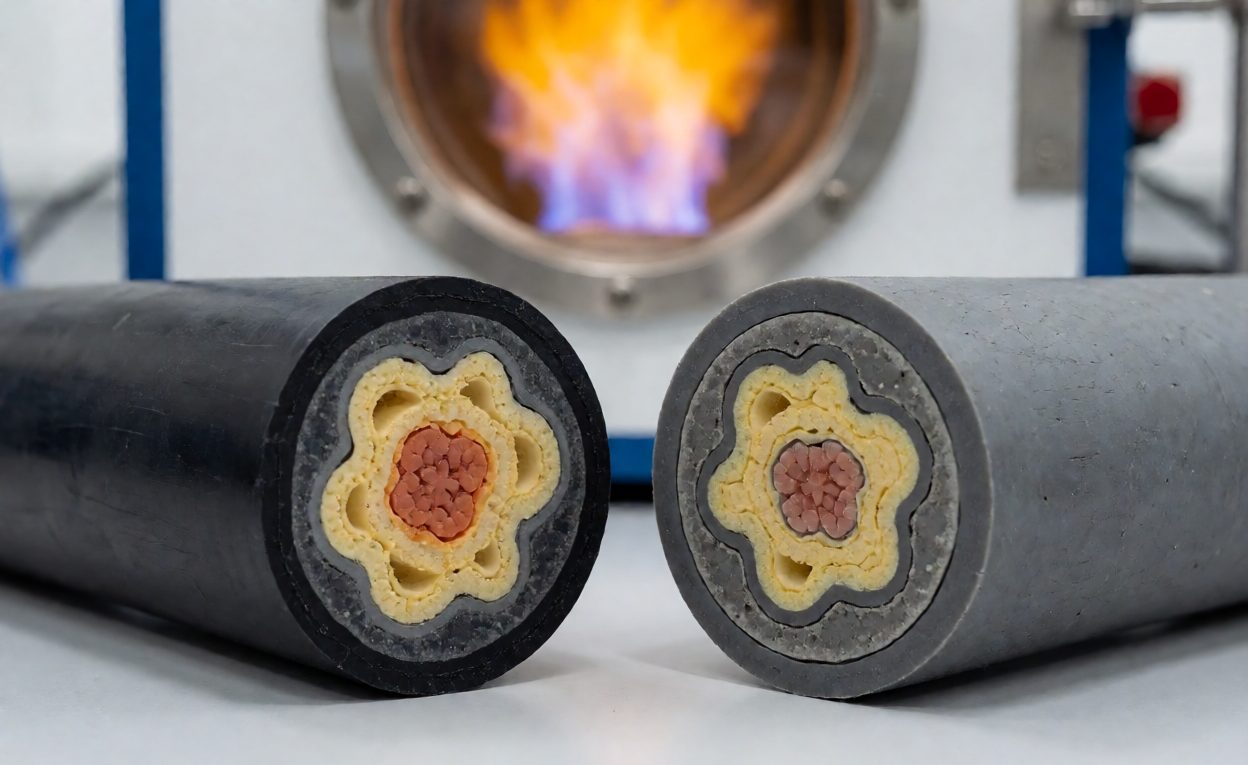
Common cable jackets are based on PVC, a halogen-containing polymer. When PVC burns, it releases hydrogen chloride gas, which is toxic and corrosive. The corrosion aspect is the one that surprises buyers most: hydrogen chloride combines with moisture to form hydrochloric acid, which attacks electronics, contacts and steelwork far beyond the seat of the fire. Data centers and control rooms have suffered more total loss from smoke corrosion than from flames.
The second concern is smoke itself. Dense opaque smoke in a confined space removes visibility faster than heat removes survivability, which is why escape routes, tunnels and transit systems care so much about smoke emission. Halogen-free compounds are formulated to burn with far less smoke and to release water vapor and carbon char products rather than acid gas when subjected to flame.
What the Terms Actually Mean
- LSZH / LSOH (low smoke zero halogen): a compound containing no measurable halogen content, tested by a stated method, with smoke emission limited under a stated test. The terms are only meaningful with the test method named.
- Low halogen: a looser category where halogen content is capped at a small percentage rather than eliminated; common where full LSZH mechanical performance is impractical.
- HCl emission tests: measure acid gas released during combustion; the pass criterion is a percentage of HCl evolved, and LSZH compounds are held near zero.
- Smoke density tests: measure light transmission through smoke from burning cable samples in a chamber; minimum transmittance values are the pass line.
- Flame retardance and flame spread: a separate property. A cable can be excellent at not spreading flame yet smoky, or low-smoke yet weak against flame spread, so both families of tests must be checked.
The specification discipline is therefore to cite the test method and the limit, not the adjective. “LSZH cable” on a drawing means whatever the supplier decides it means; “jacket compound to [named test], HCl emission below [value], smoke transmittance above [value]” means something enforceable.
The Trade-Offs Nobody Mentions
Halogen-free compounds give up some of what makes PVC pleasant to work with. Classic LSZH jackets are stiffer, less flexible and historically weaker in abrasion and tear resistance than equivalent PVC, which matters on flexible assemblies and continuous-flex applications. Formulations have improved, but the gap has narrowed rather than closed, and a cable specified as halogen-free should be checked for flex life and bend performance rather than assumed equal to its PVC cousin.
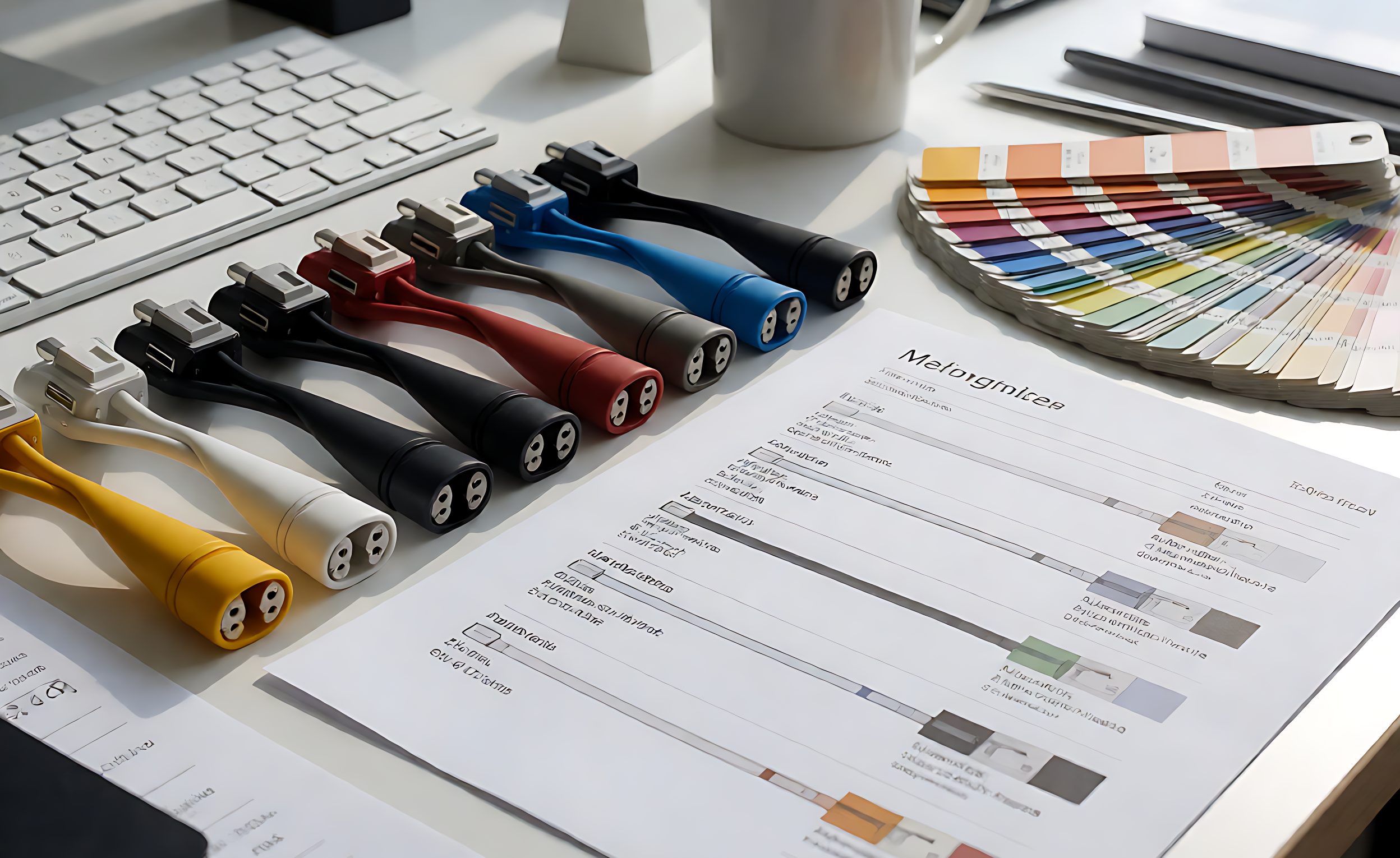
Cost sits above PVC by a meaningful margin, and color availability is narrower – many LSZH compounds are produced in a limited palette, which affects color-coded installations. None of these trade-offs argue against halogen-free where it is needed. They argue against specifying it where it is not, which happens frequently when one project’s requirement is copied into the next project’s template.
Where Requirements Genuinely Bind
- Public transport and tunnels: rolling stock and infrastructure standards typically mandate low smoke and low halogen with named test methods.
- Ships and offshore: maritime rules restrict halogenated materials in accommodation and machinery spaces.
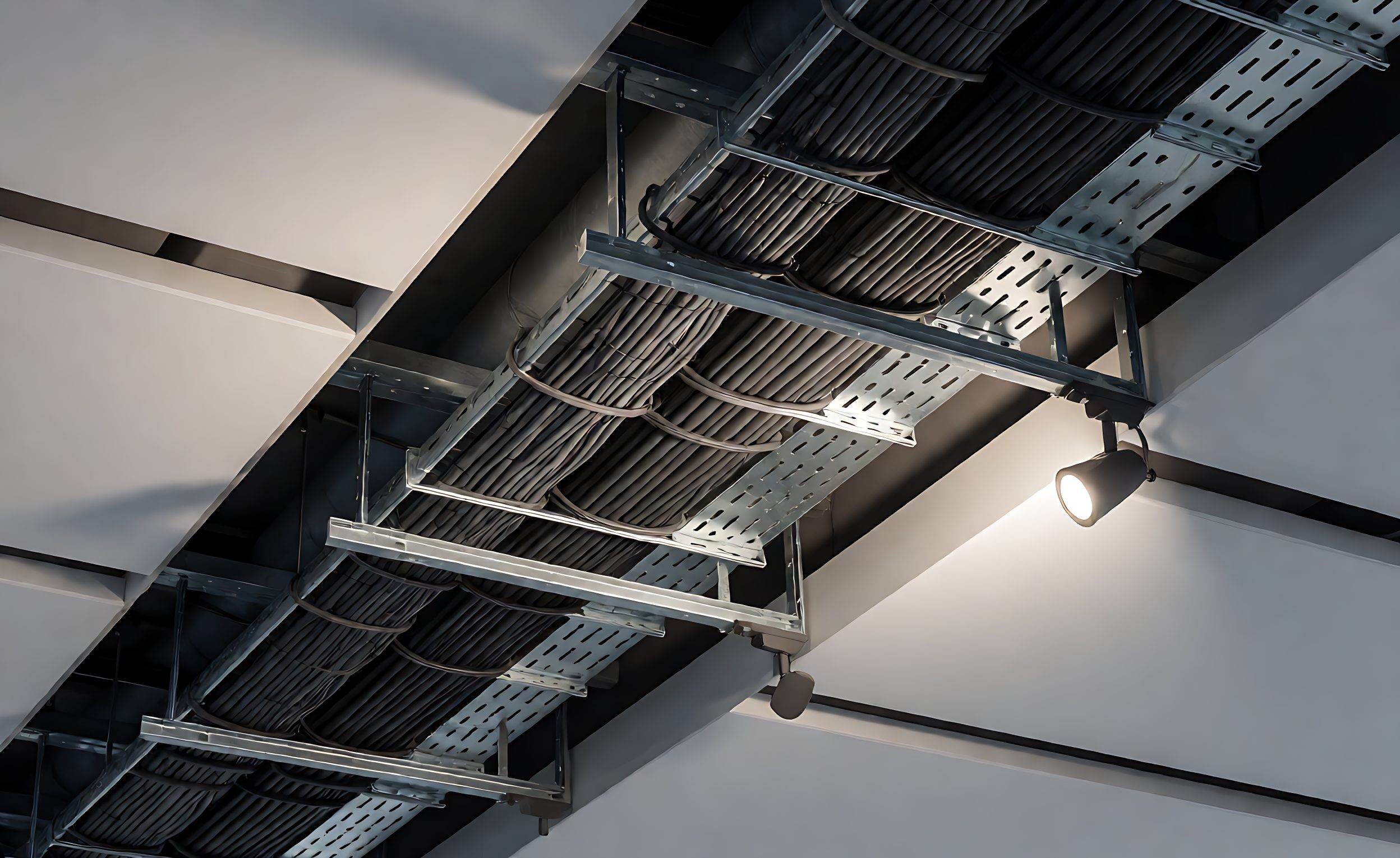
- Public buildings and airports: national wiring codes increasingly require low-smoke construction for routes serving escape paths.
- Data centers and telecom rooms: frequently specified to limit acid-gas corrosion of equipment, often at the operator’s discretion rather than by code.
- Poorly ventilated enclosures: any space where people or electronics share air with burning cable rewards low-smoke compounds.
Technical Background
The elements in question are the halogens, principally chlorine and bromine in cable chemistry, which interfere with combustion but release acidic gas as a by-product. Compounds formulated to avoid them are described as low smoke zero halogen, a construction category defined by performance tests rather than by chemistry alone. The broader family of additives and polymers that resist burning is covered under flame retardants, which is where the trade-offs between retardance, smoke and mechanical properties originate.
Specifying It Correctly
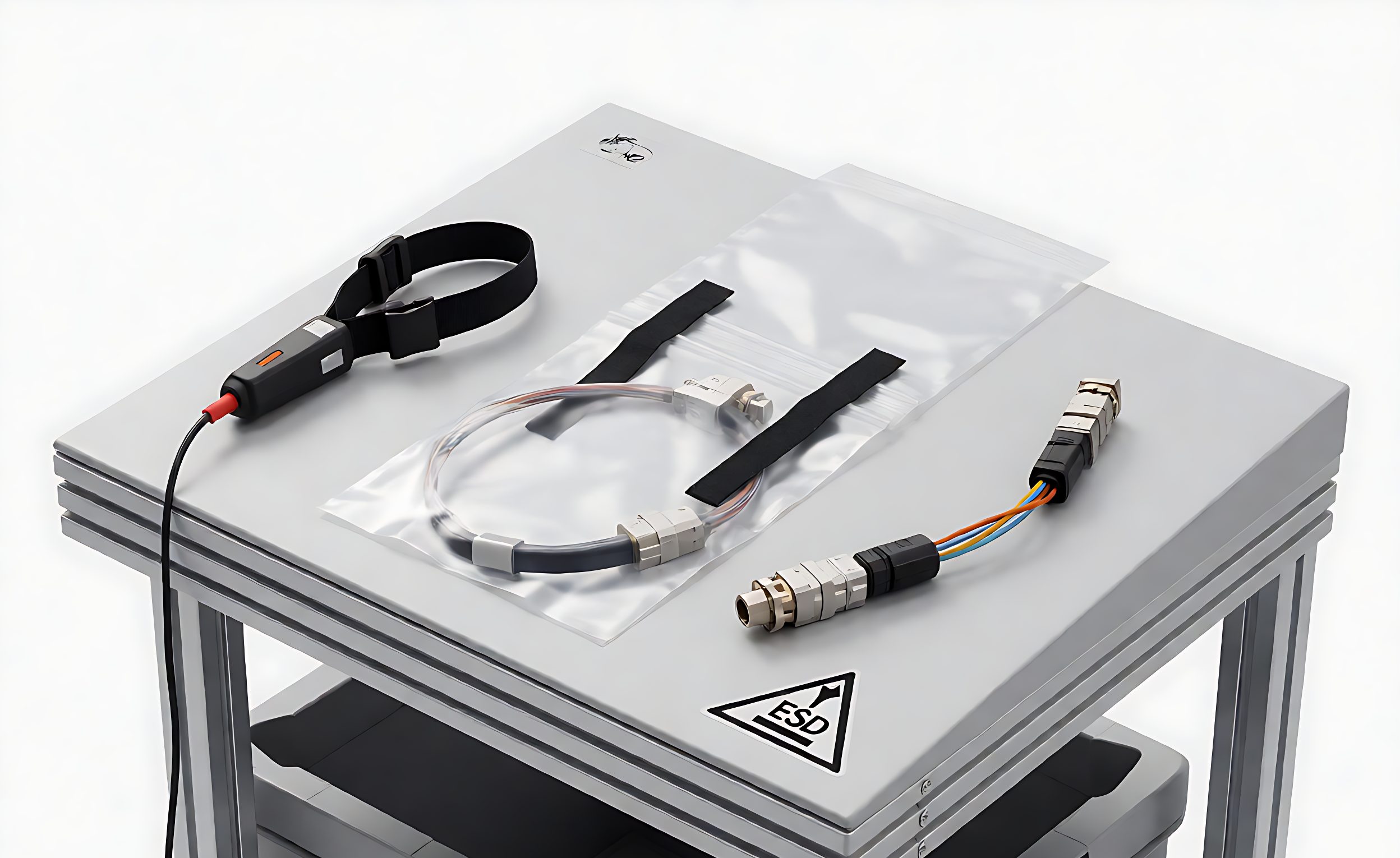
Four lines make a halogen-free specification complete: the compound requirement with the named test methods and limits, the flame class required for the installation route, the mechanical requirements that remain – flex life, bend radius, abrasion – and the evidence required at delivery. Evidence is jacket printing plus a declaration covering the specific part number, because a compound requirement is only auditable through documents tied to the material actually used.
Verify at goods-in by reading the jacket print, which should state the compound type and approvals, and by filing the declaration with the shipment. Buyers who specify halogen-free without asking for evidence routinely receive a jacket that looks the part and a data sheet that does not cover it.
The compound landscape behind these choices is set out in industrial cable materials and jacket compounds, and the fire-side property family in choosing a flame-retardant industrial cable. The documentation evidence chain is covered in RoHS, REACH and safety marks for cable buyers, and jacket construction details in flame-retardant jacket construction.
Preguntas frecuentes
What does LSZH actually stand for?
Low smoke zero halogen: a jacket compound with no measurable halogen content and limited smoke emission, defined by named tests.
Is low-halogen the same as halogen-free?
No. Low halogen caps the content at a small percentage; zero halogen requires none at all.
Why do data centers care about halogen-free cable?
Acid gas from burning PVC corrodes electronics far from the fire, so operators limit halogens to cut secondary damage.
What are the drawbacks of LSZH cable?
Historically stiffer jackets, lower abrasion and tear resistance, narrower color choice and higher cost than PVC.
Is a flame-retardant cable automatically low smoke?
No. Flame spread and smoke emission are separate properties, each with its own test.
How should LSZH be written into a specification?
Name the test methods and limits for halogen content, HCl emission and smoke transmittance, plus the mechanical requirements that still apply.
How do I verify a shipment is actually halogen-free?
Check the jacket printing against the specification and file a part-specific declaration with the delivery.