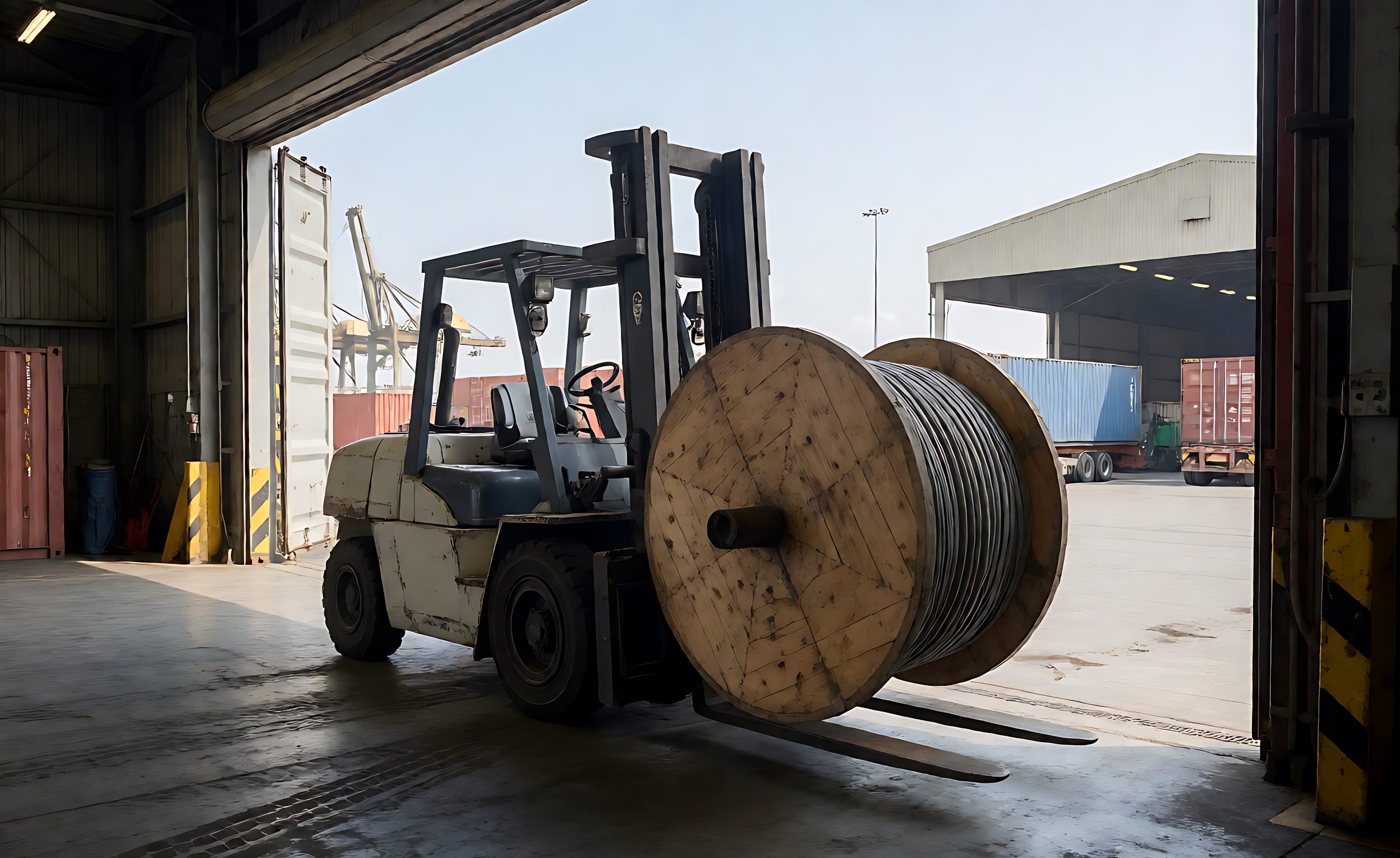
Cable is one of the densest products that ships in general-purpose containers. A single steel-wire-reinforced drum can weigh more than a small car, and a container that looks half empty can be at its weight limit. Buyers who plan cable shipments by volume alone routinely discover at the port that the container is over weight, or at the receiving dock that nobody has equipment able to move a two-tonne reel.
Both problems are avoidable with arithmetic done before the purchase order is issued: drum weight is calculable from the cable specification, container limits are published, and the handling question is answered by one email to the destination site.
Calculating Drum Weight Before Quoting Freight
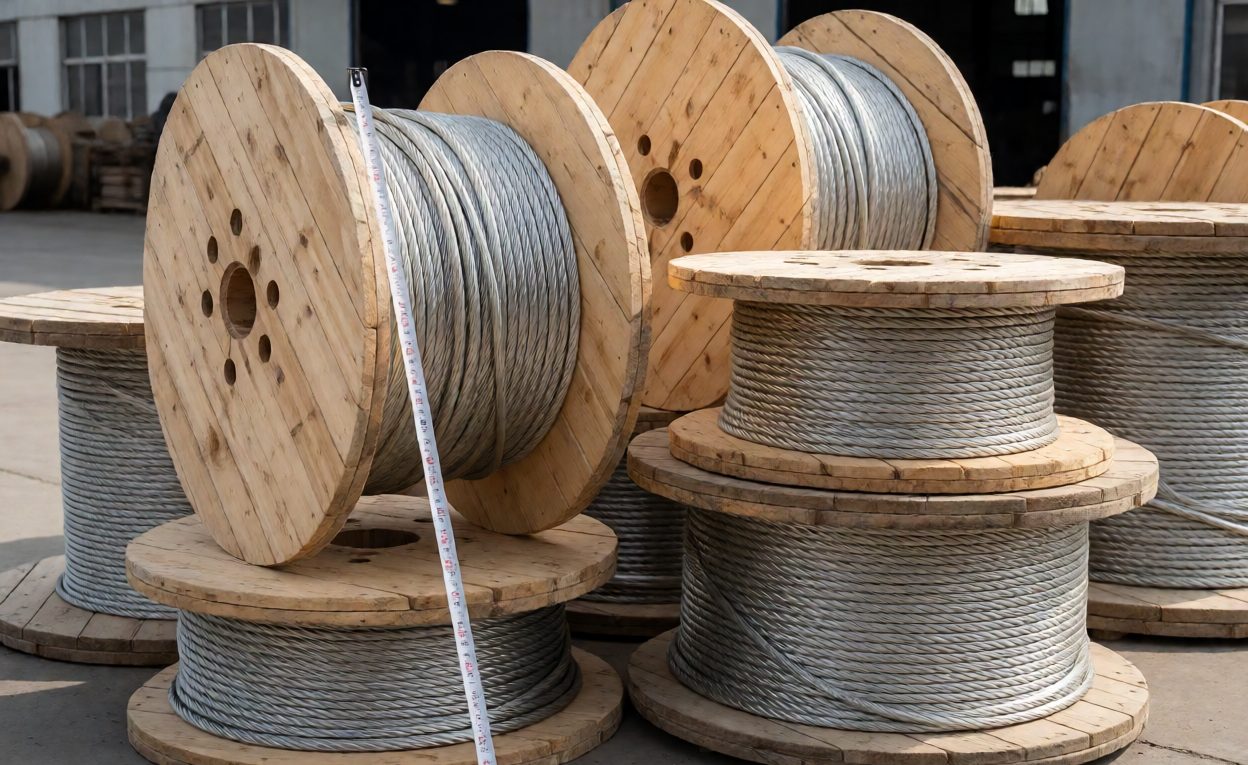
The gross weight of a drum is the cable weight plus the drum tare plus packing. Cable weight comes from the datasheet, expressed in kilograms per kilometer or per meter, and it varies more than buyers expect: a jacketed control cable and a fine coax of the same diameter can differ by a factor of three because of conductor copper content and armor.
The calculation is straightforward. Cable weight per meter multiplied by the length on the drum gives the net. Drum tare weight is available from the supplier on request and typically ranges from tens of kilograms for small reels to several hundred for large steel-drum constructions. The figure buyers forget is the winding itself: drums are rarely wound to full capacity, so the actual length wound should be confirmed rather than assumed from the drum size.
Two habits keep the numbers honest. First, use the datasheet weight of the exact construction ordered, not a family average. Second, add the tare and the packing weight to the gross before any freight calculation, because carriers charge and limit on gross, not net.
What a Container Actually Allows
A twenty-foot container offers roughly twenty-eight tonnes of payload on paper, but the practical figure is lower. Road limits at both ends govern the total: in many destinations a truck may not exceed a combined weight that leaves well under the theoretical container maximum. A forty-foot container gives more volume but a similar weight ceiling, which is exactly why dense cargo fills the weight limit long before the space.
For cable, the binding constraint is almost always weight on large drums and volume on small ones. The practical planning sequence is to compute the gross weight per drum, multiply by drums per container row, and check the running total against the payload ceiling, leaving margin for the pallets and bracing lumber that add hundreds of kilograms before the container closes.
Where the weight limit bites, options exist. Shipping part of the quantity on smaller drums costs handling but fits under road limits, and breaking a bulk reel into cut lengths trades winding efficiency for transportability. Both should be priced before the order, not improvised after.

Securing Drums in the Container
Drums roll. That single fact drives most of the securing work. Standard practice is to load drums on their flanges, chock each one so it cannot rotate or shift, brace rows against the container walls with lumber, and strap across the flanges to the lashing points. Mixed drum sizes are loaded so nothing can roll into a gap in transit, and each drum is labeled for identification at goods-in.
A drum wound under tension stores energy. If the brake slips in transit, the outer layers can loosen and the cable can birdcage, damaging the jacket and sometimes the conductors. Suppliers who wind and brake properly will describe their securing method without prompting; a quotation silent on lashing is worth a question.
Planning the Unloading End
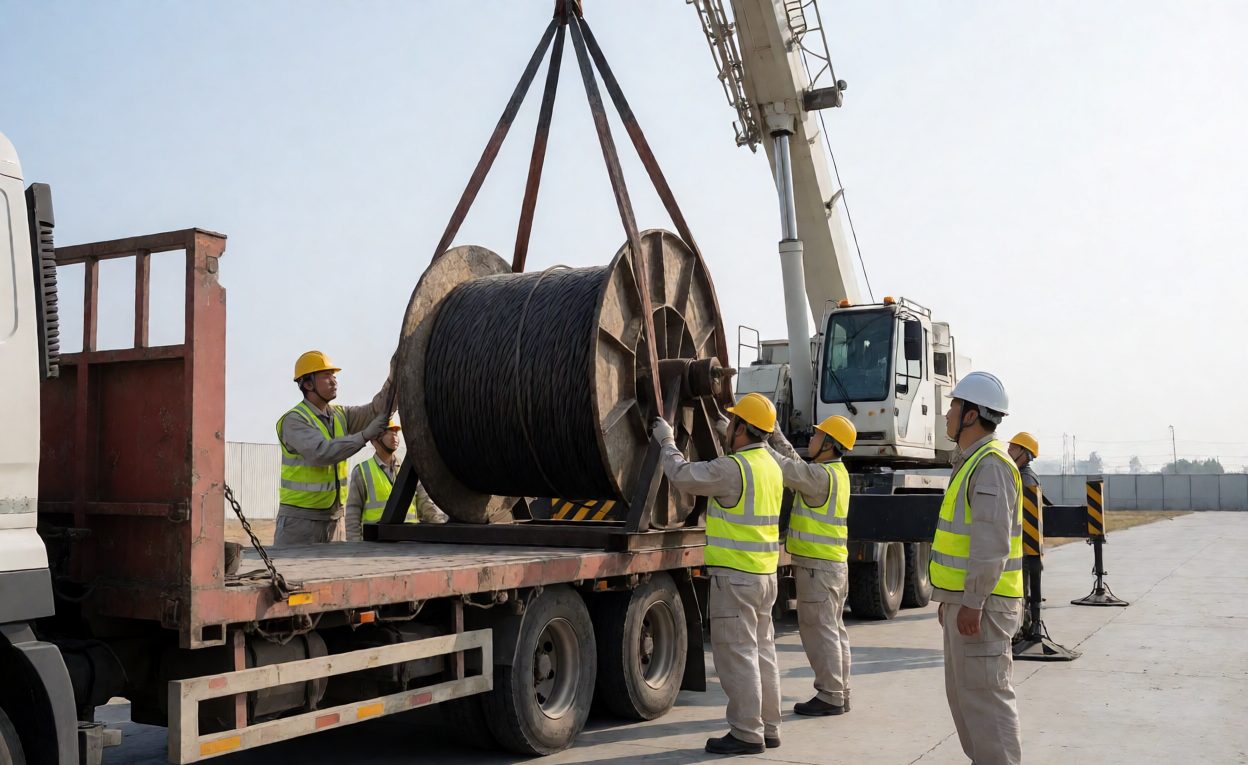
The most common failure in drum shipments has nothing to do with the container: it is a two-tonne reel arriving at a site with a forklift rated for one. Weight per drum decides the unloading method – forklift for lighter drums, crane or HIAB truck for heavy ones – and the destination’s capability should be confirmed when the shipment is planned, not when the truck arrives.
Drums should be rolled and lifted only with proper spindle or lifting bars through the center, never by the cable itself. These points belong in a short handling note attached to the shipment, because the people receiving the drum are rarely the people who ordered it.
Technical Background
The reel itself is a cable reel, a wooden or steel drum construction sized to protect the cable and to suit standard handling equipment. The freight unit is the shipping container, whose payload limits interact with road regulations at both ends. The dense, heavy cargo character that makes planning necessary is an instance of deadweight thinking in shipping: weight, not space, sets the limit.
Putting the Numbers into the Order
A workable drum and container plan fits in a few lines: drum size and maximum gross weight, length wound per drum, drums per container, total gross per container, and the unloading method at destination. Agreeing these at order stage turns freight from a surprise into a line item.
Container and drum decisions interact with the packing choices described in cable assembly packaging and labeling for bulk shipments and with supply scheduling in blanket orders and scheduled releases. Volume and lead-time trade-offs are covered in realistic MOQ and lead time expectations, and the freight component’s share of landed cost in total cost of ownership for cable assemblies.
Preguntas frecuentes
How much does a drum of cable weigh?
Cable weight per meter times length, plus drum tare. Large drums of power or control cable routinely reach one to three tonnes gross.
Why does a container fill by weight before volume?
Cable is dense. Heavy drums reach the payload and road weight limits while much of the container volume is still empty.
What is the practical payload of a twenty-foot container?
Nominally near twenty-eight tonnes, but road limits at origin and destination often reduce the usable figure to around twenty.
How are drums secured in a container?
Loaded on flanges, chocked against rotation, braced with lumber and strapped to lashing points so nothing can shift or roll.
What unloading equipment does a heavy drum need?
A forklift rated above the drum weight for small reels, or a crane or truck-mounted loader with a spindle bar for heavy drums.
Can a drum be lifted by the cable?
No. Lift only with spindle or lifting bars through the drum center; lifting on the cable damages the winding and the termination.
Should drum sizes be agreed before ordering?
Yes. Drum size decides freight utilization, handling equipment and unloading cost, so it belongs in the order, not in the shipment.