
Moving cable fails in a way static cable never does, and it fails on a schedule that is easy to predict badly. Two numbers govern that schedule: the minimum bend radius the cable works at, and the number of flex cycles it is rated to survive. Both are quoted constantly and both are routinely misapplied, because the conditions behind the printed figure rarely match the machine.
This article separates what the two numbers mean, how they interact, and how to write requirements that describe the installation rather than the catalogue.
Bend Radius: Static, Dynamic and Why the Difference Is Large
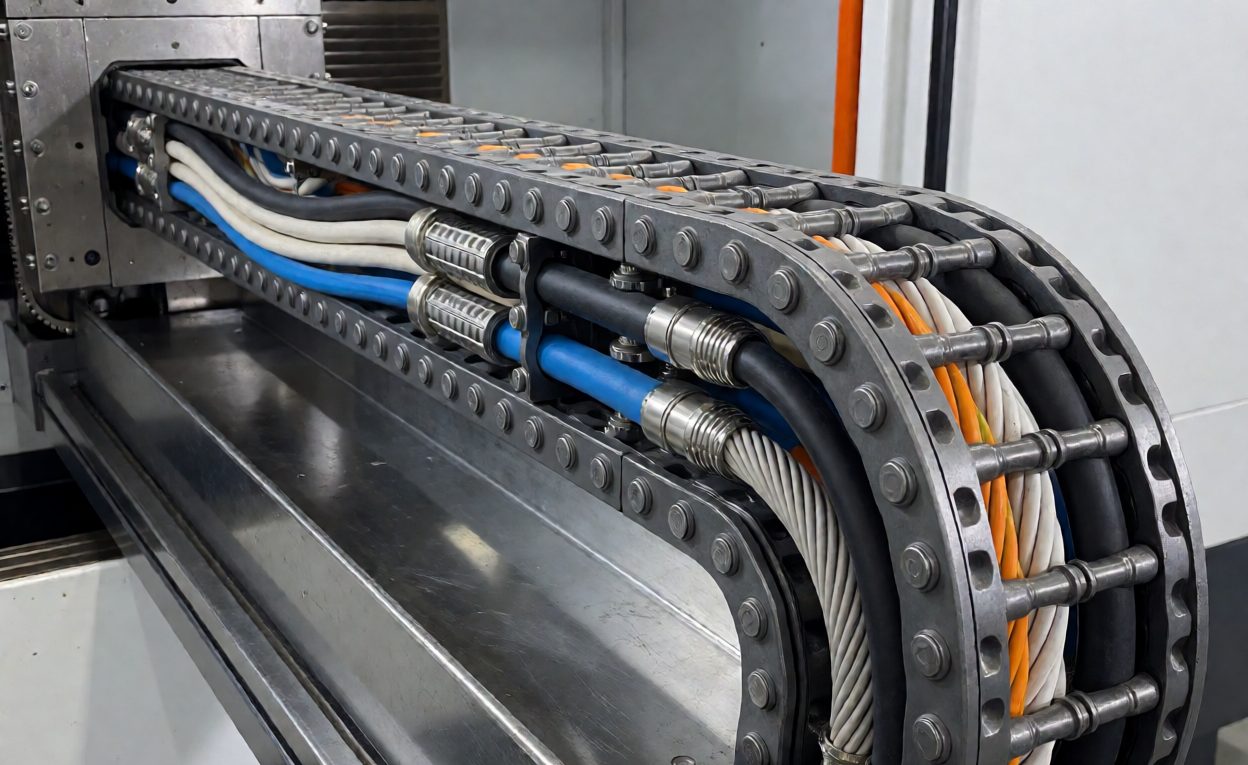
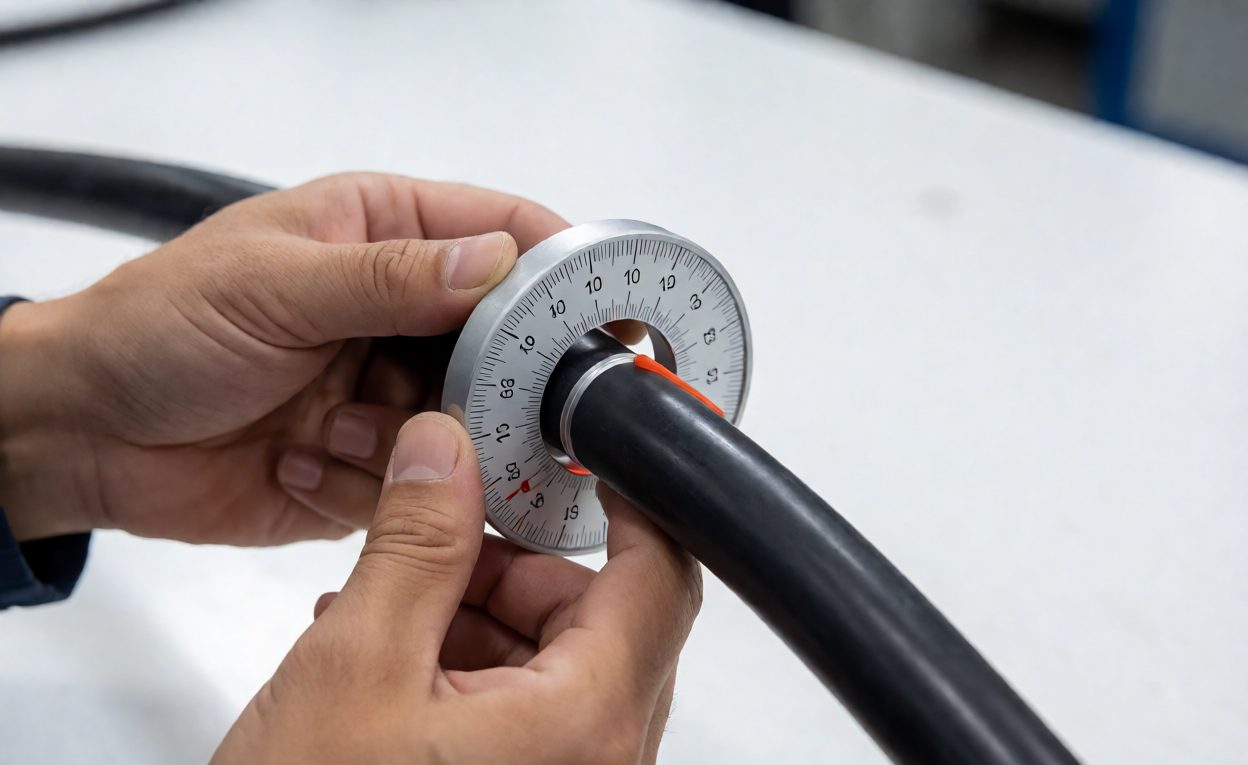
Minimum bend radius is usually expressed as a multiple of the cable’s outside diameter. A typical static installation figure might be four times the diameter; the same cable in continuous motion might require seven or eight times, and in a carrier chain considerably more. The difference is not conservatism. In motion, the cable is not simply bent – it is repeatedly unbent, and the strain cycle is what does the damage.
The rule that saves most installations is simple and often ignored: in continuous-flex service the working radius is set by the application, not the datasheet, and it should be enforced by hardware. Radius is maintained by carrier geometry, guide troughs, bend restrictors at the connector and, most importantly, by routing that keeps the cable in one bending plane rather than letting it twist.
What Flex Life Ratings Actually Measure
A flex life rating is a cycle count achieved under a defined test: a specified bend radius, a specified travel, a specified speed, a specified ambient temperature and a failure criterion. Change any one of those and the number changes, sometimes by an order of magnitude. A cable rated for ten million cycles at eight times diameter may manage a small fraction of that at four times diameter, which is why a rating quoted without its test conditions is unusable.
Failure criteria also vary. Some tests run to conductor break and loss of continuity; others stop at a defined resistance rise or jacket damage. A rating to first strand break and a rating to full open circuit are not comparable, so ask what event ended each test.
What Actually Kills a Moving Cable
- Bending below the rated radius. Compresses the inner side of the bend and stretches the outer side, concentrating strain at the conductor surface.
- Twisting instead of bending. Torsion applied to a cable that is only built to bend is one of the fastest routes to failure, and it usually comes from poor routing.
- Cables rubbing each other in a carrier. Without separators, adjacent cables abrade, and the jacket loss becomes the conductor fatigue site.
- Fixing both ends rigidly. Clamping a cable hard at both ends transfers all strain into the shortest section instead of distributing it.
- Heat in the cable path. Elevated temperature softens the jacket and accelerates aging, cutting cycle life well below the room-temperature figure.
- Wrong stranding for the duty. Fine-stranded, high-flex constructions exist because coarse stranding fatigues far sooner at the same bend radius.
Specifying Flex Requirements Properly
Write the motion, not just the rating. A usable flex specification states the bend radius the cable will actually see in service, the travel and speed of the axis, the cycle rate and duty cycle, the ambient and cable-surface temperature range, the expected service life in cycles, and the failure criterion – usually continuity loss rather than cosmetic jacket wear.
With that information a supplier can propose a construction: stranding class, lay length, jacket compound, shield type and any filler or binder that keeps the bundle stable. Without it, the supplier quotes a general-purpose high-flex cable and hopes, which is a reasonable commercial response to an unanswerable question.
Technical Background
The mechanical limit at the heart of all of this is radio de curvatura, the smallest radius a cable can be formed to without damage or shortened life. The failure mechanism under repeated motion is material fatigue, in which cyclic strain propagates cracks long before static strength is exceeded, and the conductor that carries the strain is drawn wire, whose stranding and lay determine how the load is shared.
Designing the Installation, Not Just the Cable
Most flex failures are routing failures in cable clothing. Separators in the carrier keep cables from abrading each other; correct fill keeps them from stacking; a proper strain relief at each end keeps motion out of the termination; and enough free length keeps the cable bending in a single plane. A cable specified for the right cycle life and routed badly will still fail early.
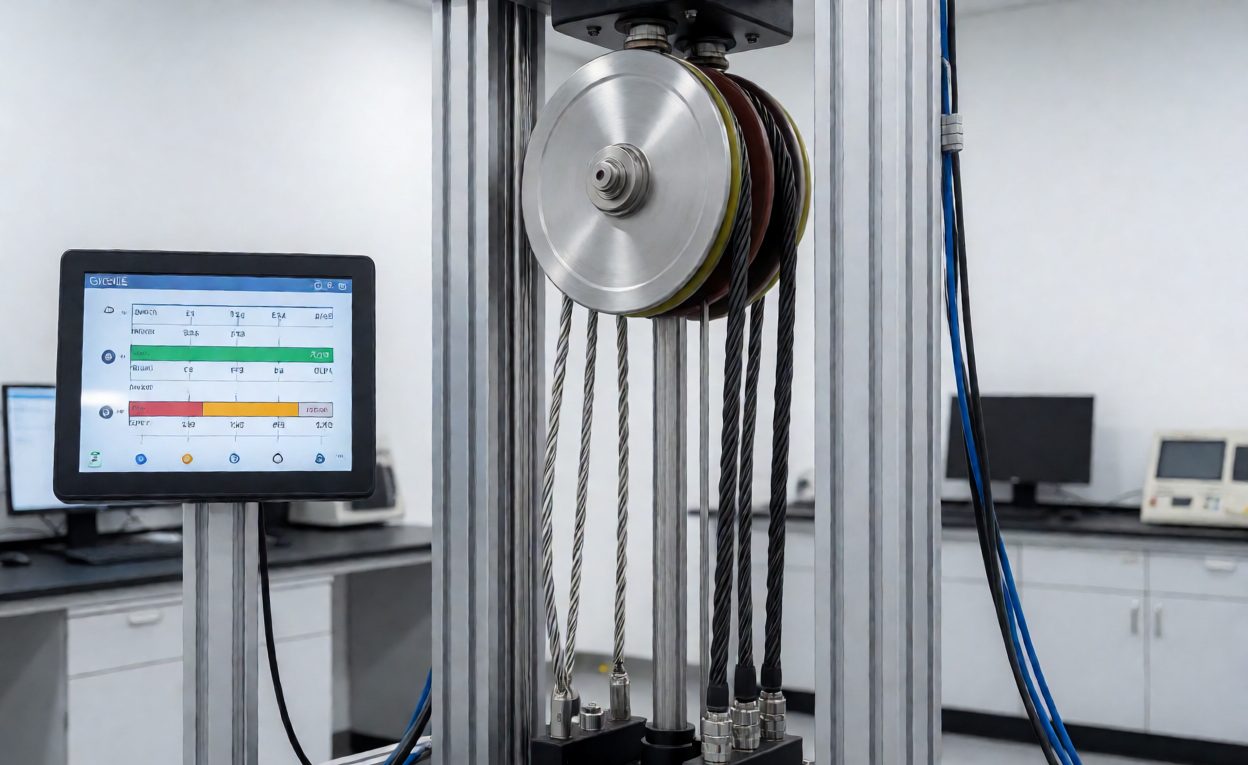
Testing closes the loop. Flex testing the actual assembly on a rig that reproduces the real radius, travel and temperature is the only practical way to validate a moving-cable design, and it is far cheaper than learning the answer through warranty returns. Require the cycle count and failure criterion in the report rather than a pass statement.
Bend limits in general installation practice are covered in the cable bend radius guide, and the construction choices behind high-flex cable in industrial cable materials and high-flex jackets. Route causes of early failure are analyzed in cable assembly failure analysis and field returns, and harness-level practice in reliable wire harness assembly. Validation fits into the drawing-to-sample-to-bulk-production process.
Preguntas frecuentes
What is a typical minimum bend radius for cable?
Often around four times the cable outside diameter for fixed installation and seven to eight times or more in continuous motion.
Why is the dynamic bend radius larger than the static one?
In motion the cable is repeatedly bent and unbent, and the cyclic strain fatigues the conductor rather than simply forming it once.
What does a flex life cycle rating mean?
The number of cycles survived under a defined bend radius, travel, speed, temperature and failure criterion. Without those conditions it means little.
How much does bend radius affect cycle life?
Enormously. Halving the working radius can cut cycle life by an order of magnitude on the same cable.
What is the most common cause of early flex failure?
Routing: bending tighter than rated, twisting instead of bending, cables rubbing in a carrier, and rigid fixing at both ends.
Should the cable be tested on a rig before release?
Yes. A rig reproducing the real radius, travel and temperature is the only practical way to validate a moving-cable design.
Does temperature affect flex life?
Yes. Elevated temperature softens the jacket and accelerates aging, so cycle life falls well below the room-temperature rating.