
Two lines on a cable drawing decide more about field behavior than any others: the UL style number and the conductor size. The style number carries the insulation system, temperature rating and voltage rating that a safety file was built on; the conductor size carries current capacity, voltage drop and mechanical strength. Both are habitually copied from the previous project, and both are often wrong for the new one, usually toward over-specification, which costs money without buying reliability.
Treat them as two decisions. The style number is a compliance decision, bounded by the approvals the end product needs and the environment the cable lives in. The gauge is an engineering decision, bounded by current, length and mechanical duty. Confusing them is how a buyer ends up paying for a 105 degree cross-linked jacket on a two-amp signal run.
What a UL Style Number Actually Covers
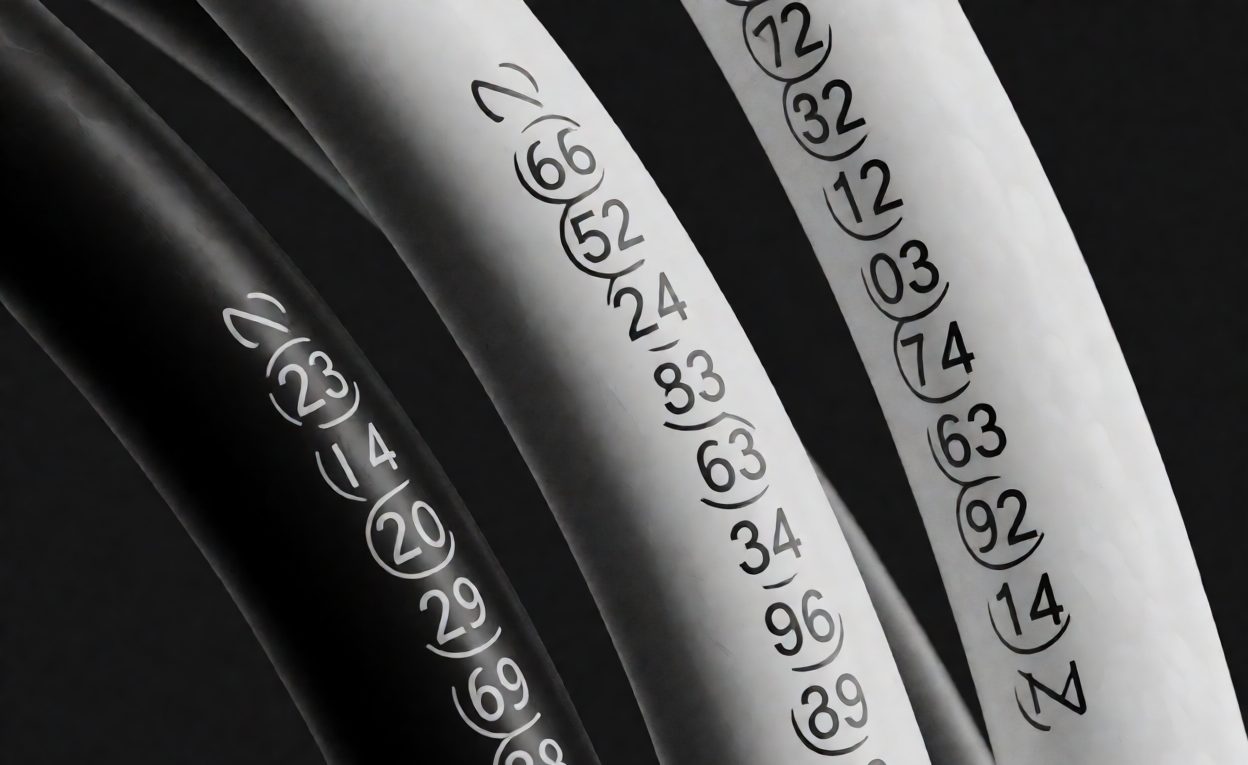
A UL style is a construction description tested and listed as a complete system: conductor, insulation, and for jacketed styles the jacket, shielding and temperature class together. What the number claims is that the cable as built matches the construction that was tested, so the number is a reference to a file rather than a description of performance. Where a specification has to be enforceable, the file is what should be consulted.
- Voltage and temperature rating. Commonly 300 V and either 80 or 105 degrees Celsius; these define where the cable may be used and what derating applies.
- Insulation and jacket compound. The style fixes the material family, and with it the flexibility, abrasion resistance and chemical behavior of the assembly.
- Conductor range and stranding. Styles are listed against a range of sizes and constructions; a size outside that range is a deviation rather than a variant.
- Flame class. Whether a horizontal or a vertical flame test was passed is part of the listing, and often the reason the style was chosen years ago.
Reading AWG Beyond the Current Chart
Ampacity tables are the most misused tool in cable selection. The familiar figure for a given gauge is normally derived for a few conductors in free air at a stated temperature rise. Change any of those conditions and the number moves: bundled conductors heat each other, a sealed enclosure holds heat in, and a high ambient temperature consumes the margin first.
Bundling is the correction that matters most. Ten current-carrying conductors in a sleeve do not behave like one conductor in open air, and the applicable standards derate accordingly. Sizing from a single-conductor table produces a harness that runs warm in its first summer and a failure analysis that finds nothing wrong with any individual part.

Voltage Drop: The Constraint That Grows With Length
Current capacity is a thermal limit and therefore almost independent of length. Voltage drop accumulates along every meter, so on long runs it becomes the binding constraint long before the conductor is anywhere near warm. A two-amp supply that is comfortable at one meter can be unusable at fifteen, and the symptom is not a hot cable but a device that resets intermittently, which is far harder to diagnose.
- Size for the worse limit. Calculate permitted current and permitted drop, then take the larger conductor.
- Count the return path. Drop is a round-trip quantity; the return conductor contributes as much loss as the supply one.
- Judge it at the load. Sensitive electronics are less forgiving than relays or solenoids.
The economical answer is rarely a heavier cable throughout. Where one branch is long and another short, only the long one needs the larger conductor, and mixing gauges in one assembly is normal and cheap.
Where Stranding, Flex and Termination Enter
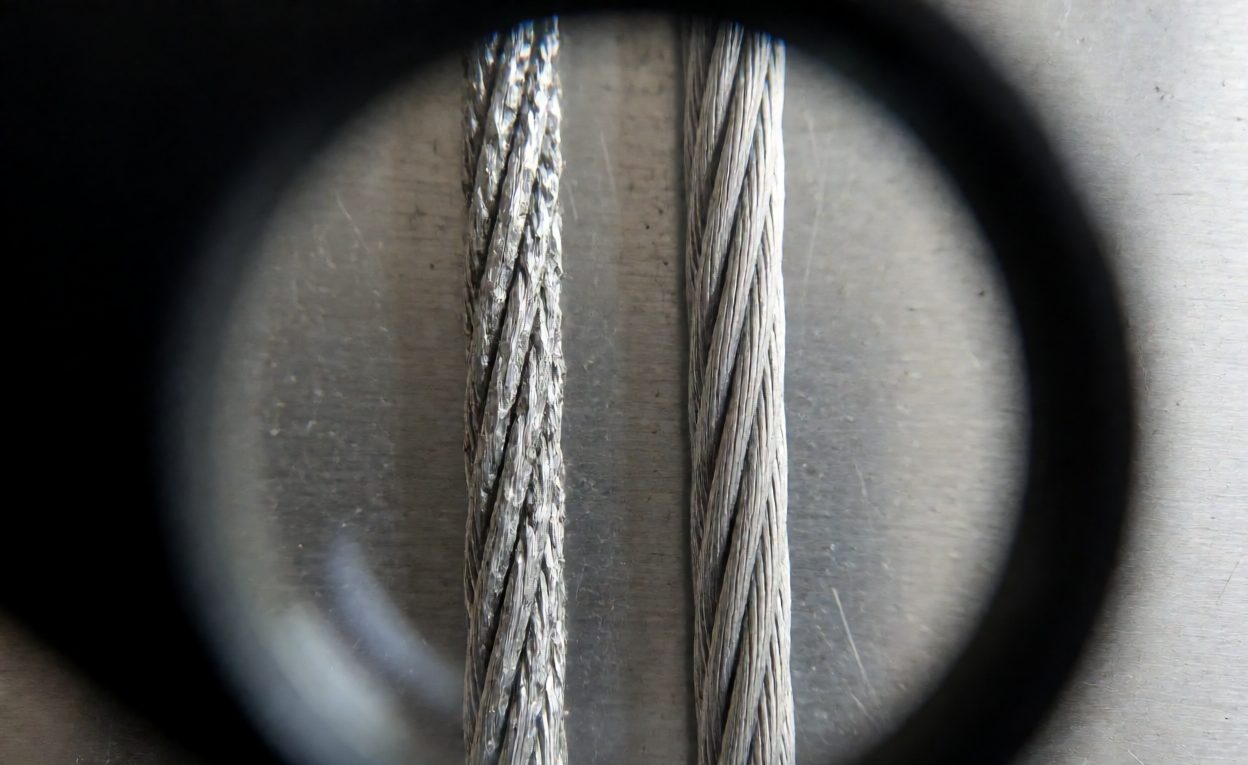
Gauge sets cross-sectional area, not flexibility. A 20 AWG conductor can be a few thick strands that solder beautifully and crack after a few thousand flex cycles, or many fine strands that flex almost indefinitely and need ferrules. Continuous-flex applications such as robot dress packs and moving gantries are specified on stranding class and jacket compound, with gauge almost secondary.
Termination interacts with gauge the same way. A crimp barrel is made for a defined range of conductor sizes and stranding; a conductor at the edge of that range gives a joint that passes a bench pull test and works loose in service. Specifying gauge, stranding and termination together prevents the common first-article failure of a conductor that matches the number on the drawing and not the contact it lives in.
Technical Background
The sizing system in use is American wire gauge, in which a smaller number denotes a larger cross-section. The cumulative loss on long runs is voltage drop, calculated over the round trip. The listings themselves are maintained by UL, whose style files cover a complete construction rather than an isolated property.
Writing It Into the Specification
- Name the style number and, where the approval matters, the listing it refers to.
- State gauge and stranding separately. A gauge alone lets the supplier choose a stranding that cannot survive the application.
- Give current and length together. Neither figure means anything alone.
- Name the termination. Crimp, solder or ferrule decides which conductor constructions are usable.
- Mark what is critical. Suppliers inspect what the drawing emphasizes, and price it accordingly.
Style and gauge sit alongside cable compliance marks for buyers and the drawing items in the cable assembly drawing package. Gauge on power assemblies is treated in calibre y clasificación de potencia del cable USB-C, and the jacket side in industrial cable materials.
Preguntas frecuentes
Is a UL style number the same as a part number?
No. The style describes a listed construction many manufacturers can build; the part number is one supplier’s product built to it.
Can two cables with the same voltage and temperature rating be swapped?
Only if both listings cover the whole construction, including jacket and flame class.
Why does my harness run hotter than the table predicts?
Bundling, enclosure and ambient temperature all derate the free-air figures tables are based on.
When does voltage drop override current capacity?
On long runs, where accumulated resistance drops the load voltage before the conductor reaches its thermal limit.
Does a thicker conductor always flex longer?
No. Flex life is governed by stranding class and jacket, not by cross-sectional area alone.
Should the drawing state stranding as well as gauge?
Yes, because the same gauge can be built with stranding suited to soldering or to continuous flex, rarely both.
Is mixing gauges in one assembly acceptable?
Yes, and it is often cheaper, since only the branches that need a larger conductor carry one.