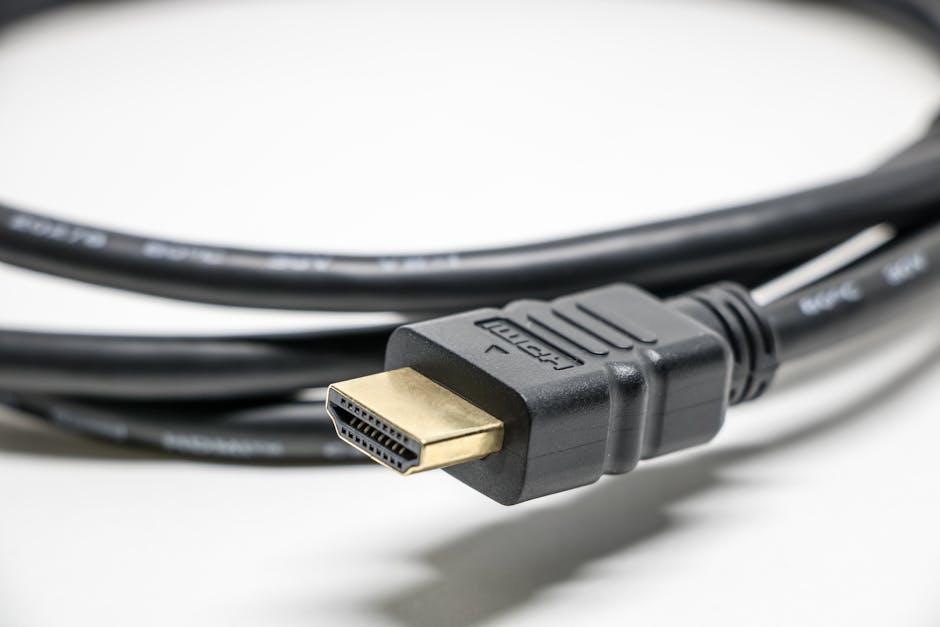
Understanding the Importance of Reliable High-Speed Cable Assemblies
High-speed cable assemblies play a crucial role in ensuring seamless data transmission across various industries, including data centers, automotive, and aerospace. To design reliable high-speed cable assemblies, it’s essential to understand the specific requirements of the application, including data transfer rates, signal integrity, and environmental conditions. For instance, in data centers, high-speed cable assemblies are used to connect servers and storage devices, requiring high data transfer rates and low latency. The demand for high-speed cable assemblies is driven by the increasing need for faster data transfer rates and lower latency in various applications. Signal Integrity: The Unseen Factor Defining High-Speed Cable Performance is a critical consideration in this context.
Signal degradation can occur due to various factors, including cable length, signal frequency, and environmental conditions. To mitigate signal degradation, designers can use techniques such as signal amplification, equalization, and pre-emphasis. For example, in high-speed data transmission applications, signal amplification can be used to boost the signal strength, while equalization can be used to compensate for signal distortion caused by the cable. Additionally, designers can use simulation tools to model the cable assembly and predict its performance, allowing for optimization and improvement of the design.
To ensure reliable high-speed cable assemblies, designers must also consider the impact of environmental conditions, such as temperature, humidity, and vibration. For example, in aerospace applications, high-speed cable assemblies must be designed to withstand extreme temperatures and vibrations. The use of high-quality materials and components, such as low-loss cables and connectors, can also help to minimize the risk of signal degradation. High-Performance Industrial Camera Cable Solutions: Why Longkai is the Trusted Supplier for Machine Vision highlights the importance of high-quality cables in industrial applications.
Key Considerations for Designing Reliable High-Speed Cable Assemblies
- Signal Integrity: Ensuring that the signal is transmitted with minimal degradation or distortion. This can be achieved by using high-quality materials and components, such as low-loss cables and connectors. Designers should also consider the use of signal amplification, equalization, and pre-emphasis techniques to mitigate signal degradation.
- Cable Selection: Choosing the right cable type and configuration for the specific application. For example, shielded twisted-pair cables are suitable for high-speed data transmission applications, while coaxial cables are suitable for high-frequency applications. The cable selection process should also consider factors such as cable length, signal frequency, and environmental conditions. SFF 8644 to 8644 internal high-speed cable is an example of a high-speed cable solution.
- Connector Selection: Selecting connectors that meet the required specifications and performance standards. For example, high-speed connectors with low insertion loss and high return loss are essential for high-speed data transmission applications. Designers should also consider the use of connectors with robust shielding and grounding to minimize electromagnetic interference (EMI).
- Shielding and Grounding: Implementing effective shielding and grounding to minimize EMI. This can be achieved by using shielded cables and connectors, and ensuring proper grounding and bonding. Designers should also consider the use of additional shielding techniques, such as foil shielding and braided shielding, to further minimize EMI.
- Testing and Validation: Conducting thorough testing and validation to ensure compliance with industry standards. This includes testing for signal integrity, EMI, and environmental factors. Designers should also consider the use of simulation tools to model the cable assembly and predict its performance, allowing for optimization and improvement of the design.
| Cable Type | Data Transfer Rate | Signal Frequency |
|---|---|---|
| Shielded Twisted-Pair | Up to 100 Gbps | Up to 10 GHz |
| Coaxial | Up to 400 Gbps | Up to 20 GHz |
| Fiber Optic | Up to 1 Tbps | Up to 100 GHz |
The table above provides a comparison of different cable types and their corresponding data transfer rates and signal frequencies. Designers can use this information to select the most suitable cable type for their specific application.
Designing High-Speed Cable Assemblies: Step-by-Step Guide
- Step 1: Define the application requirements, including data transfer rates, signal integrity, and environmental conditions. This involves understanding the specific needs of the application and identifying the key performance parameters.
- Step 2: Select the cable type and configuration based on the application requirements. This involves considering factors such as cable length, signal frequency, and environmental conditions.
- Step 3: Choose the connectors and other components that meet the required specifications and performance standards. This involves selecting high-quality components that are compatible with the selected cable type and configuration.
- Step 4: Design the cable assembly, taking into account factors such as cable length, signal frequency, and environmental conditions. This involves using simulation tools to model the cable assembly and predict its performance, allowing for optimization and improvement of the design.
- Step 5: Test and validate the cable assembly to ensure compliance with industry standards. This involves conducting thorough testing and validation, including testing for signal integrity, EMI, and environmental factors.
Best Practices for Designing High-Speed Cable Assemblies
- Collaborate with experienced manufacturers to ensure that the cable assembly meets the required specifications. This involves working closely with manufacturers to understand their capabilities and limitations.
- Use high-quality materials and components to minimize the risk of signal degradation. This involves selecting components that are compatible with the selected cable type and configuration.
- Implement robust testing and validation procedures to ensure compliance with industry standards. This involves conducting thorough testing and validation, including testing for signal integrity, EMI, and environmental factors.
- Consider using simulation tools to model the cable assembly and predict its performance. This involves using software tools to simulate the behavior of the cable assembly under various conditions.
- Use design for manufacturability (DFM) principles to ensure that the cable assembly is easy to manufacture and assemble. This involves designing the cable assembly with manufacturability in mind, taking into account factors such as component availability and assembly complexity.
Frequently Asked Questions (FAQs)
- Q: What is the maximum data transfer rate for high-speed cable assemblies?
- A: The maximum data transfer rate depends on the cable type and configuration, as well as the application requirements. For example, shielded twisted-pair cables can support up to 100 Gbps, while coaxial cables can support up to 400 Gbps.
- Q: How do I ensure signal integrity in high-speed cable assemblies?
- A: Signal integrity can be ensured by using high-quality materials and components, such as low-loss cables and connectors, and by implementing effective shielding and grounding.
- Q: What are the key considerations for designing high-speed cable assemblies for aerospace applications?
- A: When designing high-speed cable assemblies for aerospace applications, designers must consider factors such as extreme temperatures, vibrations, and radiation. The use of high-quality materials and components, such as low-loss cables and connectors, is also critical.
Industry Applications and Trends
High-speed cable assemblies are used in a variety of industries, including data centers, automotive, and aerospace. Emerging trends include the increasing use of high-speed cable assemblies in 5G applications and the growing demand for high-speed cable assemblies in artificial intelligence and machine learning applications.
- The adoption of high-speed cable assemblies in IoT applications, such as smart homes and cities.
- The development of new cable technologies, such as optical cables and wireless cables.
- The increasing use of high-speed cable assemblies in automotive applications, such as autonomous vehicles.
- The growing demand for high-speed cable assemblies in data centers and cloud computing applications.

Case Study: High-Speed Cable Assemblies in Data Centers
Data centers require high-speed cable assemblies to connect servers and storage devices. A leading data center operator used high-speed cable assemblies to upgrade its data center infrastructure, achieving a significant increase in data transfer rates and a reduction in latency.
- The data center operator selected high-speed cable assemblies with shielded twisted-pair cables and high-speed connectors.
- The cable assemblies were designed to meet the specific requirements of the data center, including high data transfer rates and low latency.
- The use of high-speed cable assemblies resulted in a significant improvement in data center performance and efficiency.
- The data center operator was able to reduce its energy consumption and operating costs by using high-speed cable assemblies.
Case Study: High-Speed Cable Assemblies in Aerospace Applications
Aerospace applications require high-speed cable assemblies that can withstand extreme temperatures and vibrations. A leading aerospace company used high-speed cable assemblies to upgrade its aircraft communication systems, achieving a significant improvement in data transfer rates and reliability.
- The aerospace company selected high-speed cable assemblies with coaxial cables and high-speed connectors.
- The cable assemblies were designed to meet the specific requirements of the aerospace application, including high data transfer rates and low latency.
- The use of high-speed cable assemblies resulted in a significant improvement in aircraft communication system performance and reliability.
- The aerospace company was able to reduce its maintenance costs and improve its overall safety record by using high-speed cable assemblies.