Introduction: A Different Class of Connectivity
In a standard office environment, the requirements for a cable are simple: connect two devices and reliably transfer data. The common ethernet cable or USB cord is designed for a world of climate control, minimal physical stress, and low electromagnetic interference. However, when these connections are moved into the demanding world of industry—the factory floor, an automotive assembly line, or a medical operating room—they enter an environment that is actively hostile to standard electronics. Here, a cable is not a mere accessory; it is a piece of critical infrastructure where failure can lead to costly downtime, production errors, and significant safety risks.
An Industrial network cable is a fundamentally different product from its consumer counterpart, engineered from the inside out to survive conditions that would quickly destroy a standard cable. It must withstand constant vibration, resist chemical corrosion, repel moisture, and maintain perfect signal integrity while surrounded by powerful electrical “noise.” This resilience is the result of deliberate engineering choices in materials, construction, and design, from the connector housing to the core conductors.
This guide will explore the unique challenges that industrial environments present and the specific engineering solutions that define a high-endurance industrial cable. We will delve into the technologies that combat mechanical stress, electromagnetic interference, and environmental hazards, highlighting why a partnership with a specialized manufacturer like Longkai Electronics is essential for building a truly robust and reliable system.
The Challenge of Mechanical Stress: Vibration and Physical Durability
The “silent killer” of connections in any industrial setting is constant, low-level vibration. Originating from motors, conveyor systems, and heavy machinery, this vibration can cause a standard friction-fit connector to gradually work itself loose, leading to intermittent signal loss and difficult-to-diagnose “ghost” failures. Beyond vibration, cables are often subjected to pulling, flexing, and abrasion.
Solution: Secure Locking Mechanisms
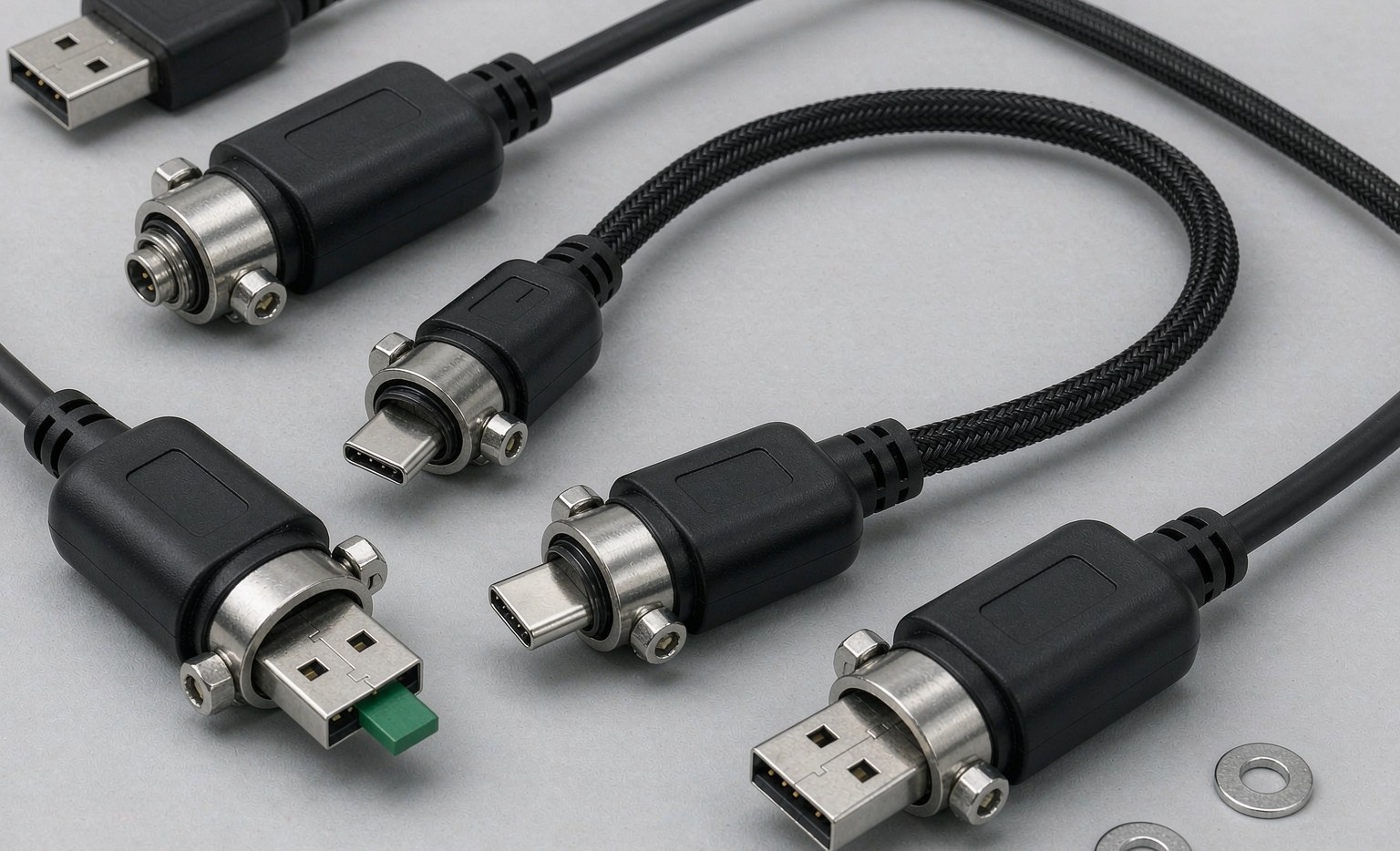
To eliminate vibration-induced disconnections, industrial cables employ mechanical locking systems. This is a non-negotiable feature for any critical connection. Examples include:
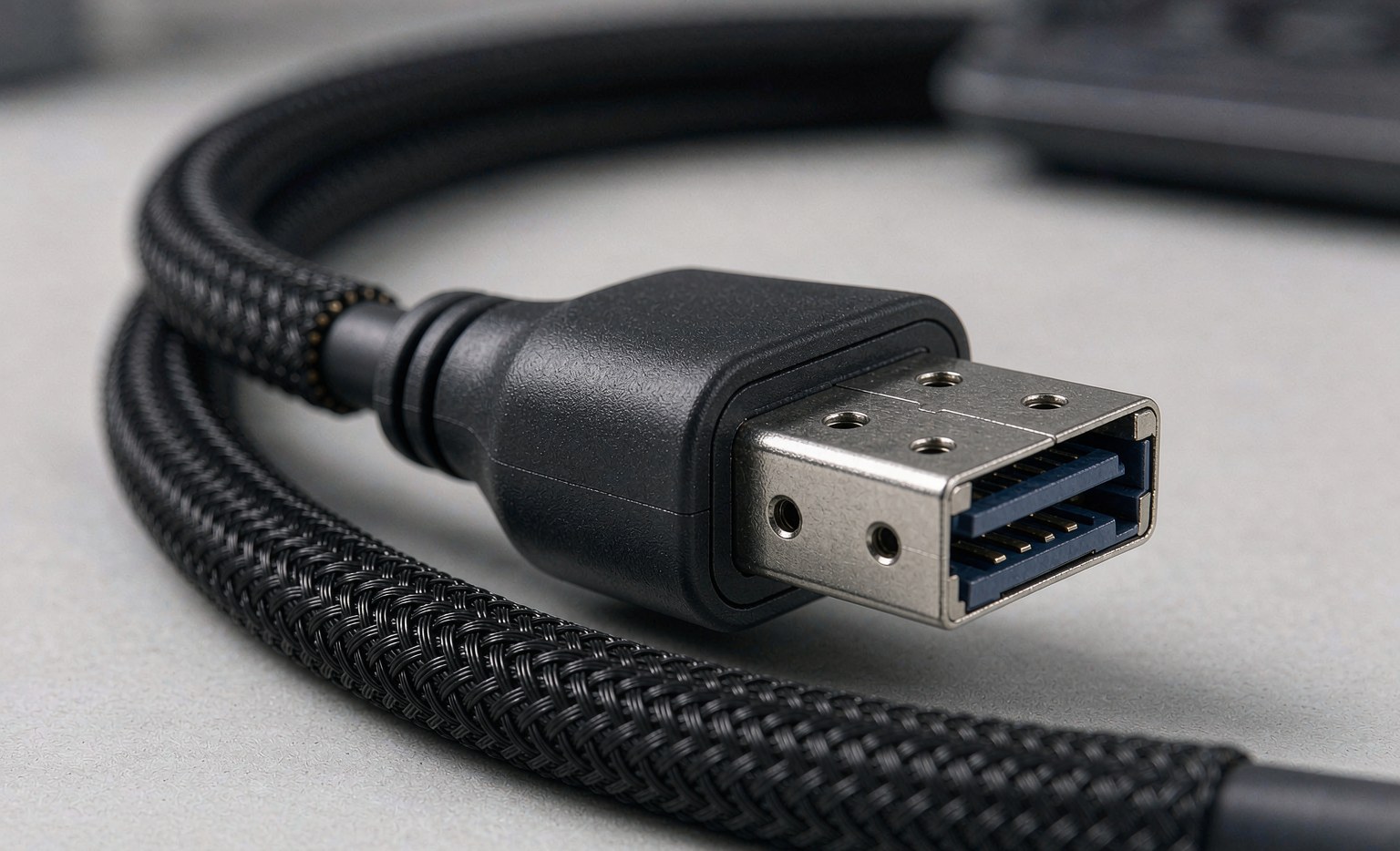
- Thumbscrew Connectors: This is the most common and reliable solution. Standards like USB Cable locking and locking Type-C connectors feature integrated screws that securely fasten the plug to the port, creating a rock-solid, vibration-proof link.
- Latch Mechanisms: Connectors for standards like DisplayPort and SAS often include a physical latch that must be depressed to release the cable, preventing accidental pull-outs.
Solution: Rugged Construction and High-Flex Life
To withstand physical abuse, the entire Cable Assembly must be built for durability. This involves using a ruggedized outer jacket, often made of PUR (polyurethane), which offers superior resistance to abrasion and tearing compared to standard PVC. For applications involving repeated movement, such as on a robotic arm, cables are specifically designed for a high “flex-life,” meaning they can be bent millions of times without the internal conductors breaking.
The Invisible Threat: Combating Electromagnetic Interference (EMI)
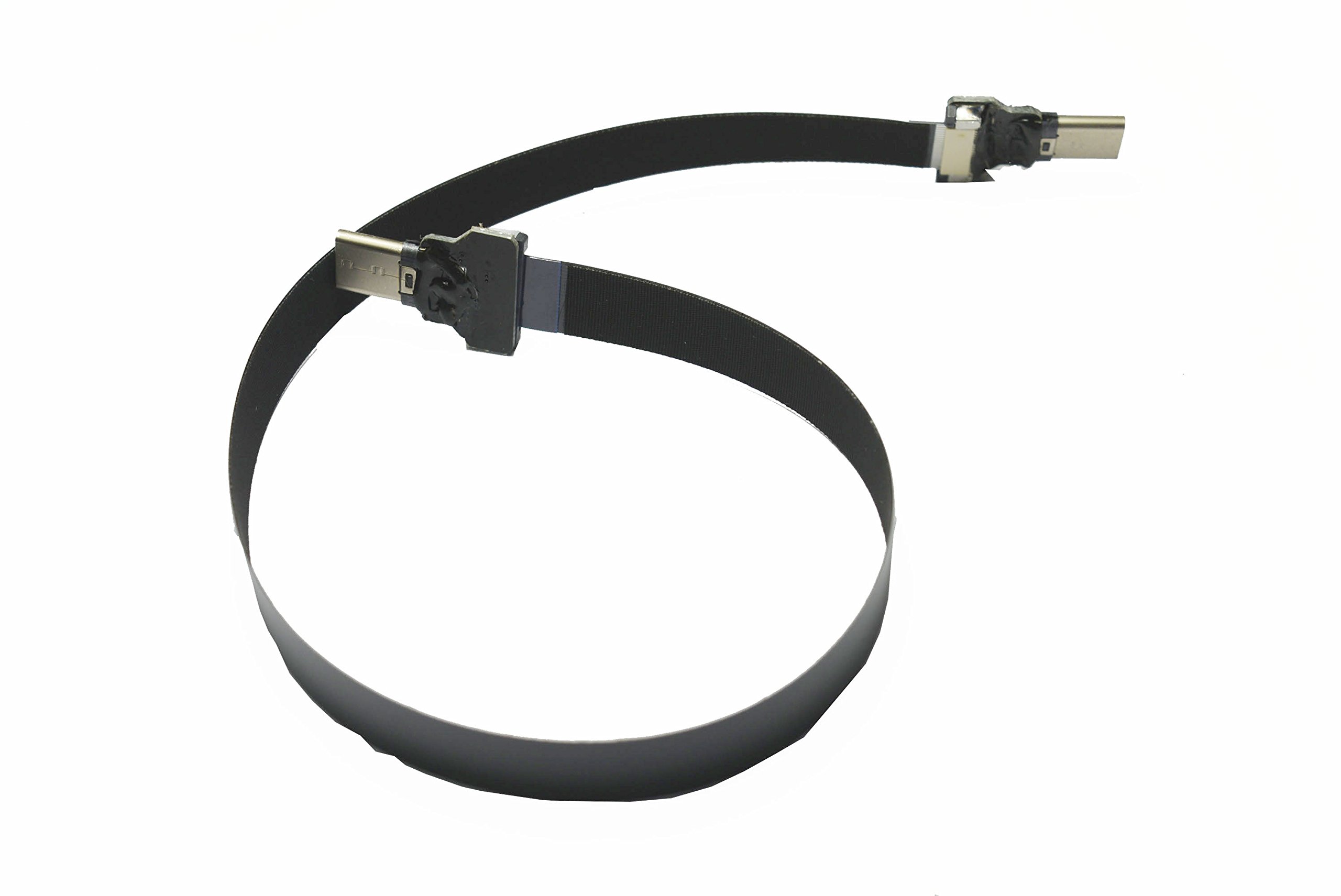
The industrial environment is saturated with electromagnetic interference (EMI), or electrical noise. This is generated by powerful motors, variable frequency drives (VFDs), welding equipment, and high-voltage power lines. For a data cable, this noise is a constant barrage that can easily corrupt the delicate signals traveling within it, leading to data errors, reduced speeds, or total connection failure. An Industrial Camera Cable, for example, must transmit a high-bandwidth video feed with perfect integrity to be useful.
Solution: Advanced Shielding
An Industrial network cable is defined by its superior shielding. While a basic consumer cable might have a single layer of foil shielding, an industrial-grade cable employs a multi-layered defense:
- Foil Shielding on Pairs: Each individual twisted pair of conductors is wrapped in its own foil shield to protect it from interfering with its neighbors (crosstalk).
- Overall Braid Shield: All the internal components are then encased in a woven braid of tinned copper. This braid is highly effective at blocking low-frequency interference and adds significant physical strength to the cable.
- Double Shielding: The most robust cables use both a total-coverage foil shield and a high-density braid shield together, providing the ultimate protection against all forms of EMI.
Conquering Environmental Extremes: Moisture, Chemicals, and Temperature
Beyond mechanical and electrical challenges, industrial cables must often survive exposure to a range of environmental hazards that would render a standard cable inoperable.
Solution: Ingress Protection (IP Ratings)
For applications where dust, water, or cleaning solutions are present, a sealed and waterproof connection is required. This is achieved using connectors with an IP (Ingress Protection) rating. A connector like a D-SUB Waterproof conn uses rubber gaskets and a screw-down housing to create a sealed interface that is impervious to liquids and fine particulates. This is essential for food processing, outdoor installations, and medical equipment that undergoes regular sterilization.
Solution: Chemical and Temperature Resistant Materials
The outer jacket material is carefully chosen for its ability to resist the specific challenges of the environment. In automotive or machining applications, the cable jacket must be able to withstand exposure to oils and solvents without degrading. For outdoor or refrigerated environments, the material must remain flexible at low temperatures and resist UV degradation from sunlight.
The Sum of the Parts: Precision in the Wire Harness and Assembly
An industrial cable is rarely a simple, straight cord. It is often part of a complex Wire Harness, a custom-designed assembly that integrates multiple cables and connectors into a single, streamlined bundle. This requires a level of manufacturing precision and expertise far beyond that of a commodity product.
The manufacturing process for these assemblies is where a partner’s quality becomes paramount. At Longkai Electronics, our approach, refined since 2012, is built on a foundation of engineering excellence.
- Integrated Design: We work with clients to design harnesses that are a perfect fit, with specific breakout points, custom lengths, and integrated mounting features that simplify the final product assembly.
- Unwavering Quality Control: Our entire process is governed by a scientific quality management system, validated by our ISO9001 and ISO14001 certifications.
- Certified Reliability: Every component we produce meets stringent CE and FCC standards, ensuring that our products perform safely and reliably. This commitment to quality has earned us the trust of over 100 global brands, including industry leaders like CATL and BAYER.
Conclusion: Engineered for Uptime, Built for Survival
The selection of an industrial cable is a strategic engineering decision that has a direct impact on operational uptime, data integrity, and system longevity. Unlike consumer-grade products, industrial solutions are holistically designed to conquer a trinity of challenges: mechanical stress, electrical interference, and environmental hazards. By prioritizing features like secure locking connectors, advanced multi-layer shielding, and ruggedized materials, you are investing in reliability. Partnering with a manufacturer that possesses deep expertise in these demanding applications ensures that your critical infrastructure is built not just to function, but to endure.