Executive Summary
Industrial vs. Consumer USB-C: Mechanical & Electrical Specs
Designing for the factory floor requires a shift from consumer-grade aesthetics to industrial-grade reliability. Below are the engineering parameters that distinguish a standard Industrial USB assembly from its commercial counterparts.
| Feature | Consumer USB-C | Industrial Screw-Lock USB-C |
|---|---|---|
| Locking Mechanism | Friction Fit (None) | Single/Dual Locking Screws (M2 Standard) |
| Vibration Resistance | Poor (Prone to data dropouts) | Excellent (MIL-STD-810G compliant testing) |
| Mating Cycles | ~3,000 to 5,000 | 10,000+ (Longkai Tested) |
| Data Transfer Rate | Up to 10/20Gbps | Supports USB 3.1 Gen 2 / USB 3.2 (10Gbps+) |
| Shell Material | Plastic / Aluminum thin foil | Zinc Alloy / Nickel-plated High-strength Steel |
| Operating Temp | 0°C to 45°C | -45°C to +85°C (Industrial Grade) |
The Vulnerability of Friction-Fit in Harsh Environments
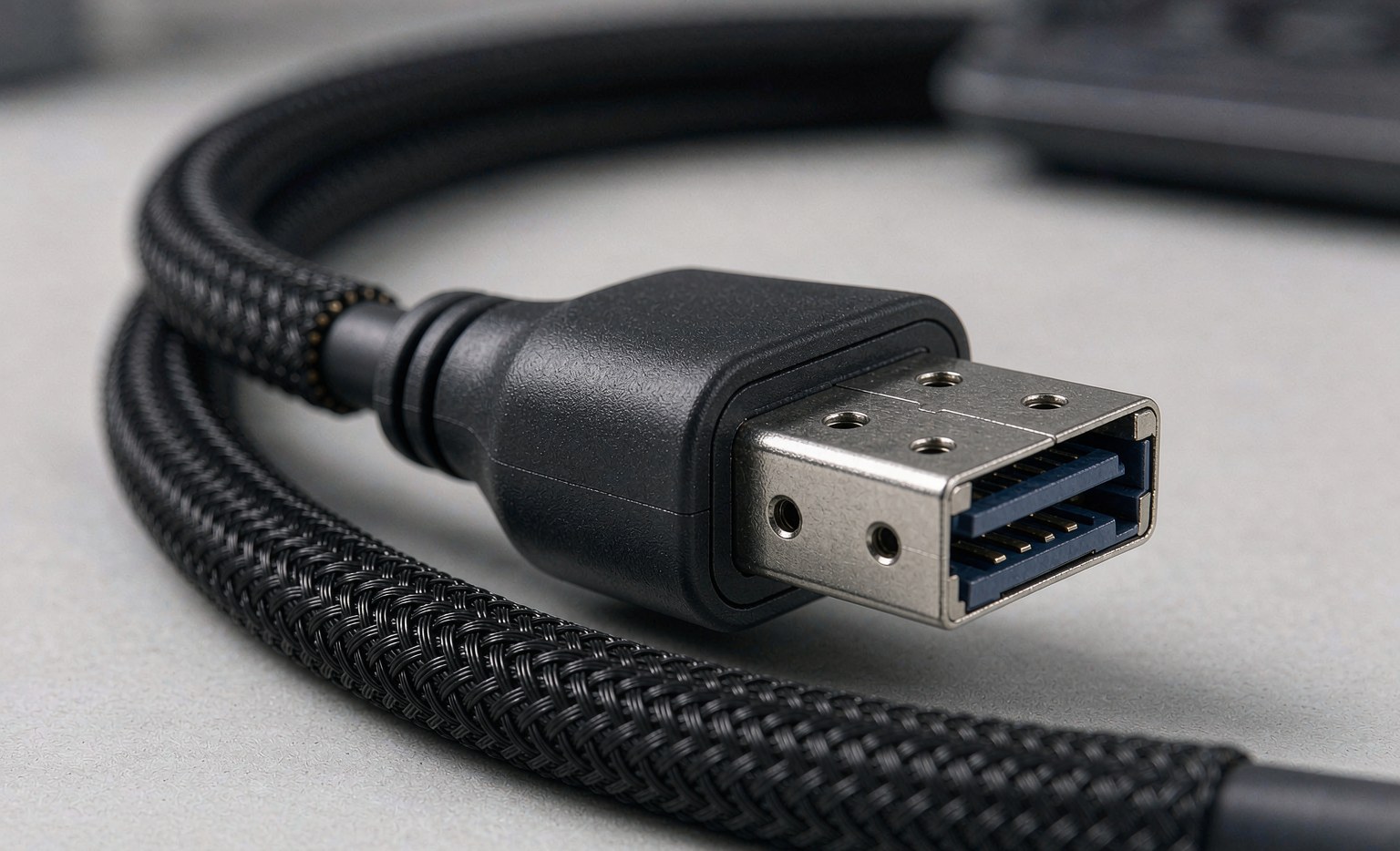
Standard USB-C relies on small internal springs to maintain a connection. In a lab, this is sufficient. However, for a field engineer deploying a Cable Assembly on a robotic arm or a CNC machine, vibration is the enemy. Micro-movements can cause “fretting corrosion” and momentary signal breaks. This is where the USB C design guide turns toward mechanical redundancy.
1. Eliminating Accidental Disconnection
Accidental unplugging is a primary cause of data loss in industrial imaging. Using a Type C-3.1 Cable locking solution ensures that even under significant cable pull-force, the electrical contacts remain unmoved. At Longkai Electronics, our locking cables are engineered to resist up to 50N of extraction force without compromising the connector.
2. Signal Integrity and Shielding
Industrial settings are often saturated with Electromagnetic Interference (EMI) from motors and high-voltage lines. Our Industrial Cable designs incorporate 360-degree shielding connected directly to the metal screw-lock shell. This creates a continuous Faraday cage, reducing EMI noise that could otherwise corrupt high-speed data packets.
Standardizing the Lock: Single vs. Dual Screws
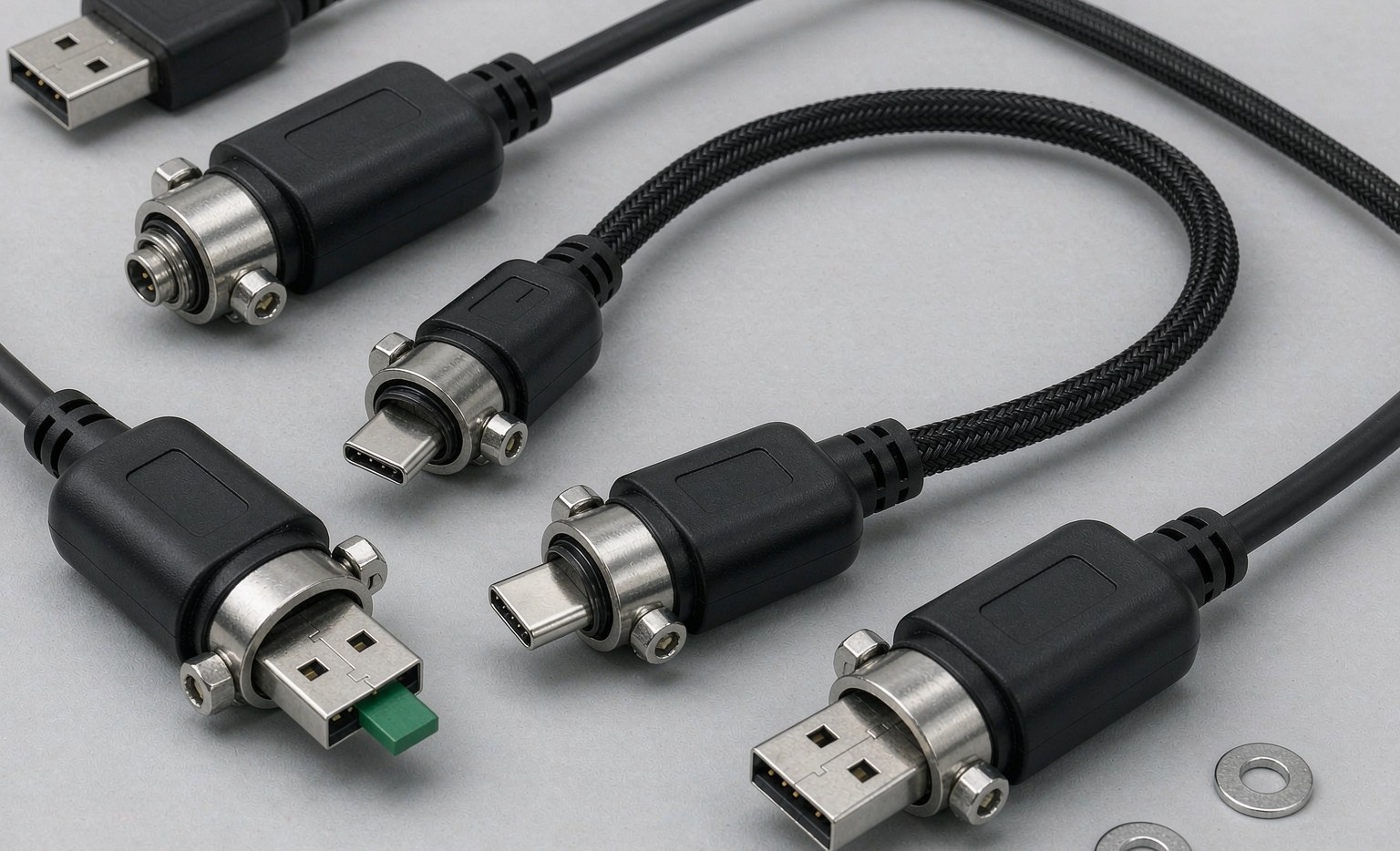
When consulting a USB C design guide, you must choose between different locking orientations based on your PCB layout and space constraints. Longkai Electronics provides specialized USB Cable locking configurations:
- Single Top Screw: Ideal for compact Internal Cable routing where horizontal space is limited.
- Dual Side Screws: Provides the highest level of mechanical stability, common in Machine Vision cameras (Basler, FLIR, IDS standards).
- Right-Angle Locking: Necessary for tight enclosures where a straight exit would strain the Wire Harness.
Longkai Electronics: Precision Manufacturing for Industrial IO
With over 12 years of expertise, Dongguan Longkai Electronics Co., Ltd. has mastered the complexities of high-speed transmission. Our 3,000㎡ factory serves as a hub for innovation in Cable Catalog development.
- Signal Integrity Testing: We use TDR (Time Domain Reflectometry) to ensure every Screw fix Type-C cable meets precise impedance requirements.
- Durability Testing: Our Industrial USB connectors undergo salt spray testing for 48-96 hours to ensure corrosion resistance in marine or outdoor environments.
- Certification: We are ISO9001 and ISO14001 certified, ensuring that every Communication Cable leaving our facility meets RoHS and CE standards.
Frequently Asked Questions: USB C Design Guide
Is the screw-lock USB-C compatible with my standard laptop?
The USB-C connector itself is standard, but the screw-lock housing may interfere with the chassis of a consumer laptop if it doesn’t have the corresponding M2 threaded holes. However, for industrial PCs (IPCs), they are fully compatible.
What is the benefit of USB 3.1 Gen 2 in industrial settings?
USB 3.1 Gen 2 offers 10Gbps speeds, which is essential for high-resolution uncompressed video in machine vision. Using our Type C-3.1 Cable locking ensures this high-speed data isn’t interrupted by mechanical jitter.
Can I customize the cable length for my robotics application?
Yes. Longkai Electronics specializes in custom Cable Assembly. We can optimize cable length and flexibility (high-flex life) to suit dynamic robotic movements.
Expert Consultation & Global Sourcing
Beyond USB-C, we provide a wide range of specialized interconnects, including M12 / M16 / M8 Connectors for sensors and Servo Series Connectors for motion control. Follow our updates here:
- Facebook: Longkai Electronics Official
- LinkedIn: Ying Han – Technical Sales
- Alibaba Store: Lungkay Global Sourcing