
Introduction: Beyond the Algorithm — The Physical Reality of AI
Artificial Intelligence has captured the global imagination. With the power to generate breathtaking art from a simple text prompt, to diagnose diseases with superhuman accuracy, and to engage in nuanced conversation, AI feels like a form of digital magic. We speak of neural networks, large language models, and algorithms as if they are ethereal entities, existing purely in the realm of software. But this is a profound misconception. AI is not magic; it is a brute-force, physical process of unprecedented scale. It is a product of hardware—of silicon, metal, and electricity—and its incredible power is forged in the crucible of the most advanced physical infrastructure ever created: the AI data center.
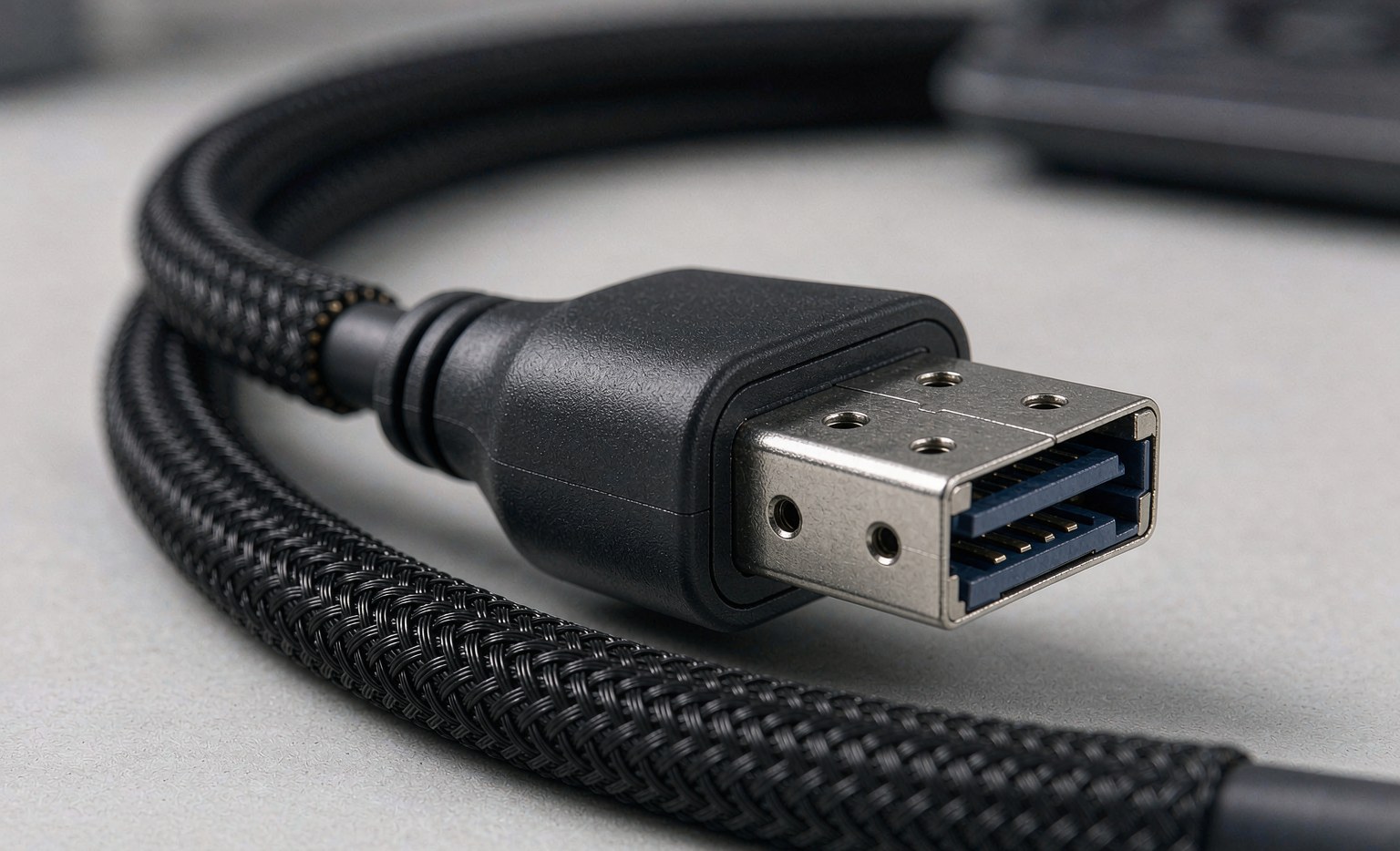
At the heart of this infrastructure lies a fundamental challenge that is rarely discussed outside of engineering circles. The performance of a multi-billion-dollar AI cluster is not ultimately limited by the speed of its processors, but by the speed and reliability of the connections between them. The intricate web of the data cable that links thousands of GPUs to mountains of storage and to each other is the system’s central nervous system. If this nervous system is slow, inefficient, or unreliable, the entire “brain” becomes sluggish and ineffective, no matter how brilliant its individual neurons may be. The most advanced algorithm in the world is useless if it is starved of the data it needs to learn and to reason.
This deep-dive analysis will journey into the heart of the AI revolution, but our focus will not be on the software. Instead, we will investigate the hidden physical layer, the critical infrastructure of connectivity that makes AI possible. We will explore how the explosive demands of AI training are forcing a radical redesign of the modern server and its internal cabling, driving the evolution from legacy standards like MINI SAS to the new titans of bandwidth, the SlimSAS Cable and OCUlink Cable. We will then travel to the “edge,” to see how AI in robotics and autonomous systems is creating a new imperative for rugged, ultra-reliable Industrial Cable solutions. Finally, we will argue that in the age of AI, the quality of the physical connection has been elevated from a technical detail to a primary strategic concern, and the choice of a manufacturing partner is now a critical factor in the success of any AI venture.
Part I: The AI Data Center — Architecting a Superhuman Brain
The process of “training” a large AI model, such as GPT-4 or Stable Diffusion, is one of the most computationally intensive tasks ever conceived. It involves feeding a neural network with a dataset that can span a significant portion of the entire internet and having it process this data for weeks or months on end across a massive cluster of specialized processors, typically GPUs. This is not a task for a standard server; it requires a new type of supercomputer, one architected around a single, overriding principle: minimizing the data bottleneck.
The Interconnect Bottleneck: The Idle GPU Problem
A high-end AI GPU is an incredibly powerful and expensive piece of hardware, capable of performing trillions of calculations per second. However, it can only perform these calculations on data that is present in its local memory. The single greatest challenge in AI infrastructure design is keeping these GPUs constantly fed with data from the network storage and from other GPUs in the cluster. When a GPU is waiting for data, it is sitting idle, and an idle GPU is a catastrophic waste of capital and energy. This “idle GPU problem” is almost entirely a function of interconnect performance.
The data pathways inside an AI server must handle several extreme-bandwidth traffic flows:
- Storage-to-GPU: The massive training dataset must be streamed from ultra-fast NVMe storage arrays to the GPUs with the lowest possible latency.
- GPU-to-GPU (Peer-to-Peer): In a distributed training job, the GPUs must constantly exchange intermediate results and synchronize their calculations. This peer-to-peer traffic, often managed by protocols like NVLink or through the PCIe bus, is incredibly intense.
The traditional internal cabling infrastructure, built around the 12 Gbps speeds of SAS-3, was simply not designed to handle this level of parallel, high-frequency data transfer. The result was a crippling bottleneck, where the physical cables were throttling the performance of the entire multi-million-dollar system.
The Solution: A New Generation of High-Bandwidth Internal Cables
To break this bottleneck, the industry turned to a new generation of internal interconnects that were designed to serve as the high-speed arteries of the AI server. These standards were engineered to carry the massive bandwidth of the latest PCI Express generations (PCIe 4.0, 5.0, and the emerging 6.0) with pristine signal integrity.
- SlimSAS (SFF-8654): The Density and Bandwidth Champion. The SlimSAS Cable has become the de facto standard for connecting high-density NVMe backplanes in AI servers. Its ultra-compact design allows for the maximum number of drives to be packed into a server chassis, while its superior electrical properties ensure a clean, error-free signal path for PCIe 5.0 speeds (32 GT/s). This allows a massive pool of training data to be available to the GPUs at breathtaking speeds.
- OCUlink (SFF-8611): The Low-Latency Specialist. As a native extension of the PCIe bus, the OCUlink Cable provides the most direct and lowest-latency path available. It is often used for the most critical, time-sensitive connections within the AI server, such as linking a CPU directly to a GPU accelerator or connecting specialized components in the data fabric. Its robust, latching connector also provides the high level of reliability demanded by these mission-critical systems.
The adoption of these advanced standards represents a fundamental architectural shift. The Internal Cable is no longer just a link in a chain; it is the fabric of the AI supercomputer itself. The design of this intricate, high-speed web of cables, the Cable Assembly, is now a primary focus of server architects, as it directly determines the training efficiency and, therefore, the economic viability of the entire AI model.
Part II: The Science of Speed — Engineering a Flawless Signal Path
The transition to these multi-gigatransfer-per-second speeds has placed an extraordinary emphasis on the science of signal integrity. At these frequencies, the principles of high-frequency RF engineering become directly applicable to the design of a data cable. A cable is no longer a simple conductor; it is a precisely tuned transmission line where even the smallest imperfection can cause the signal to collapse. For an AI system, where a single bit error in a training dataset can have cascading effects, a flawless signal path is not a luxury; it is a mathematical necessity.
The Physics of Failure
Several physical phenomena conspire to degrade a high-speed signal as it travels through a cable:
- Insertion Loss: The natural tendency of a signal to lose energy (attenuate) as it travels down a conductor. This is combated by using high-purity, low-resistance copper and by keeping cable lengths as short as possible.
- Crosstalk: The unwanted coupling of a signal from one wire pair to an adjacent pair. This is the “signal bleed” that can corrupt data. It is mitigated by the precise and consistent twisting of the wire pairs and by high-quality shielding.
- Impedance Discontinuities: Every part of the signal path—the circuit board, the connector, the cable—has a characteristic impedance (typically 100 ohms). Any point where this impedance changes will cause a portion of the signal to be reflected back, like a wave hitting a wall. These reflections interfere with the original signal, corrupting the data. This is why the quality of the connector and the termination process is so critical.
The Engineering of Quality
A high-quality cable, capable of supporting AI-level data rates, is the result of a manufacturing process that is fanatically focused on controlling these physical variables.
- Precision Extrusion: The plastic insulation around the conductors must be extruded with a uniform thickness and density, controlled to within microns, to maintain a consistent impedance.
- Synergistic Shielding: The most robust cables use a combination of a 100% coverage aluminum foil shield to block high-frequency noise and a dense tinned copper braid to block low-frequency noise. This dual approach provides comprehensive protection against EMI.
- Automated, Verified Termination: The process of attaching the connector to the cable is the most critical step. World-class manufacturers use automated, laser-guided processes to ensure perfect alignment and consistent termination, followed by 100% testing with advanced equipment like a Vector Network Analyzer (VNA) to verify the signal integrity performance of every single assembly.
This is a level of precision that is impossible to achieve through low-cost, commodity manufacturing. It is a scientific discipline, and it is the unseen foundation upon which the entire AI industry is being built.
Part III: The Sentient Edge — AI in the Physical World
While the most powerful AI models are trained in the data center, their ultimate purpose is to be deployed in the real world. This is the realm of “Edge AI,” where intelligence is embedded directly into the devices that interact with our physical environment: the factory robot, the autonomous drone, the smart medical device. At the edge, the challenges for connectivity are amplified, as the demand for high performance is combined with the unforgiving realities of the physical world.
The Robotic Nervous System
The modern collaborative robot is a sensory-rich system, guided by 3D vision and equipped with force-feedback sensors that give it a sense of touch. The Wire Harness that connects these sensors and powers the robot’s motors is its nervous system. This harness must be a masterpiece of reliability engineering.
- The Challenge of Constant Motion: The cables in a robotic harness are subjected to millions of cycles of bending and twisting. A standard cable would fail in a matter of hours. A robotic-grade Industrial Cable is designed with special, high-strand-count conductors and advanced jacketing materials that are specifically engineered for a high “flex-life.”
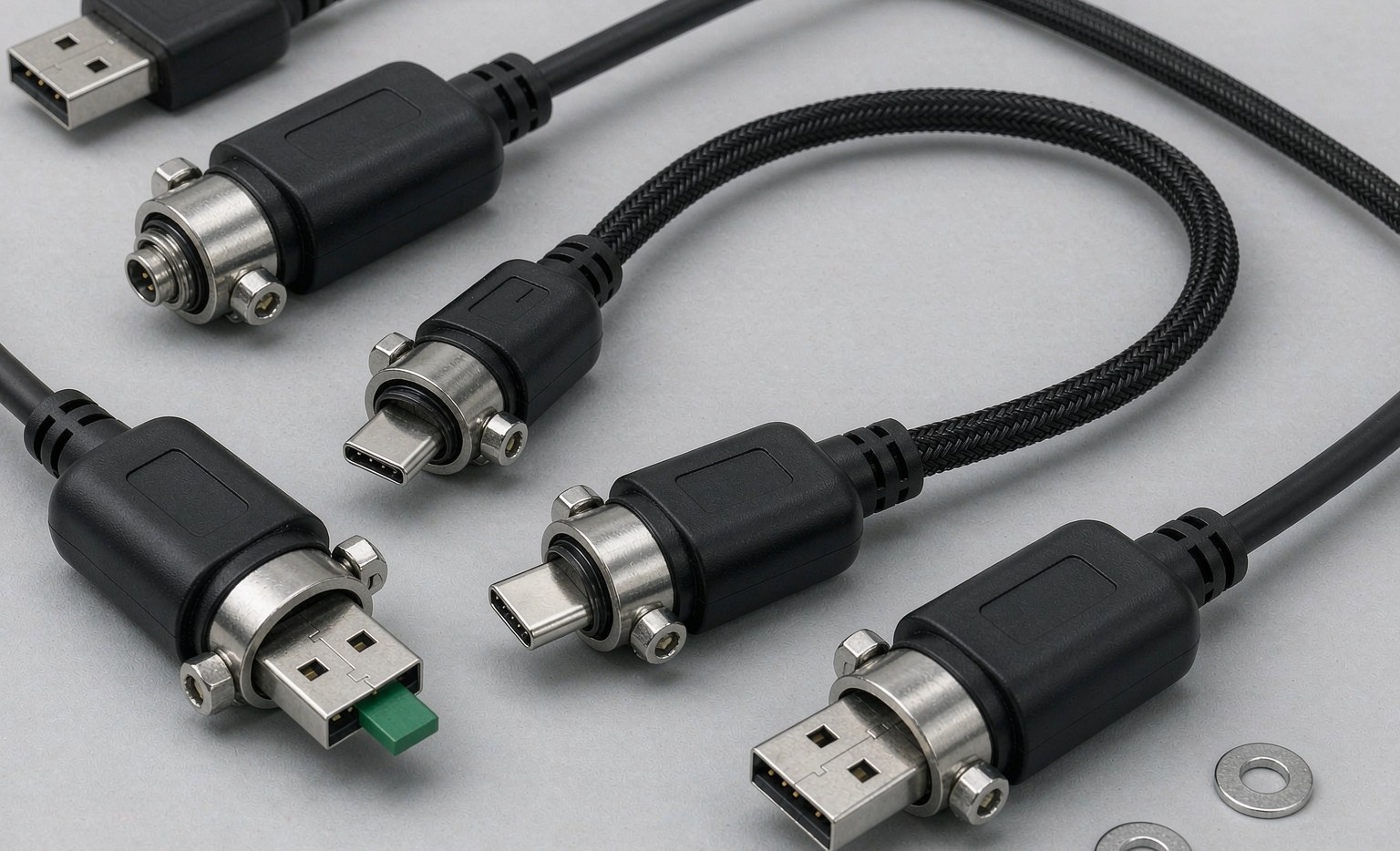
- The Need for Absolute Integrity: The data from the robot’s vision system is mission-critical. To ensure this data is not corrupted by the intense EMI from the robot’s own motors, the harness must incorporate robustly shielded cables. Furthermore, the connectors, such as a USB Cable locking interface, must be physically secured to prevent any possibility of a vibration-induced disconnect.
The Eyes of the Autonomous Machine
From agricultural drones that monitor crop health to delivery robots that navigate city sidewalks, autonomous machines rely on a constant stream of high-fidelity data from their sensors. The cables that connect these sensors are the machine’s optic nerves, and their reliability is paramount.
- Ruggedization for the Real World: These cables are exposed to everything: rain, dust, sunlight, and physical impacts. They must be designed with IP-rated waterproof connectors and jackets that are resistant to UV degradation and abrasion.
- The Convergence of Data and Power: To simplify the design of these complex machines, there is a strong push towards single-cable solutions that can deliver both data and power. Standards like Power over Ethernet (PoE) are becoming critical, but they require a higher grade of ethernet cable that can handle the thermal load of carrying significant power without degrading its data performance.
At the sentient edge, the quality of the physical connection is directly proportional to the safety, reliability, and effectiveness of the entire intelligent system.
Part IV: The Manufacturing Mandate — The Human Element Behind the Machine Intelligence
The vision of a future powered by AI and robotics is inspiring, but it is a future that will be built by human hands and human ingenuity. The creation of the advanced connectivity solutions required by this new era is a profound manufacturing challenge, one that requires a deep and integrated commitment to quality at every level of an organization.
The manufacturer of the future is not a simple vendor of components; they are a strategic partner in innovation. This partnership is built on a foundation of trust, a trust that is earned through a demonstrated and verifiable commitment to excellence.
- A Culture of Engineering Excellence: It begins with a deep, institutional knowledge of the underlying science. A world-class manufacturer, like Longkai Electronics, has an R&D department that is not just following standards, but is actively working to solve the next generation of connectivity challenges. Our heritage, stretching back to 2012, is one of continuous learning and adaptation.
- A System of Verifiable Quality: Trust must be verified. A commitment to quality is proven not by marketing claims, but by internationally recognized certifications. Adherence to standards like ISO 9001 (for quality management), IATF 16949 (for automotive quality), and ISO 13485 (for medical devices) is the mark of a manufacturer that is serious about reliability.
- The Power of Vertical Integration: The ability to control the entire manufacturing process, from the drawing of the copper to the final assembly and testing, is a powerful advantage. This vertical integration allows for a level of quality control and consistency that is impossible to achieve in a fragmented supply chain.
- A Collaborative Approach to Innovation: The most advanced connectivity solutions will be custom-designed for their specific applications. The ideal manufacturer acts as an OEM/ODM partner, working closely with their clients’ engineering teams to design, prototype, and produce the perfect solution for their needs. This collaborative spirit, a cornerstone of our philosophy at Longkai Electronics, is what has allowed us to build trusted relationships with over 100 of the world’s leading technology brands.
Conclusion: The Unseen Architecture of Tomorrow
The Artificial Intelligence revolution is not happening in a vacuum. It is being built on a physical foundation, a hidden architecture of connectivity that is just as critical as the algorithms themselves. We are moving from a world of simple connections to a world where the physical cable has become the sentient nervous system of our most advanced creations.
The demands of this new era—for extreme bandwidth, for near-zero latency, for intelligent power, and for unwavering reliability in the harshest of environments—have elevated the art and science of cable manufacturing to a new level of importance. The future of AI, of robotics, and of our entire connected world will not be limited by our ambition, but by the quality and performance of the physical links we use to build it. The unseen architecture of tomorrow is being forged today, in the precision and care of every connection we make.