
Prologue: The Promise and the Betrayal
In a world saturated with technological marvels, we have become accustomed to the promise of performance. We purchase a new enterprise server with blazing-fast processors, a professional camera capable of capturing cinematic 8K video, or a sleek laptop boasting the revolutionary power of a U4 Cable port. These devices are the embodiment of progress, the culmination of billions of dollars in research and development. They come with a promise. And yet, for a growing number of users, this promise is being broken at the first and most fundamental step: the simple act of plugging in a cable. The screen flickers. The data transfer crawls. The connection drops. The potential of a multi-thousand-dollar device is strangled by a ten-dollar accessory.
This is not a story of isolated incidents or minor annoyances. This is the story of a systemic and pervasive crisis in the electronics industry—a “Great Disconnect” between the incredible potential of our core technology and the dismal reality of the accessories designed to support it. The market has been flooded with a deluge of counterfeit, non-compliant, and dangerously substandard cables, all masquerading as high-performance products. This hidden crisis of quality is more than just a frustration for consumers; it is a direct threat to the reliability of our critical infrastructure, a saboteur of productivity in our businesses, and a corrosive force that undermines the very trust upon which the technology ecosystem is built.
This investigative report will pull back the curtain on this crisis. We will dissect the anatomy of the low-quality cable, exposing the common deceptions in materials and design. We will journey to the frontlines of failure—from the mission-critical data center to the high-stakes factory floor—to witness the real-world consequences of this disconnect. Finally, we will outline a blueprint for resilience, a strategic framework for navigating this treacherous landscape and rebuilding the broken chain of trust. This is an investigation into the shadows of the supply chain, a deep dive into the silent crisis that threatens to unplug our connected world.
Part I: The Anatomy of a Counterfeit — The Three Sins of the Low-Quality Cable
The crisis is fueled by a simple economic reality: a high-performance data cable is a complex, precision-engineered component, but it is often perceived and sold as a simple commodity. This disconnect creates a fertile ground for manufacturers who cut corners, substituting quality for profit. These compromises, while often invisible to the naked eye, can be categorized into three fundamental “sins” that define the low-quality cable.
Sin #1: Material Deception — The Lie of the Conductor
The most common and egregious deception lies at the very core of the cable: the conductor material. The industry standard for any reputable data cable is high-purity, oxygen-free copper (OFC) for its superior conductivity and corrosion resistance. The counterfeit market’s material of choice is Copper-Clad Aluminum (CCA).
- What is CCA? CCA wire is an aluminum core with a thin coating of copper. It is significantly cheaper and lighter than solid copper, making it attractive to unscrupulous manufacturers. It is often marketed deceptively as “copper” or “OFC” to unsuspecting buyers.
- The Electrical Consequences: The problem is that aluminum is a far worse electrical conductor than copper. A CCA cable has approximately 60-70% higher resistance than a pure copper cable of the same diameter. This has catastrophic consequences for performance. In a Power over Ethernet (PoE) ethernet cable, this higher resistance generates significantly more heat, creating a fire hazard and failing to deliver the required power. In a high-speed data application, the increased resistance leads to severe signal degradation (attenuation), drastically reducing the speed and the maximum effective length of the cable.
- The Physical Consequences: Aluminum is also more brittle than copper. It is far more susceptible to breaking under the stress of bending and flexing, leading to a much shorter service life and a higher rate of physical failure, especially in a dynamic Wire Harness application.
The use of CCA in a cable that is meant for high-speed data or power transmission is not a compromise; it is a fundamental deception that renders the product unfit for its purpose.
Sin #2: Design Negligence — The Illusion of Robustness
Even if a cable uses pure copper conductors, its performance can be crippled by negligent design and the omission of critical structural components. This is where manufacturers cut corners on the things that are not immediately visible.
- Inadequate Shielding: Proper shielding against electromagnetic interference (EMI) is a complex, multi-layered system in a high-quality cable. Low-cost alternatives often cut corners by using only a single, thin layer of foil with poor coverage, or by omitting the braided shield entirely. This leaves the data signal defenseless against the electrical noise of a typical office, let alone the hostile environment of a factory. The result is a connection that is prone to random errors, slow speeds, and inexplicable dropouts.
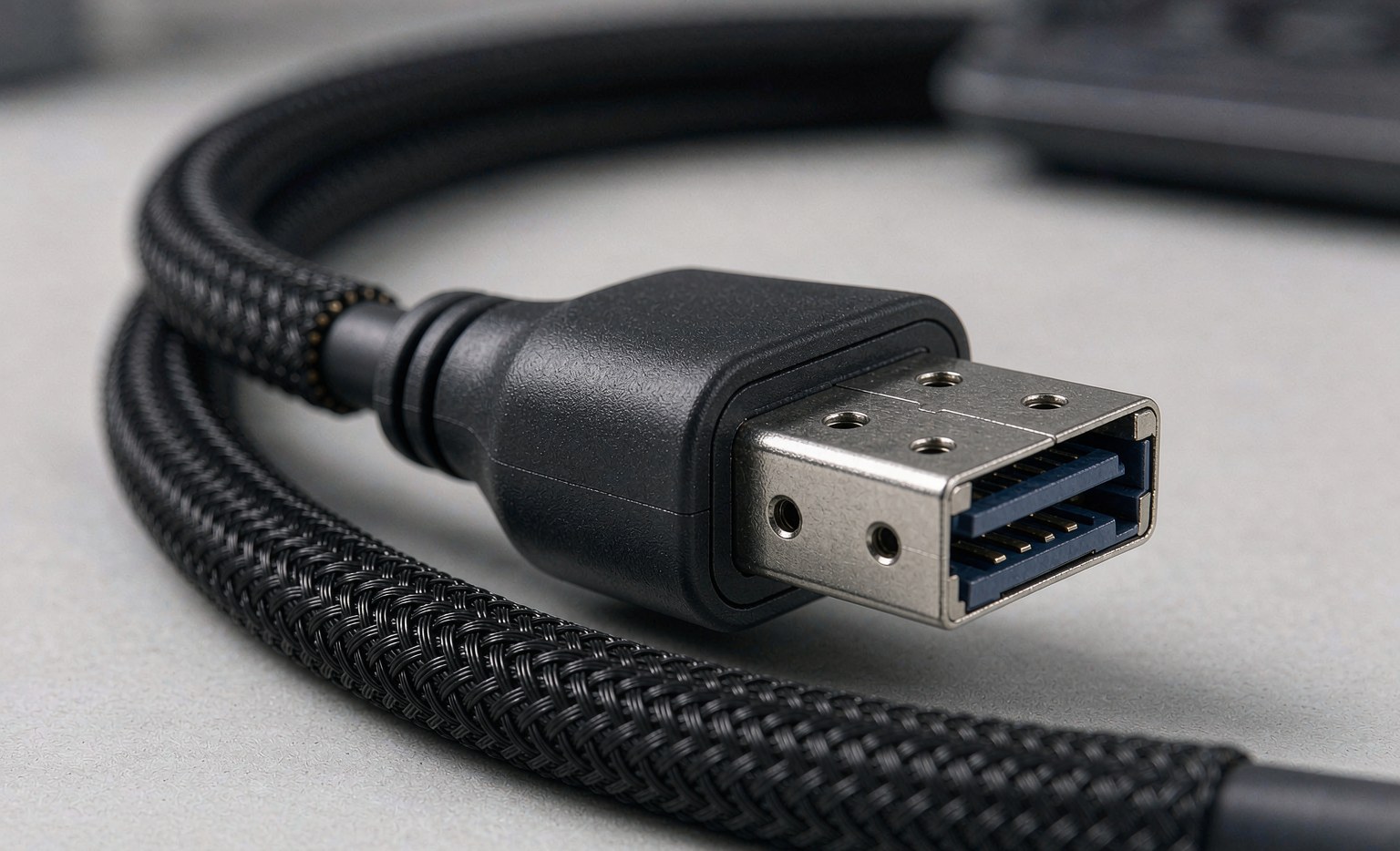
- Poor Strain Relief: The point where the cable meets the connector is the most common point of mechanical failure. A quality Cable Assembly features a robust, overmolded strain relief that distributes bending stress over a larger area. Counterfeit cables often have a flimsy, purely cosmetic strain relief, or none at all. This means that the full force of any pull or bend is concentrated on the delicate solder joints inside the connector, leading to a swift and inevitable failure.
- Substandard Connector Quality: The deception extends to the connectors themselves. Instead of gold-plated contacts to prevent corrosion, low-quality cables may use tin or nickel, which oxidize over time and create a poor connection. The plastic housing may be made from brittle, recycled materials that crack or break easily.
This negligent design creates a product that may look the part, but is functionally fragile and destined for a short and unreliable service life.
Sin #3: Certification Fraud — The Forgery of Trust
The final and most insidious sin is the fraudulent use of certification marks. Official certifications from bodies like the USB-IF (for USB products), VESA (for DisplayPort), and UL (for safety) are a consumer’s primary guarantee of quality and compliance. They signify that a product has been rigorously tested and is proven to meet the strict performance and safety standards of the specification.
The counterfeit market thrives on forging this trust. Manufacturers will illegally place certification logos on products and packaging for cables that have never been submitted for testing, or have failed testing. This is a direct deception that misleads consumers into believing they are buying a product that is safe and will perform as advertised.
- The USB-IF Example: For a U4 Cable to be certified, it must pass a stringent battery of electrical and mechanical tests. It must include a specific “e-marker” chip that communicates its capabilities. A non-certified cable may use the U4 or Thunderbolt logo, but it will lack the internal construction and components to actually deliver 40 Gbps speeds or handle high-wattage Power Delivery safely.
- The Consequence: This fraud not only results in poor performance but can be actively dangerous. A non-certified Type C-Cable used for high-power charging can overheat, damage the connected device, or even cause a fire.
This forgery of trust erodes the value of the entire standards ecosystem and places the burden of vigilance directly on the consumer or IT professional.
Part II: The Frontlines of Failure — A Cross-Industry Damage Report
The consequences of this quality crisis are not theoretical. They are causing real, measurable damage across every sector of the technology landscape. The Great Disconnect is creating a drag on productivity, a risk to critical operations, and a threat to safety.
The Data Center: A Foundation of Sand
In the high-stakes world of the data center, the use of non-compliant internal cables is akin to building a skyscraper on a foundation of sand. The entire multi-million-dollar investment in high-performance servers, storage, and networking is jeopardized by the failure to invest in a reliable physical layer.
- The “Soft Failure” Epidemic: The most dangerous problem is not the cable that fails completely, but the one that fails intermittently. A substandard SlimSAS Cable connecting an NVMe array may not go dark; it may simply produce a higher bit error rate under load. The system will slow down as it constantly has to retransmit data, but the source of the problem will be almost impossible to pinpoint. This leads to what data center operators call a “diagnostic nightmare,” where countless hours are wasted chasing ghosts in the software, when the fault lies in the physical hardware.
- The Thermal Threat: A poorly designed Cable Assembly can also disrupt the carefully managed airflow within a modern, high-density server. This can lead to hotspots, causing processors to thermal throttle (intentionally slow down to prevent overheating), further degrading performance and increasing the risk of premature component failure.
In the data center, a low-quality cable does not just fail to perform; it actively sabotages the performance of the entire system.
The Industrial Zone: A Hazard in Waiting
On the factory floor, the consequences of the quality crisis shift from performance degradation to operational catastrophe and safety hazards. An Industrial Cable is a component of a larger machine, and its failure can have kinetic consequences.
- The Reliability Imperative: A modern factory’s profitability is measured in uptime. An assembly line that is forced to stop because of a failed sensor cable or a faulty ethernet cable in a control network is a financial disaster. The cost of lost production in a single hour can exceed the entire cabling budget for the machine by a factor of a thousand.
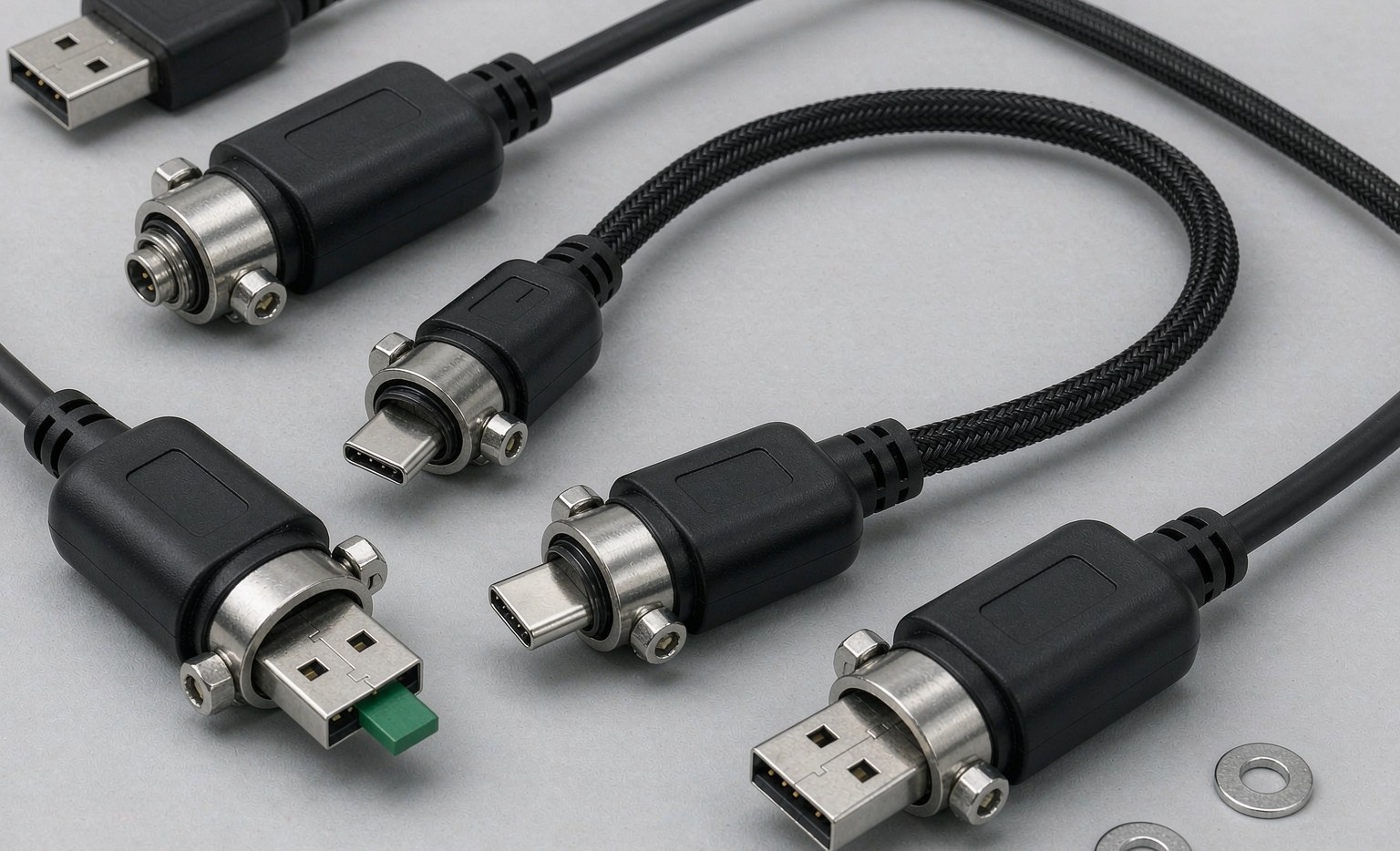
- The Safety Risk: The stakes are even higher when safety is involved. Consider a Wire Harness in a collaborative robot that is designed to work alongside human operators. If a cable in that harness fails, causing the robot’s safety sensors to malfunction, the result could be a serious accident. Similarly, the failure of a USB Cable locking mechanism on a critical piece of medical equipment could have life-threatening consequences.
In the industrial world, the quality of a cable is not an IT issue; it is a core component of operational and safety engineering.
Part III: The Path to Resilience — A Blueprint for Rebuilding Trust
The Great Disconnect is a daunting challenge, but it is not an insurmountable one. The solution lies in a proactive, knowledge-based approach to sourcing and specification. It requires moving from a passive “buyer” mindset to an active “specifier” mindset. This is the blueprint for rebuilding the broken chain of trust.
Step 1: Demand Radical Transparency
The first step is to demand a level of transparency that goes far beyond the marketing claims on a product page. A reputable manufacturer will never hide behind vague specifications.
- Ask for the Datasheet: A professional-grade cable will always have a detailed technical datasheet. This document should specify the exact conductor material (e.g., AWG, solid vs. stranded, OFC), the types and coverage percentages of the shielding, the jacket material, and the temperature and voltage ratings. If a supplier cannot provide this, it is a major red flag.
- Question the Origin: Understand the manufacturer’s supply chain. A vertically integrated manufacturer who has control over the entire process, from raw material sourcing to final assembly, is far more likely to produce a consistent, high-quality product.
Step 2: Verify, Do Not Assume, Certification
Do not take certification marks at face value. Reputable certification bodies maintain public databases of approved products.
- Check the Databases: For a USB product, you can check the USB-IF’s Certified Product database. For DisplayPort, VESA maintains a similar list. For safety, look for a UL file number that can be verified on the UL website. This due diligence is a critical step in weeding out fraudulent products.
- Prioritize System-Level Certifications: Beyond the cable itself, look for a manufacturer with robust quality management system certifications, such as ISO 9001. This demonstrates a company-wide commitment to quality processes, which is a powerful leading indicator of product quality.
Step 3: Specify for the Application, Not Just the Interface
The core of a resilient strategy is to select a connectivity solution that is holistically designed for its intended application and environment.
- Conduct an Environmental Analysis: Before specifying a cable, analyze the environmental stresses it will face. Will there be vibration? High temperatures? Exposure to chemicals? Repeated flexing? The answers to these questions should guide the specification of the cable’s mechanical properties, from the connector type to the jacket material.
- Embrace Customization: For any complex or mission-critical system, an off-the-shelf solution is often a compromise. Partnering with a manufacturer on a custom-designed Cable Assembly or Wire Harness allows you to create a solution that is a perfect fit, both mechanically and electrically. This eliminates excess cable length, optimizes for the specific routing path, and ensures every component is perfectly matched to the demands of the application.
Step 4: Choose a Partner, Not a Vendor
Ultimately, the most effective strategy for overcoming the quality crisis is to build a long-term relationship with a manufacturing partner who shares your commitment to excellence. A vendor sells you a product. A partner helps you solve a problem.
A true partner, like Longkai Electronics, becomes an extension of your engineering team. With a legacy of deep expertise stretching back to 2012, we have been on the frontlines of this quality battle for over a decade. Our integrated R&D and manufacturing capabilities, our globally recognized certifications, and our trusted relationships with over 100 of the world’s most demanding technology companies are all a testament to our core philosophy: quality is not a feature; it is the foundation of everything we build.
Conclusion: Forging a New Contract
The Great Disconnect between the promise of our technology and the reality of its supporting infrastructure is a challenge that we can and must overcome. It requires a new vigilance, a new level of technical literacy, and a new commitment to holding our supply chains accountable. The era of treating connectivity as a disposable commodity must end.
By embracing a proactive, quality-first approach, we can forge a new, unspoken contract—a contract built on a foundation of verified quality, engineering excellence, and trusted partnership. This is how we will close the gap between promise and reality. This is how we will ensure that our most advanced systems are not brought low by their weakest link. And this is how we will build a digital world that is not just faster and smarter, but is fundamentally more reliable, resilient, and worthy of our trust.