Executive Summary
Technical Specification Comparison
Choosing the right Internal Cable requires an understanding of electrical performance and mechanical constraints. Below is the engineering data comparing these two standards.
| Feature | SFF-8087 (MiniSAS) | SFF-8643 (MiniSAS HD) |
|---|---|---|
| SAS Standard | SAS 2.0 / 2.1 | SAS 3.0 / SAS 4.0 / PCIe Gen 3 & 4 |
| Max Bandwidth | 6Gbps per lane (24Gbps total) | 12Gbps per lane (48Gbps total) |
| Impedance Control | 100 Ω ± 10% | 100 Ω ± 5.2% (Longkai Standard) |
| Physical Interface | Wide ribbon/Bundle | High-density shielded |
| Pin Count | 36-pin | 36-pin |
| Application | Legacy Servers/HBA | Next-gen Storage/NVMe/RAID |
Deep Dive: Architecture and Signal Integrity
1. Bandwidth Evolution: 6G vs 12G
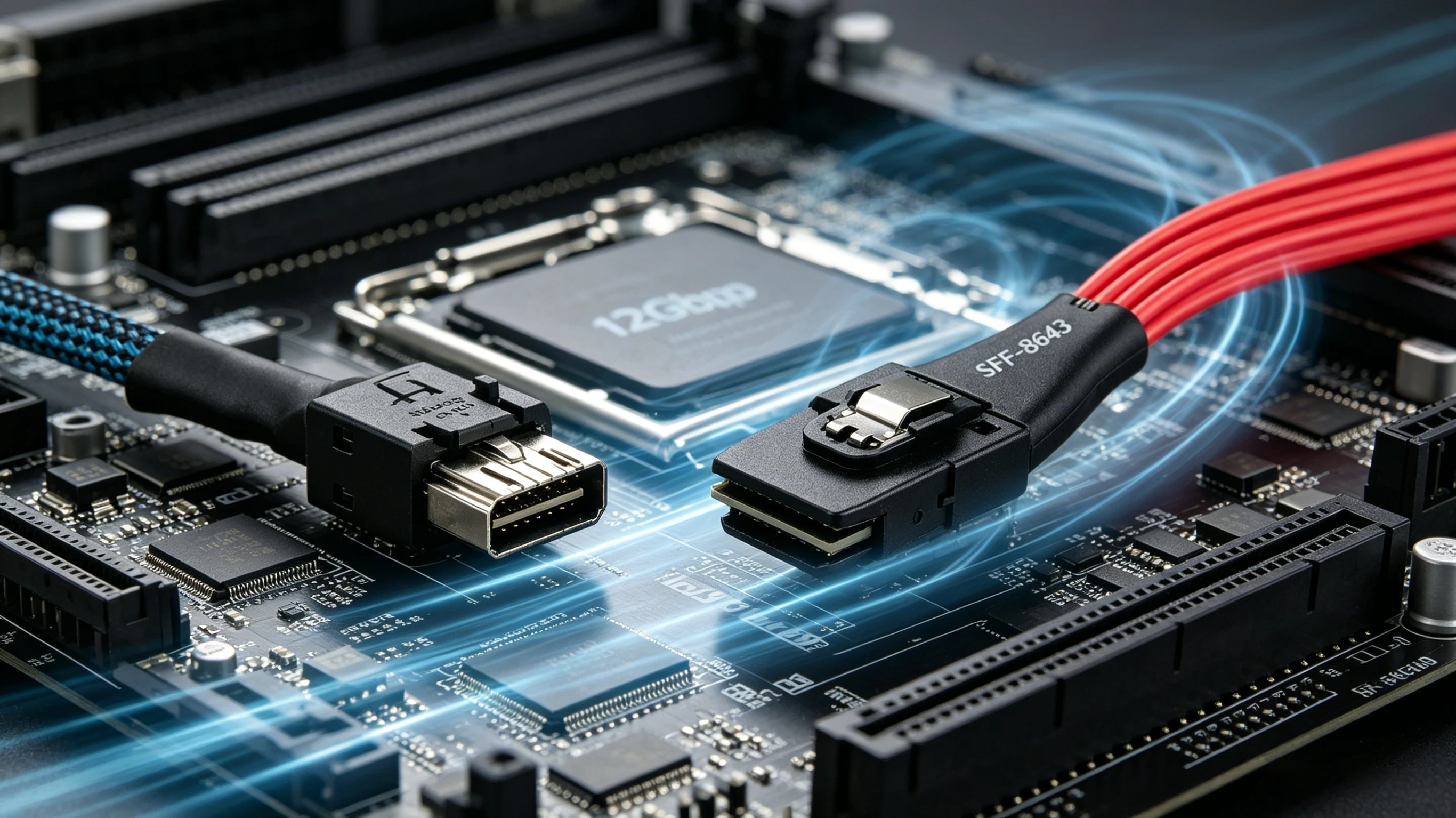
The transition from SFF-8087 to SFF-8643 was driven by the industry’s need for 12Gbps throughput. As data centers moved toward SSD-based arrays, the 6Gbps bottleneck of the MiniSAS Cable became apparent. The MiniSAS-HD Cable (SFF-8643) effectively doubles the bandwidth, allowing for 48Gbps total throughput across four lanes. This makes it the preferred choice for Communication Cable systems requiring high-speed data migration.
2. Physical Footprint and Airflow Optimization
In modern 1U and 2U rack servers, space is at a premium. An SFF-8643 connector is roughly half the size of an SFF-8087. This reduction in size allows hardware engineers to place more ports on an HBA (Host Bus Adapter) or RAID card. Furthermore, the thinner gauge wire used in high-quality Internal Cable assemblies from Longkai Electronics improves internal airflow, which is critical for thermal management in high-performance computing.
3. Shielding and EMI Mitigation
At 12Gbps, electromagnetic interference (EMI) and crosstalk become significant challenges. While SFF-8087 provides basic shielding, the SFF-8643 standard incorporates enhanced metal-to-metal contact points. At Longkai, our MiniSAS-HD Cable production involves rigorous 100% signal integrity testing, ensuring that impedance is maintained at 100Ω with a strict tolerance of ±5.2Ω to prevent signal reflection.
Backward Compatibility and Hybrid Cables
The industry often requires bridging legacy hardware with modern storage. This has led to the demand for hybrid cables, such as SFF-8643 to SFF-8087. These cables allow an older backplane (SFF-8087) to connect to a modern 12G RAID card (SFF-8643). However, users must note that the link will default to the lowest common denominator—typically 6Gbps. For those exploring the latest protocols, Longkai also offers advanced SlimSAS Cable (SFF-8654) and OCUlink Cable solutions for PCIe Gen 4 environments.
Longkai Electronics: Engineering the Future of Connectivity
As a leading manufacturer since 2012, Dongguan Longkai Electronics Co., Ltd. specializes in the R&D and production of high-performance Cable Catalog products. Our 3,000㎡ factory is equipped with 5 automated production lines and staffed by over 230 professionals dedicated to quality.
- Precision Testing: Every MiniSAS-HD Cable undergoes insertion loss and return loss testing using advanced network analyzers.
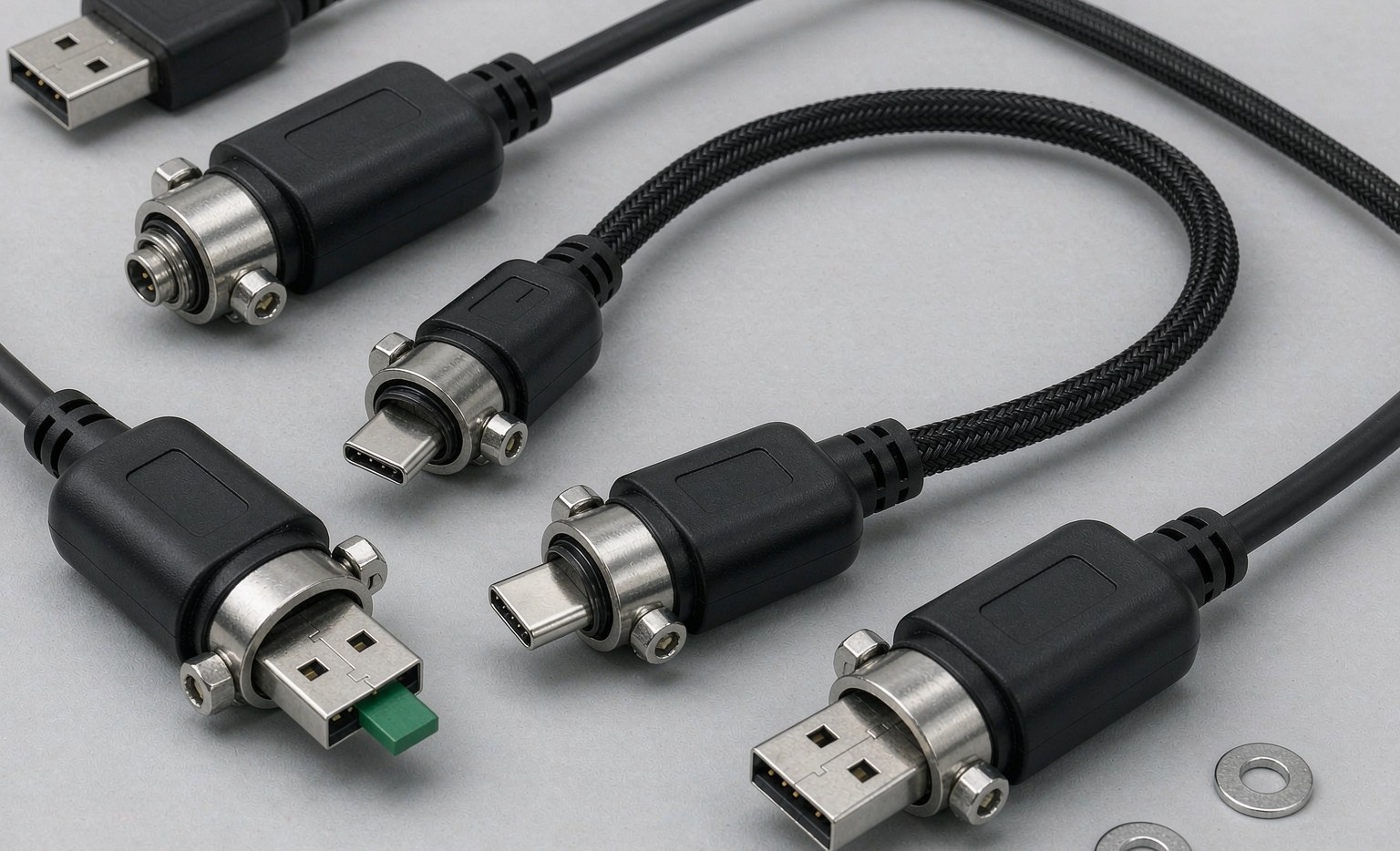
- Industrial Durability: Beyond storage, our Industrial Cable solutions, including Industrial USB and Screw fix Type-C, are tested for 10,000+ plug cycles.
- Certified Quality: We maintain ISO9001 and ISO14001 certifications, ensuring our Cable Assembly products meet international safety and environmental standards (CE, FCC, RoHS).
Frequently Asked Questions
Can I use an SFF-8643 cable for NVMe drives?
Yes, SFF-8643 is the standard connector for internal NVMe connectivity (often referred to as U.2). It supports PCIe x4 lanes, providing the high bandwidth necessary for NVMe SSDs.
Is SFF-8643 the same as MiniSAS HD?
Exactly. SFF-8643 is the specific technical designation for the internal 36-pin high-density connector, commonly marketed as MiniSAS HD.
Do these cables support 4K video editing storage?
Absolutely. For high-speed editing, we recommend our DP Cable for monitoring and our MiniSAS-HD Cable for the underlying RAID storage to ensure zero-lag playback.
Connect with Our Experts
Explore our full range of Connector and Consumer Cable solutions including USB 4.0. Visit our official channels for technical support and wholesale inquiries:
- Facebook: Longkai Electronics Official
- LinkedIn: Ying Han – Technical Sales
- Alibaba Store: Lungkay Global Sourcing