In a world that increasingly values wireless convenience, a common question arises for gamers, professionals, and industrial engineers: is ethernet cable faster than wifi?
The short answer is yes. While Wi-Fi technology has improved drastically with Wi-Fi 6 and 7, a physical Ethernet connection consistently outperforms wireless in terms of raw speed, lower latency, and unwavering stability.
At Longkai Electronics, we have been manufacturing high-performance data cables since 2012. From connecting home offices to wiring complex industrial automation systems for clients like LG and Samsung, we see the physics of connectivity every day. Here is a deep dive into why the cable is still king.
The Three Pillars of Ethernet Superiority
When asking if Ethernet is faster, we must look at three specific metrics: Bandwidth (Speed), Latency (Ping), and Reliability.
1. Raw Transfer Speed (Bandwidth)
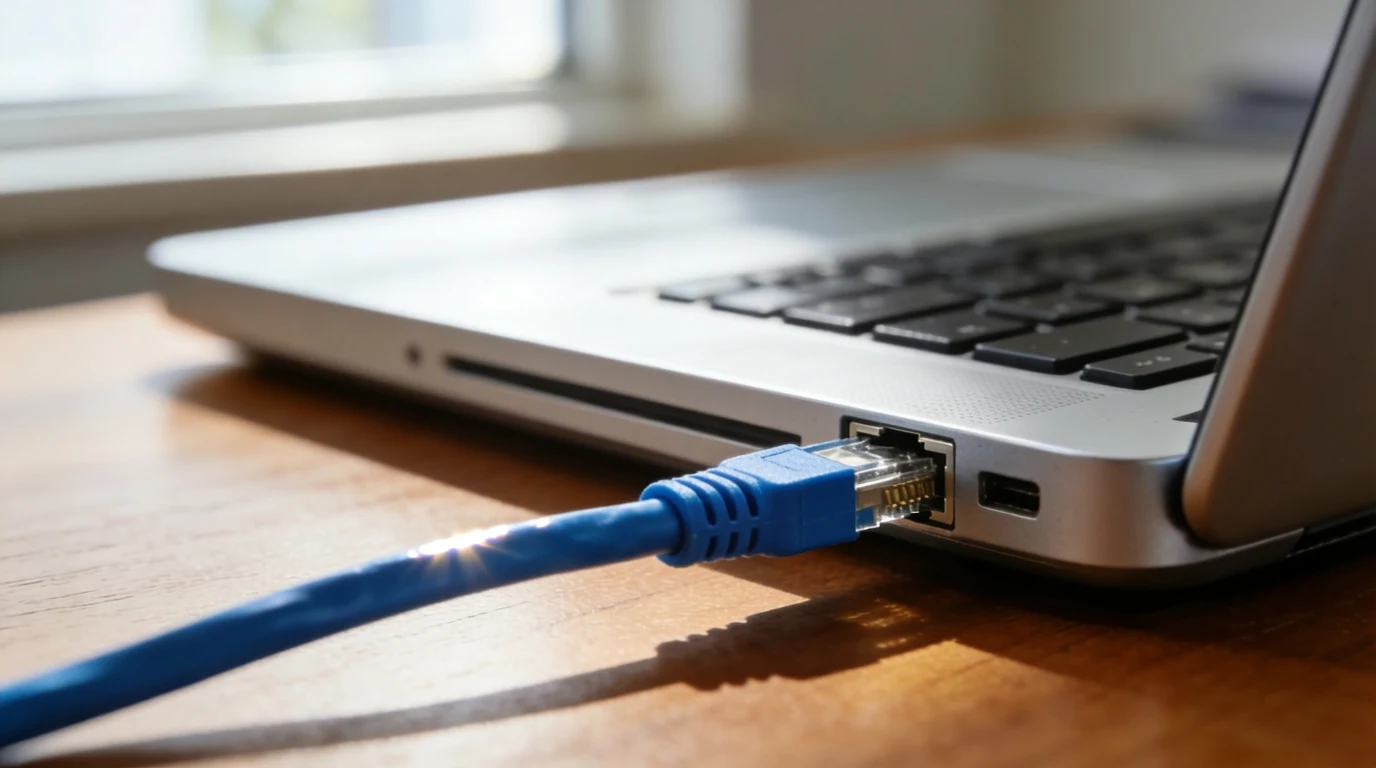
Wi-Fi speeds are often theoretical maximums. A router might advertise “1200 Mbps,” but that speed drops significantly due to distance, walls, and interference from neighbors. In contrast, an Ethernet cable provides a dedicated highway for your data.
Modern LAN cables, such as Cat6 and Cat6a, support speeds of 1 Gbps to 10 Gbps consistently up to 100 meters. There is no signal loss through the air, meaning file transfers that take minutes on Wi-Fi can take seconds on Ethernet.
2. Latency: Why Gamers Prefer Cables
Speed isn’t just about how much data you can move; it’s about how fast it arrives. This is called latency or “ping.”
Wi-Fi signals must be encrypted, transmitted via radio waves, received, and decrypted. This process adds delay. Ethernet transmits data directly via electrical impulses over copper wires. For online gaming, stock trading, or real-time industrial monitoring, this millisecond difference is crucial.
3. Reliability and Interference
Wi-Fi is susceptible to interference from microwave ovens, Bluetooth devices, and even thick concrete walls. This causes “jitter” or sudden connection drops.
Ethernet cables, specifically those with shielding, are immune to these issues. In our industrial network cable solutions, we utilize shielding to protect data integrity in factory environments filled with electromagnetic noise. This ensures that the connection never drops, regardless of the environment.
Ethernet Cable Categories: Does It Matter?
Not all cables provide the same speed. To beat modern Wi-Fi, you need the right category of cable.
- Cat5e: The baseline standard. Supports up to 1 Gbps. It is faster than most home Wi-Fi connections.
- Cat6/Cat6a: The modern standard. Reduces crosstalk and supports up to 10 Gbps. This is the ideal choice for high-speed home networks and offices.
- Cat7/Cat8: Designed for data centers and extreme performance, offering massive bandwidth.
Security: The Overlooked Advantage
Beyond speed, Ethernet offers superior security. A Wi-Fi signal is broadcasted in all directions; anyone within range can theoretically attempt to intercept it. An Ethernet connection is contained within the physical wire. To hack an Ethernet network, one usually needs physical access to the building. This makes wired connections the standard for secure corporate and government networks.
The Longkai Difference: Quality Materials
As a manufacturer established in 2012, we know that a cable is only as good as its copper. Cheap cables use aluminum coated in copper (CCA), which increases resistance and lowers speed.
At Longkai Electronics, we prioritize “Quality First.” Our manufacturing process adheres to ISO9001 and ISO14001 standards. Whether it is a simple patch cord or a complex cable assembly, our products are rigorously tested to ensure they meet the full specified speed. Our CE and FCC certifications are a testament to our commitment to safety and performance.
Conclusion: When Should You Use Ethernet?
So, is Ethernet cable faster than Wi-Fi? Yes, and it is more reliable. While Wi-Fi is perfect for mobile phones and tablets, Ethernet remains the best choice for:
- Desktop computers and workstations.
- Gaming consoles (PS5, Xbox, PC).
- Smart TVs streaming 4K/8K content.
- Industrial machinery and automation.
If you are tired of lag, buffering, or slow downloads, the solution is likely a physical connection. Explore Longkai Electronics’ range of high-quality LAN cables and experience the true speed of your internet service.