D-SUB Connector Technical Comparison Table
| Type | Standard Pins | High Density (HD) | Primary Industrial Use |
|---|---|---|---|
| DB9 (DE-9) | 9 Pins | 15 Pins | RS-232, CAN bus, PLC Comms |
| DB15 (DA-15) | 15 Pins | 26 Pins | VGA, Analog Joystick, Sensors |
| DB25 (DB-25) | 25 Pins | 44 Pins | Parallel Ports, CNC Control |
| DB37 (DC-37) | 37 Pins | 62 Pins | Telemetry, Industrial Automation |
| Waterproof | All Above | All Above | Marine, Outdoor, Food Processing |
Decoding D-SUB Variants: Standard vs. High Density
In the realm of D-SUB connector types industrial application, the distinction between “Standard” and “High Density” (HD) is critical. Standard connectors use 2.77mm pitch, while HD variants utilize a 2.29mm pitch to fit more pins into the same shell size. For example, an HD15 occupies the same footprint as a standard DB9. This density is a core feature in SCSI / HDB Connectors, allowing for complex multi-channel data transmission in compact industrial controllers.
The Importance of Shielding in D-SUB Design
Industrial environments are noisy. Motors, VFDs, and high-voltage lines generate significant Electromagnetic Interference (EMI). A high-performance Connector must feature a full metal shell (typically tin-plated or nickel-plated steel) that connects to the cable shield. This creates a continuous grounding path, which is a standard requirement in Longkai’s Cable Assembly projects to ensure low bit-error rates in long-distance serial links.
Waterproof D-SUBs: Protecting Industrial Connectivity
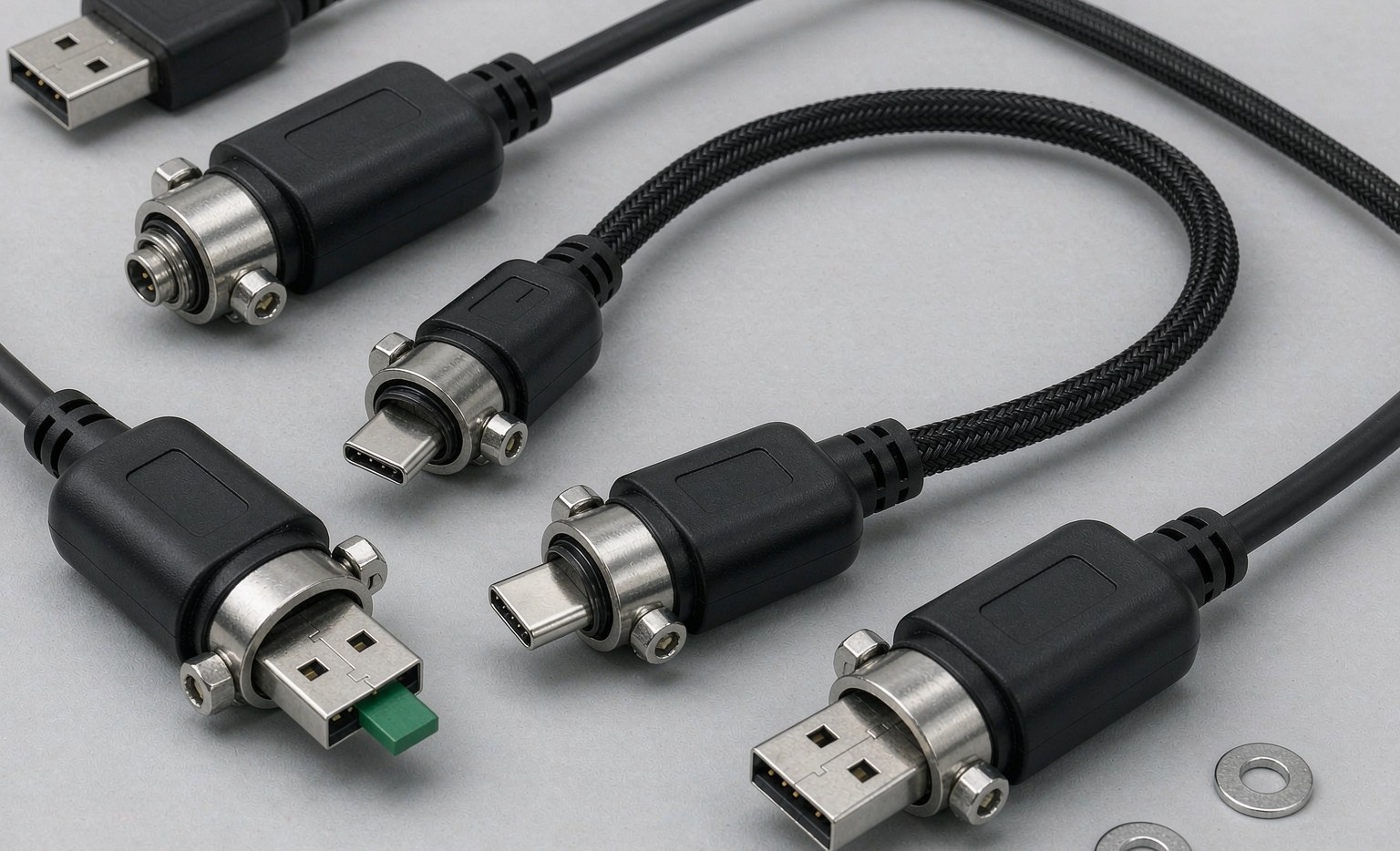
One of the most vital D-SUB connector types industrial application evolutions is the development of the D-SUB Waterproof conn. Standard D-SUBs are prone to failure in washdown or outdoor environments because moisture can seep through the pin insulators or the shell gaps.
- IP67/IP68 Sealing: Longkai’s waterproof series utilizes epoxy potting and O-ring seals at the panel interface to prevent liquid ingress even under temporary immersion.
- Corrosion Resistance: For marine applications, we utilize stainless steel hardware and specialized plating to prevent salt-spray damage to the Industrial Cable connection.
- Integrated Solutions: Our Wire Harness team can provide pre-terminated waterproof D-SUB assemblies, reducing installation time and ensuring factory-certified sealing.
Applications of D-SUB Connectors in Modern Industry
Despite the rise of USB and Ethernet, the D-SUB remains a staple in the Product Center of most industrial manufacturers due to its mechanical robustness:
- Legacy PLC Systems: DB9 and DB25 are still the standard for serial debugging and machine-level control.
- CNC Machinery: The secure screw-lock mechanism prevents disconnection during high-vibration machining processes.
- Sensors & Actuators: Multi-pin D-SUBs allow for a single Cable Assembly to carry both power and multiple signal lines.
- Medical Equipment: High-density variants provide reliable connectivity for imaging and diagnostic devices where Communication Cable integrity is life-critical.
Longkai Electronics: 12+ Years of Manufacturing Excellence
Since 2012, Dongguan Longkai Electronics Co., Ltd. has specialized in high-speed and high-reliability interconnects. Our 3,000㎡ factory is optimized for the production of diverse D-SUB connector types industrial application needs.
- Advanced R&D: We provide custom pin-out designs and specialized Servo Series Connectors for motion control.
- Quality Assurance: ISO9001 and ISO14001 certified production lines ensure that every Connector meets CE, FCC, and RoHS standards.
- Rigorous Testing: We perform 48-hour salt spray tests and 10,000+ mating cycle tests on our Industrial Cable assemblies.
FAQ: Industrial D-SUB Connector Sourcing
Q: What is the difference between a DB9 and a DE9?A: Technically, DE9 is the correct shell size for a 9-pin connector. However, “DB9” has become the industry-standard term used by engineers and in our Cable Catalog.
Q: Can I use an IP67 D-SUB connector for marine applications?A: Yes. For marine environments, we recommend a D-SUB Waterproof conn with nickel-plated shells or stainless steel hardware to ensure long-term corrosion resistance.
Q: Do you offer hybrid D-SUB connectors for power and signal?A: Yes, Longkai manufactures “Combo D-SUBs” which allow high-power pins (up to 40A) and standard signal pins to coexist within the same shell.
Connect with Longkai Global Support
Explore our complete range of high-speed transmission products, including SlimSAS Cable and Industrial USB. Follow us for the latest technical updates:
- LinkedIn: Ying Han – Technical Interconnect Expert
- Facebook: Longkai Electronics Official
- Alibaba: Longkai Electronics Sourcing Portal