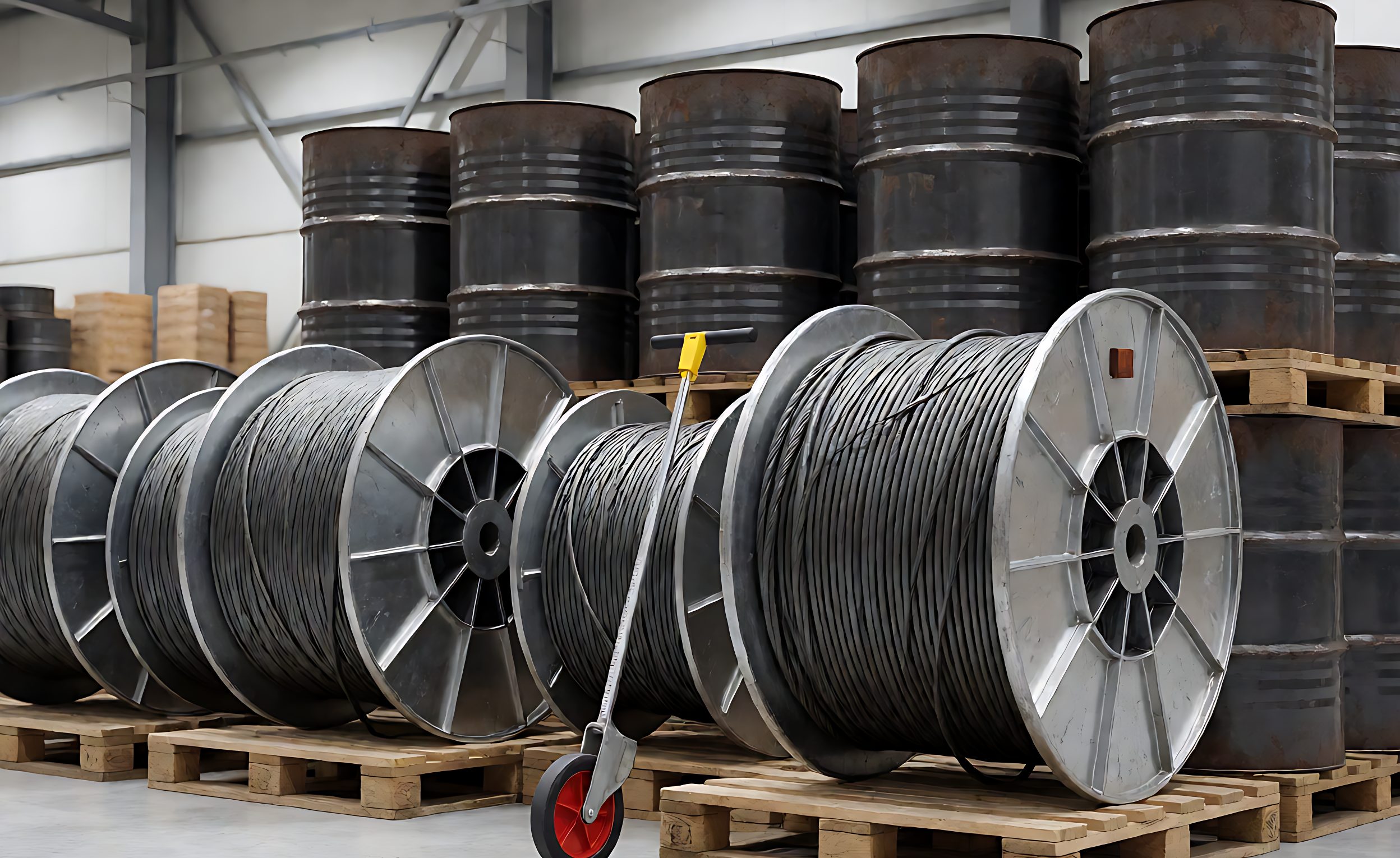
Every buyer who has ordered bulk cable by the reel has met the same problem in some form: the job needs a known number of cut lengths, the reels are nominally sized, and the arithmetic never quite closes. Sometimes there is a half-meter of usable cable left on the last reel and sometimes the last three assemblies cannot be built. Understanding where the missing length goes is more useful than arguing about it afterwards.
Reel length is a measured quantity with an uncertainty attached, and that uncertainty behaves differently from the tolerance on a finished assembly. A finished assembly is measured once against a drawing; a reel is measured during spooling, then rehandled, then partially consumed, and each step adds error. Buying well means understanding all three stages and ordering against the last one.
Why Reel Length Is Only Approximately Known
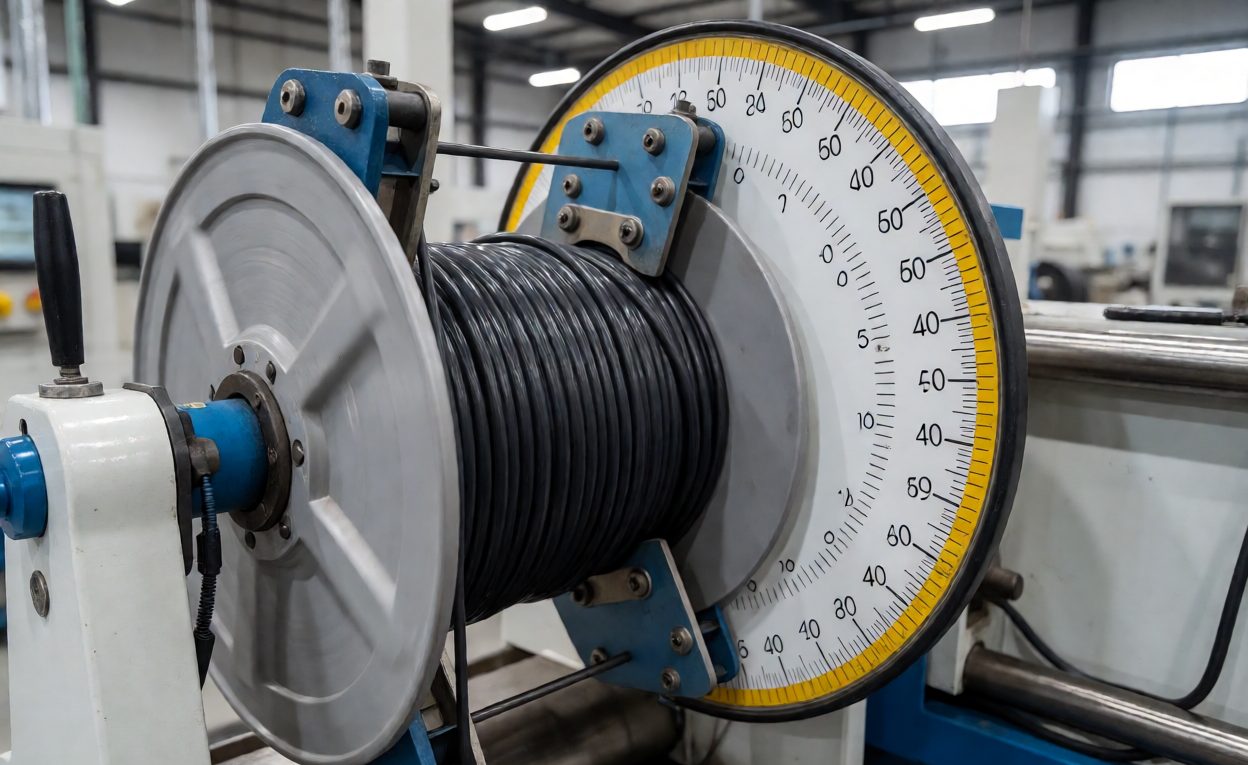
Length is counted as cable is spooled, usually by a measure wheel or an encoder on a capstan. Both count the distance the cable travels past a reference, which is not identical to the length of cable on the reel for three reasons. The wheel reads the surface of the jacket, and jacket diameter varies slightly along a run, so a wheel calibrated to nominal diameter drifts. Cable under tension during spooling is slightly stretched and relaxes afterwards. And the last layer is wound under different tension and diameter conditions from the first, so end-of-reel counting is the least accurate part of the reel.
Manufacturers handle this by stating a tolerance or, more commonly, by stating a minimum: a reel sold as 500 m may be marked as containing not less than 500 m, with the actual quantity anywhere up to a few percent above it. Buyers who assume the nominal is the maximum are regularly surprised in the pleasant direction and occasionally in the unpleasant one when the cable is sold to a stated range instead.
Reel Tolerance Versus Assembly Tolerance
The two are separate specifications and confusing them causes most of the friction. Reel tolerance is a quantity statement – how much cable is on this drum – and it is governed by the counting process described above. Assembly tolerance is a dimensional statement about a finished part, and it is governed by cutting and termination. A buyer can hold a reel to plus or minus one percent and still miss assembly lengths if the cutting process is uncontrolled, and vice versa.
- Reel quantity: typically stated as a minimum or as a range; relevant to purchasing and to how many reels to order.
- Cut length tolerance: typically a few millimetres to tens of millimetres depending on length; relevant to whether the assembly fits its routing.
- Consumption loss: strip length, scrap from setup, sample cuts and the unusable tail at the end of a reel; relevant to how much usable cable a reel actually yields.

Why Reorders Drift
The reorder problem has a specific shape. A first order is placed against a known job, the job consumes slightly more or less than planned, and the reorder is sized from the shortfall. If the reorder is a second reel of the same nominal length, the buyer inherits a fresh quantity uncertainty plus a fresh unusable tail, and the shortfall arithmetic that was done against the first reel’s actual yield no longer holds.
Production variables make it worse. Cable from a different production lot can differ slightly in jacket diameter, which changes both the measured length per kilogram and the way the cable lies on the reel. A different reel type changes the tail length. Even a change of operator changes how much scrap is generated at setup. None of these are large in isolation; together they routinely account for a percent or two of a job, which is exactly the margin a tightly sized order does not have.
Technical Background
The honest way to describe a stated quantity is not a single number but a range with a stated confidence, which is what measurement uncertainty means in practice – the reel figure is a measurement result, not a physical constant. Deciding when to buy more, and how much, is the domain of the reorder point, where the trigger quantity is set by demand variability and supply delay rather than by the nominal reel size. And the delay itself, lead time, is the reason a two percent shortfall becomes a two-week stoppage rather than a five-minute errand.
Practical Rules for Ordering
- Order in whole reels, sized against consumption loss. Convert the job into total metres needed, add strip and setup scrap as a percentage, add one unusable tail per reel, and round up to the next whole reel.
- Ask whether the stated length is a minimum or a range. The difference changes the quantity calculation and it is worth one question before the order.
- Keep lot identity on the reel. Recording which reel and which lot each cut length came from turns a later discrepancy into a five-minute lookup.
- Record actual yield, not nominal. The number of assemblies a reel actually produced is the figure that makes the next order accurate.
- Do not mix lots within one assembly run where jacket diameter or colour must match, because diameter variation is exactly what the counting process is sensitive to.
- Hold a service reel. One unopened reel against future repair and rework demand costs less than an emergency small-quantity purchase later.

Writing It Into the Purchase Order
A bulk cable order is complete when it states the cable specification, the reel length with whether it is a minimum or a nominal range, the maximum acceptable number of pieces per reel, the reel type and flange size, and the labelling required on the reel and on the cable. Piece count matters more than buyers expect: a reel delivered as two pieces rather than one continuous length has a joint problem in the middle of it, and continuous-length requirements should be stated explicitly rather than assumed.
Consumption planning is the other half. If the job is recurring, the reorder quantity should be set from recorded yield rather than from the original estimate, and the reorder should be triggered while enough cable remains to cover the delivery delay. Buyers who wait until the reel is empty are buying against a stopped line, which is the most expensive way to buy cable.
Reel quantity behaviour is described further in bulk reel versus cut length supply, and the dimensional side of the same subject in cable length tolerance and measurement standards. Ordering cadence is covered in blanket orders and scheduled releases, physical planning for drum size in cable drum weight and container planning, and the pricing effect of quantity in cable quotation cost drivers.
Frequently Asked Questions
Does a 500 m reel contain exactly 500 m?
Rarely. Length is counted by measure wheel during spooling, so the figure carries an uncertainty and is often stated as a minimum or a range.
Why does cable measure differently from the reel marking?
Jacket diameter variation, tension during spooling and relaxation afterwards all shift the counted length away from the true length.
Is reel tolerance the same as cut length tolerance?
No. Reel tolerance is a quantity statement about the drum; cut length tolerance is a dimensional statement about the finished assembly.
How much spare cable should an order carry?
Enough to cover strip and setup scrap, one unusable tail per reel, and a margin sized from recorded yield rather than from the original estimate.
Should reels be ordered as continuous lengths?
Yes, state it. A reel delivered in two pieces has a joint in the middle of the run unless continuous length was specified.
Why does a reorder of the same quantity still run short?
A fresh quantity uncertainty, a fresh unusable tail, and lot-to-lot diameter differences all reset the arithmetic used to size the first order.
When should the reorder be placed?
While enough cable remains to cover supplier lead time, so the reorder arrives before the line stops rather than after.