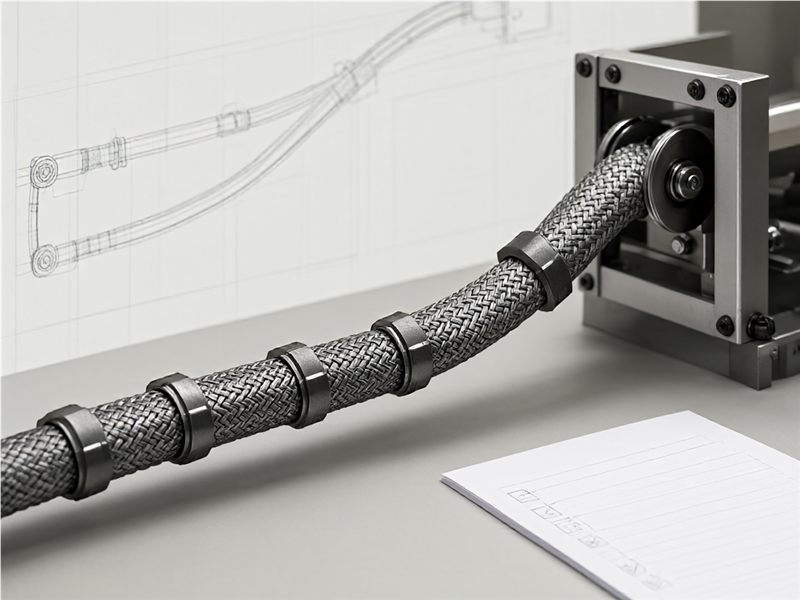
Quick answer: Cable assembly sample approval should connect a labeled sample to its drawing revision, interface, route, test results and packaging. Review it in the target equipment or a representative fixture, then record fit, clearance, pin mapping and required evidence. Agree how changes to parts, sources or process are notified and reapproved before production so the delivered lot matches the sample that was accepted.
1. Define the sample purpose and acceptance owner
State whether the sample is for dimensional fit, electrical verification, installation practice, performance qualification or a combination. Identify the engineering owner who approves each part of the review and the procurement contact who records commercial release. List the exact assembly number and revision under review. A sample without a defined purpose can be accepted for appearance while leaving fit or test questions unresolved. Set the acceptance checklist before the supplier starts building so evidence is collected during assembly rather than reconstructed afterward.
2. Confirm the sample matches the released drawing
Compare connector types, orientation, harness length, branches, labels and visible construction with the controlled drawing. Check the sample identifier and revision on the supplier record. If the supplier made a deviation for evaluation, document it and decide whether it is acceptable for trial only or requires a revised production drawing. Photograph both ends and any routing feature that matters. A traceable comparison prevents a prototype with an undocumented change from becoming the assumed production configuration.
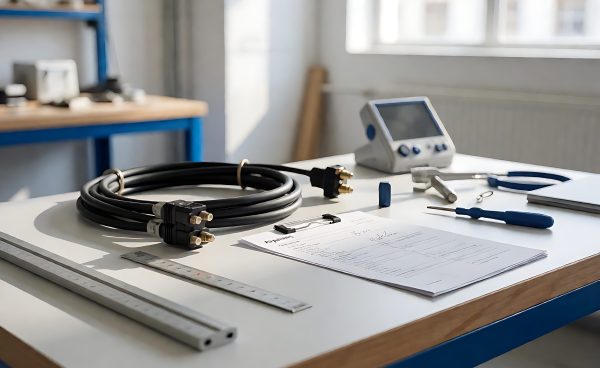
3. Fit the assembly in the target environment
Install the sample in the equipment or a fixture that reproduces connector positions, route and service access. Check mating, latch engagement, clearance, bend path, clamp position and whether the assembly can be removed without damage. Include adjacent components and the intended installation sequence. Record any tension, interference or extra loop that appears during the fit check. If a sample fits only after an unplanned adjustment, update the drawing and review again. A bench photograph alone cannot prove that a harness will install cleanly.
4. Check electrical mapping using the approved plan
Follow the test plan supplied by the responsible electrical owner. Verify connector pin mapping, opens, shorts and other checks required by the project. Record the instrument or fixture where needed, sample ID, drawing revision and result. Do not invent an application-specific test requirement from a generic assembly description; obtain it from the system specification owner. Separate routine production screening from qualification evidence. This helps the buyer understand what the report demonstrates and which system-level requirements still need review.
5. Review labels and identifiers in context
Check that the sample label is readable after installation and does not interfere with a connector, clamp or service loop. Confirm that item number, revision, date or lot trace information matches the purchase and test record. If the harness is difficult to distinguish from another assembly, ask whether an additional tag is needed and approve it before production. Keep the label artwork and placement in the controlled specification. Clear identification supports installation, receiving and later diagnosis when the harness is removed from equipment.
6. Verify packing and shipment condition
Request the proposed production pack and check that connectors and exposed ends are protected in transport. Confirm whether each assembly is bagged or grouped, how the label remains visible and how the product is restrained. If the harness has a defined bend shape for packing, review that method against the installation route. Record carton quantity and receiving references needed by the buyer. A sample can pass electrical checks and still arrive tangled, scuffed or difficult to identify if packaging is not part of the approval.
7. Agree evidence supplied for production lots
List which records accompany every sample, each production lot or a qualification package. Identify test result, lot reference, supplier revision and shipment ID needed for traceability. Set a format purchasing and quality can retrieve without asking the supplier to recreate it. If the project requires a certificate or material record, name the owner and confirm it applies to the exact assembly. Clear evidence expectations support receiving checks and make a later field issue easier to investigate.
8. Close changes and release one configuration
Document sample comments, approved deviations and unresolved issues. For a requested change, assign a drawing revision and state which fit or test checks must be repeated. Confirm the supplier’s change-notice process for connector source, conductor, construction, tooling, test method and production location where controlled. Release the assembly only after the accepted sample and production drawing agree. Archive the record with the purchase order so the next lot can be checked against the same configuration.
For buyers comparing available product and supplier options, see cable assembly information.
Questions buyers often ask
What should a cable assembly sample review prove?
It should address the agreed purpose, such as fit, pin mapping, labels, construction and required test evidence.
Is a sample photo enough to approve a harness?
No. Fit it in the target environment or representative fixture and record checks required by the project specification.
Which production records should be retained?
Keep the assembly revision, lot reference, required test results, inspection record, label data and shipment identifier.
What supplier changes need reapproval?
Review changes that affect interface, fit, construction, source, label, process or test evidence under the project’s change-control plan.