An IP rating on a connector datasheet is one of the most reassuring and least complete pieces of information a buyer can be handed. It tells you that a specific part, in a specific condition, mated to a specific counterpart, survived a specific test. It does not tell you that the assembly built around it is sealed, because the assembly introduces two things the datasheet test never saw: the cable exit and the way the whole thing is handled afterwards.
Sealing a cable assembly is therefore a system problem rather than a component choice. Water gets in at joints, along the inside of the jacket, through a gland that was tightened to a cable diameter slightly different from the one it was sized for, and through a seal that was fine at install and failed after two winters of thermal cycling. This article walks the paths in order and then covers what to write down.
What an IP Rating Actually Covers
The code has two digits. The first covers ingress of solid objects, from large body parts down to dust, and the second covers liquid ingress, from dripping water through jets, immersion and finally pressurised hot water. A rating of IP67 means dust-tight and protected against temporary immersion under stated conditions of depth and duration; IP68 means the manufacturer has specified immersion conditions more severe than those of IP67, which is why IP68 is meaningless without the depth and duration attached to it.
Three limits matter when applying the rating to an assembly. The test is performed on the connector or the enclosure as supplied, usually mated to its own counterpart and usually new. It does not include the cable termination unless the assembly itself was tested. And it is a pass-fail test at a moment in time, not a durability prediction – a seal that passes immersion on day one can fail after thermal cycling, flexing or UV exposure that the rating says nothing about.
Path One: The Cable Exit
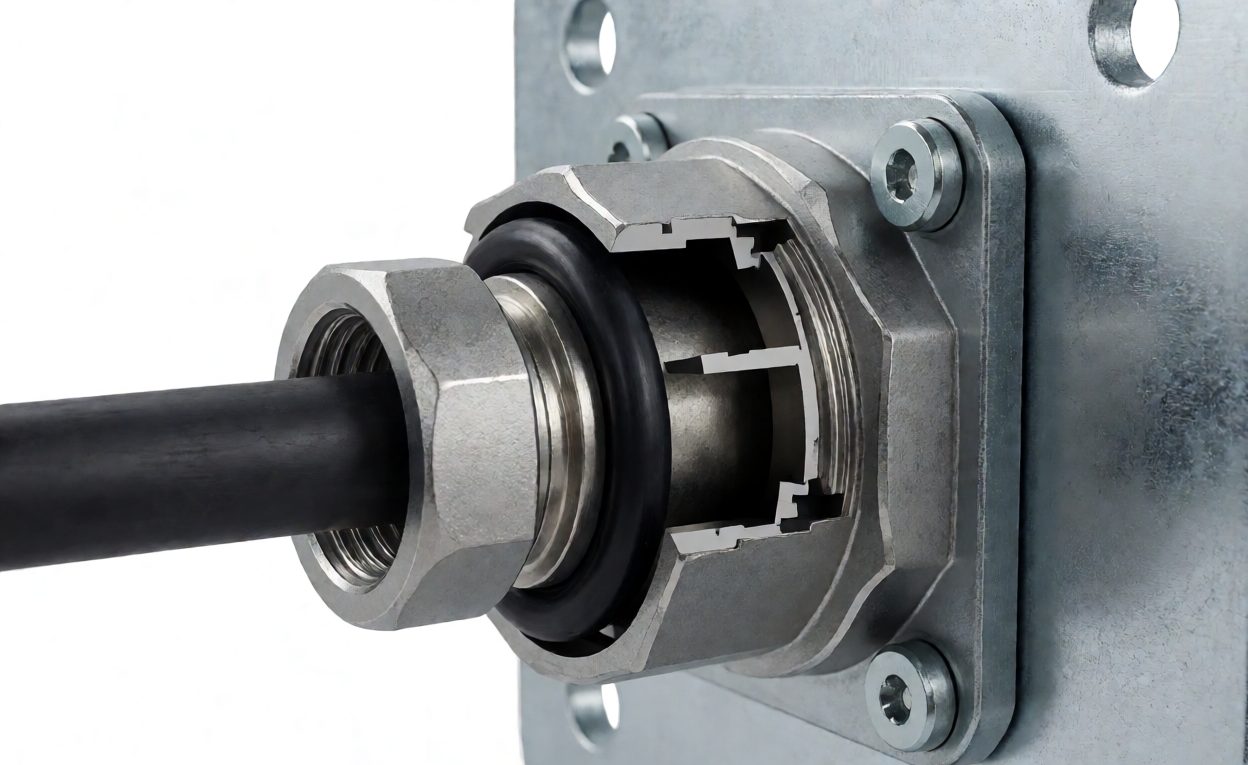
The most common leak is not through the connector face but where the cable leaves it. A round cable passing through a round hole leaves a gap, and the standard ways of closing it each have a failure mode worth knowing:
- Cable gland with compression seal. Effective and serviceable, but sized to a cable diameter range. A cable at the edge of the range, or one with a jacket that creeps under compression, seals poorly.
- Grommet or boot. Cheap and adequate for splash, dependent on the moulding staying seated and on the jacket surface being undamaged.
- Overmolded strain relief. The most robust option where volumes justify tooling, because the seal is formed by the moulding itself against a prepared cable surface rather than by a separate part that can be fitted wrongly.
- Potted backshell. Compound fills the void around the conductors, which also blocks the path described below; used where the environment is genuinely hostile.
The path buyers miss is the one inside the cable. In a stranded, unsealed construction, water that reaches a cut or damaged end can travel along the interstices between strands and appear somewhere apparently unrelated, sometimes metres away and sometimes inside the equipment. Where that risk is real, the specification needs a sealed or blocked construction, a potted termination, or a drain arrangement, none of which an IP rating on the connector will provide.
Path Two: The Connector Interface
Sealing at the mating face is what the datasheet rating addresses, and it is achieved by an interface seal – an O-ring, a gasket or a moulded face seal – compressed to a designed amount by the coupling mechanism. The practical failure modes are all compression failures: a coupling screwed down by hand rather than to a torque, a seal left unseated by a bent shell, a seal compressed beyond its designed deflection and taking a permanent set, or a seal material that hardens or swells in the service environment.
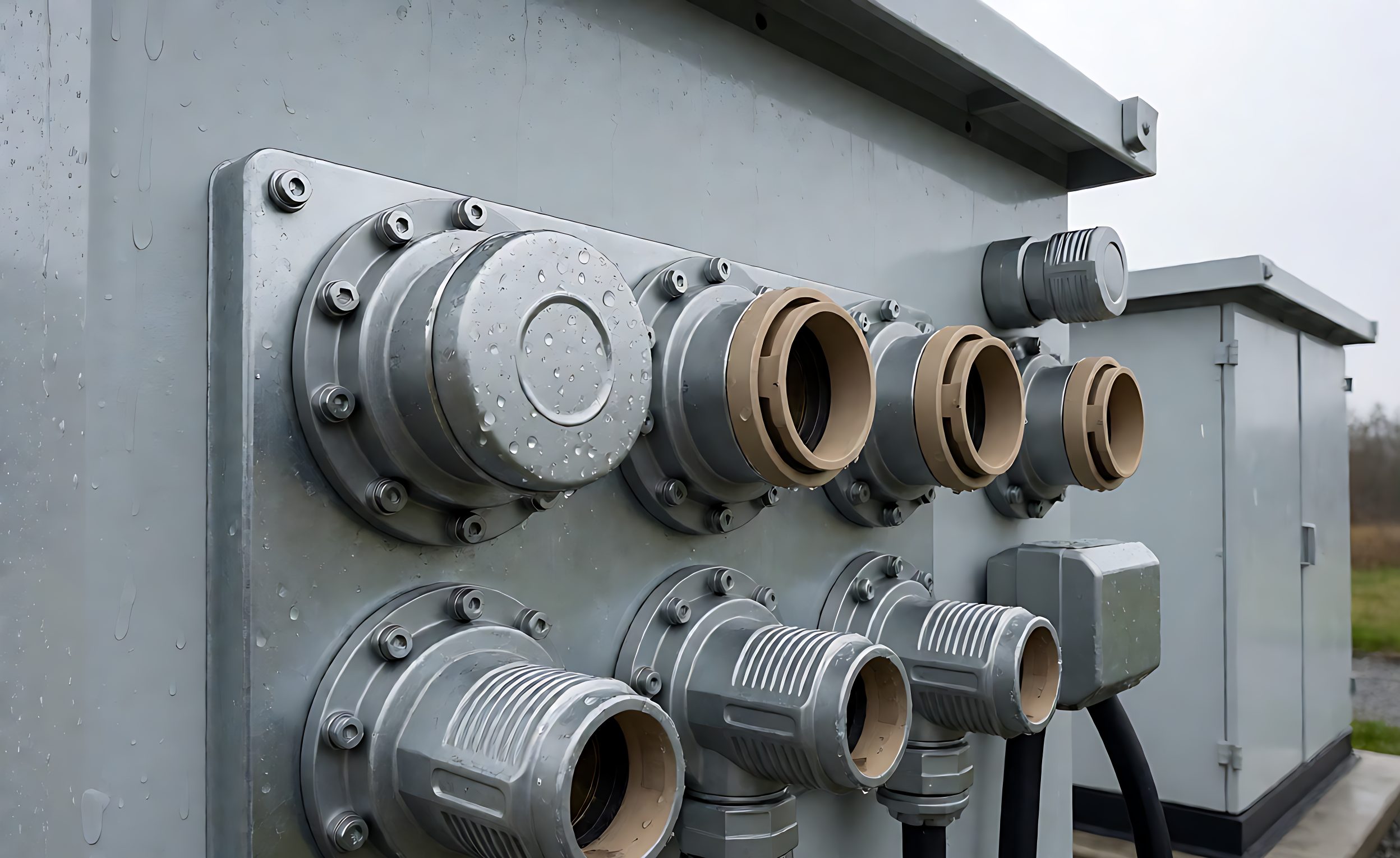
Unmated connectors are the other half of the interface problem. A mated pair is sealed and an unmated receptacle is an open hole, so a system with spare ports needs caps, and the caps need the same rating as the connectors. This is written down because it is forgotten constantly: the enclosure is IP67, the installed spare ports are open, and the enclosure is not.
What IP Ratings Do Not Tell You
- UV and weathering. A rating says nothing about polymer degradation from sunlight, which embrittles jackets and seals.
- Chemical resistance. Oils, solvents and cleaning agents attack seal compounds; compatibility has to be checked separately.
- Thermal cycling and pressure cycling. Repeated expansion and contraction, or a vacuum-then-pressure cycle, pumps water past seals that pass a static immersion test.
- Flexing. A seal on a moving cable works under conditions no static rating describes.
- Condensation. A sealed enclosure that breathes through a temperature cycle will collect water inside without any ingress at all, which is a ventilation and desiccant problem rather than a sealing one.
Technical Background
The classification itself is the IP code, published as a two-digit system where each digit refers to a defined test rather than to a general quality level. The sealing elements that do the work at the interface and the cable entry are gaskets and elastomeric seals, whose performance depends on compression, material compatibility and temperature rather than on the rating alone. For assemblies that must exclude moisture entirely rather than resist a test, the design target is a hermetic seal, achieved by glass-to-metal or fully potted construction and verified by leak testing rather than by immersion.
Specifying and Verifying Sealing
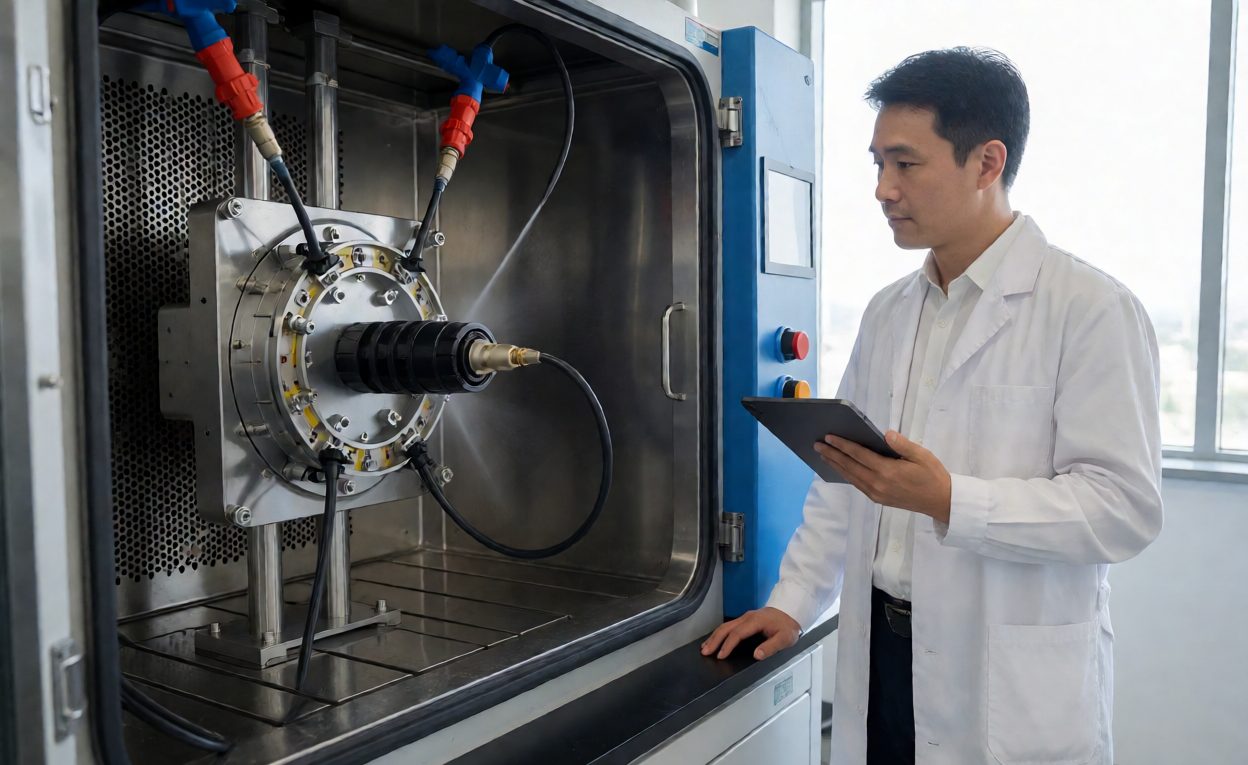
A complete sealing specification names the rating required with the test standard and, for immersion ratings, the depth and duration; identifies where sealing is required – connector face, panel interface, cable exit – rather than relying on a single system-level figure; states the cable diameter range the gland or moulding is sized for; and states the seal material and any chemical or temperature compatibility requirements. Where the assembly itself is the sealed item, the assembly is what gets tested, not the connector on its datasheet.
Verification at goods-in is limited but useful: check that the specified glands and seals are present and correctly sized, look for the moulding or potting the drawing calls for, and require the test report for the assembly where sealing is a stated requirement. A sample immersion or spray check on one unit per delivery is a proportionate way to catch a process change nobody reported.
Sealing choices interact with the moulding options in overmolding and strain relief design and the connector selection discussed in choosing between IP67 and IP68 for M12 connectors. Test evidence is covered in what a cable test report should contain, harsh-environment connector selection in IP-rated connectors in harsh environments, and jacket materials in industrial cable jacket materials.
Frequently Asked Questions
Does an IP67 connector make the cable assembly IP67?
Not automatically. The rating applies to the connector as tested; the cable exit and termination have to be sealed and the assembly itself verified.
What is the difference between IP67 and IP68?
IP67 is defined temporary immersion; IP68 means immersion conditions more severe than IP67, so the depth and duration must be stated by the manufacturer.
Where does water most often enter a cable assembly?
At the cable exit, through a gland sized to the wrong diameter range or a boot that has lifted, rather than through the connector face.
Can water travel inside the cable itself?
Yes, along the gaps between strands in an unsealed construction, so a leak can appear far from where the water entered.
Do unmated connectors break the enclosure rating?
Yes. Spare ports need caps carrying the same rating as the connectors, otherwise the enclosure is open.
Does an IP rating cover UV or chemical resistance?
No. Sunlight, oils and cleaning agents attack jackets and seals independently of the ingress rating.
How should sealing be written into a specification?
Name the rating with its test standard, state where sealing is required, give the cable diameter range and seal material, and test the assembly rather than the component.